


- Turkey accelerated delivery of thousands of Skydagger kamikaze drones to Kosovo three months early, fundamentally altering regional military balance
- Serbian President Vučić accused Turkey of violating UN Resolution 1244 but quickly softened rhetoric, revealing economic constraints and domestic political calculations
- Turkey's dual role as KFOR commander and Kosovo's arms supplier creates unprecedented challenges for NATO peacekeeping neutrality and mission credibility
The early October 2025 arrival of thousands of Turkish-made Skydagger kamikaze drones in Kosovo has detonated a diplomatic crisis in the Balkans, exposing the fragility of the EU-facilitated dialogue between Belgrade and Pristina and raising questions about Turkey's strategic ambitions in a region already strained by ethnic tensions and geopolitical rivalries. On October 8, Kosovo Prime Minister Albin Kurti personally welcomed the containers at Pristina's Adem Jashari International Airport, celebrating the shipment as a major step toward "strengthening and modernizing" Kosovo's military capabilities. The drones, manufactured by Turkish defense company Baykar and delivered three months ahead of schedule, represent a significant enhancement to the Kosovo Security Force's striking power—and a sharp escalation in the region's military balance.
Serbian President Aleksandar Vučić's response was immediate and furious. He accused Turkey of "brutal violation of the UN Charter and Security Council Resolution 1244," the 1999 agreement that ended NATO's intervention in Kosovo and established the NATO-led Kosovo Force (KFOR) as the sole authorized armed presence in the territory. Vučić went further, charging that Turkey "does not want stability in the Western Balkans and is once again dreaming of restoring the Ottoman Empire." The rhetoric marked an unusual public rupture between Vučić and Turkish President Recep Tayyip Erdoğan, leaders who have maintained close economic and political ties in recent years. Yet within days, Vučić appeared to soften his stance, calling Erdoğan "a great leader" and indicating he would seek direct talks with his Turkish counterpart about the drone delivery.
The timing of the crisis is particularly combustible. Kosovo held local elections on October 12, 2025, amid a political deadlock with Serbia that has persisted despite years of EU-brokered negotiations. The Serbian minority in Kosovo continues to face challenges regarding political participation, with some Serbian parties initially disqualified from the elections but later reinstated following appeals. Meanwhile, the EU-facilitated dialogue between Belgrade and Pristina has made no meaningful progress in mid-October 2025, with tensions heightened by incidents such as the July 2025 arrest of Serbian official Igor Popović by Kosovo authorities—a move Serbia condemned as politically motivated. How will this latest arms delivery affect the already fragile prospects for normalization between two states whose relationship remains the most volatile unresolved issue in the Western Balkans?
Turkey's strategic calculus in the Balkans
The drone shipment represents far more than a straightforward arms sale. According to the contract signed in December 2024 with Baykar, the Turkish defense manufacturer headed by President Erdoğan's son-in-law Selçuk Bayraktar, Kosovo was scheduled to receive the Skydagger drones in January 2026. The early delivery—arriving three months ahead of schedule—suggests a deliberate acceleration with potential political motivations. Prime Minister Kurti emphasized that "dozens of Kosovo Security Force soldiers were trained to operate the drones," which are described as "Ready to Fly" (RTF) FPV-type combat drones equipped with explosive payloads designed to strike both moving and static enemy targets.
The Skydagger acquisition follows Kosovo's 2023 purchase of Turkey's Bayraktar TB2 unmanned attack drones from the same manufacturer. Together with Kosovo's existing fleet of U.S. Puma unmanned aircraft, these systems represent a comprehensive modernization of Kosovo's military capabilities. The drones are equipped with dual thermal and daylight cameras, enabling all-weather operations, and can travel at speeds of approximately 80 miles per hour with a range exceeding six miles—making them ideal for quick, precision tactical strikes.
The delivery coincides with another significant development: Turkish Major General Özkan Ulutaş recently assumed command of NATO's KFOR mission in Kosovo for a one-year term. Turkey now simultaneously serves as a major military supplier to the Kosovo Security Force while leading the NATO peacekeeping force mandated to maintain neutrality and security for all communities in Kosovo. This dual role has created a complex dynamic that critics, particularly in Belgrade, view as compromising KFOR's impartiality.
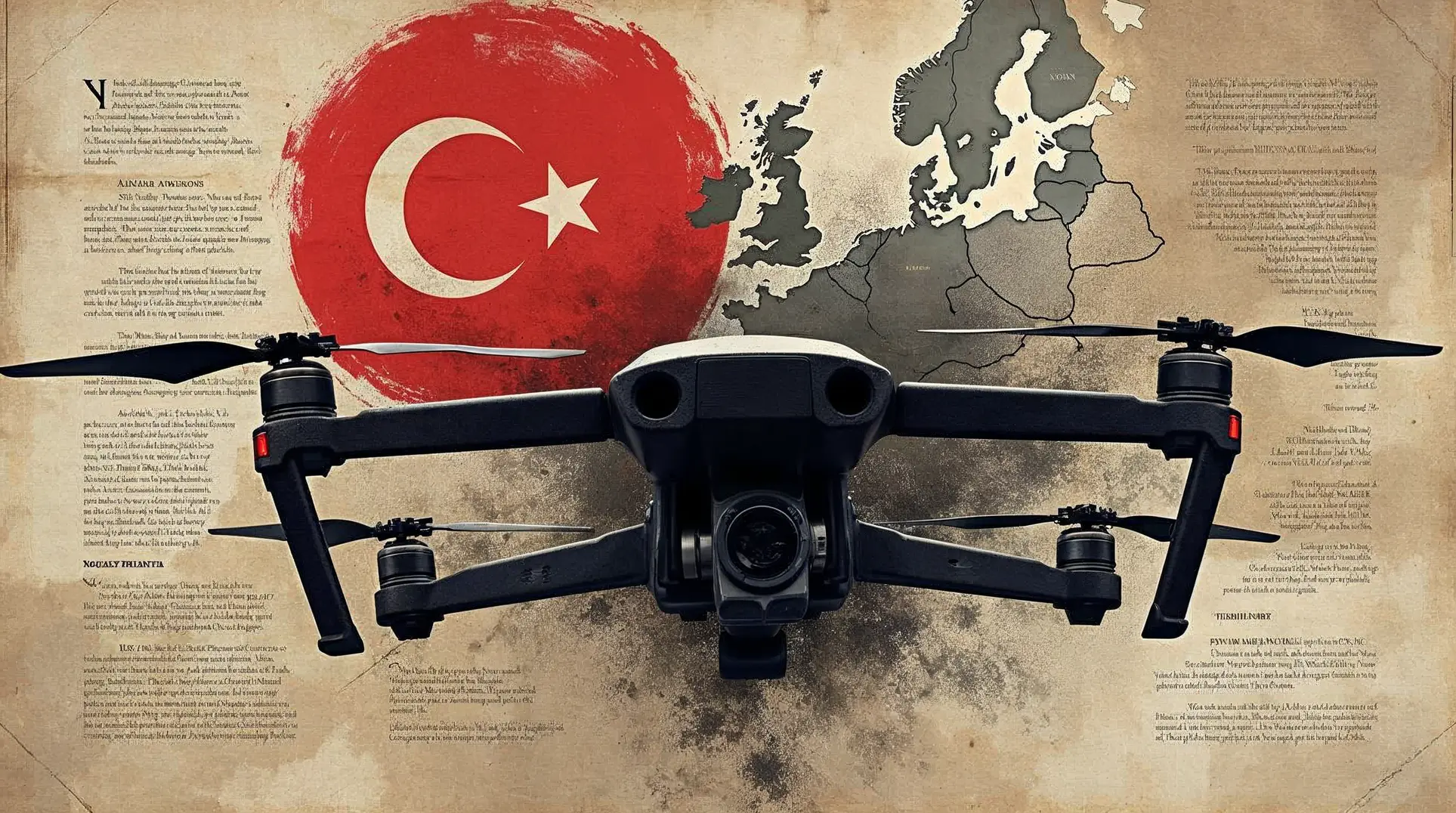
🔥 EXCLUSIVE: Discover why Turkey's shock drone delivery isn't just about weapons—it's Erdoğan's calculated power play to reshape Balkan geopolitics and challenge Western dominance. What's REALLY behind Ankara's neo-Ottoman strategy?
Serbia's furious response and rapid backtrack
President Vučić's initial reaction to the drone delivery was exceptionally harsh by the standards of Serbian-Turkish relations. Writing on X (formerly Twitter), he stated he was "appalled by Turkey's behaviour and brutal violation of the UN Charter and Security Council Resolution 1244, as well as the further arming of the authorities in Pristina." His assertion that "it is now completely clear that Turkiye does not want stability in the Western Balkans and is once again dreaming of restoring the Ottoman Empire" represented a significant escalation in rhetoric.
The accusation of "neo-Ottomanism" is a common rhetorical weapon in the Balkans whenever national interests clash with Turkey's growing regional engagement. However, analysts note that Ankara's foreign policy remains fundamentally pragmatic and focused on economic relations and regional stability—a policy that has produced what some describe as a "golden age" of economic relations with Serbia despite periodic political tensions.
Vučić's government faces its own contradictions on the arms procurement issue. While condemning Kosovo's drone acquisition, Serbia has been modernizing its own military arsenal through close cooperation with Russia and China—two countries openly at odds with the West. In July 2025, Serbian army special forces conducted joint exercises with a Chinese brigade, despite objections from the EU and United States. This stance reveals what Kosovo President Vjosa Osmani characterized as a "double standard": Belgrade claims the right to military buildup while denying the same to its neighbors, particularly Kosovo, which it still considers its own territory.
The Serbian Defense Ministry reported that General Milan Mojsilović, Chief of the Serbian Armed Forces General Staff, urgently contacted KFOR Commander Ulutaş to protest the "continued arming of the so-called Kosovo Security Force." Mojsilović emphasized that "in line with international law, the UN resolution, and all other signed agreements, the Republic of Serbia regards KFOR as the sole legitimate armed formation operating in Kosovo and Metohija"—using Serbia's preferred name for the territory.
Yet Vučić's tone shifted dramatically within days. In a media address on October 9, he called Turkish President Erdoğan "a great leader" and announced he would speak with his Turkish counterpart about the drones delivered to Pristina. "Last year I begged Erdoğan to stop arming Pristina," Vučić said. "I also asked the Americans to stop doing it." The rapid moderation of his rhetoric suggests several factors at play: the importance of economic ties with Turkey, pressure from international partners to avoid escalating regional tensions, and perhaps a calculation that maintaining the crisis serves domestic political purposes without requiring sustained confrontation with Ankara.
Kosovo's defiant stance and NATO's delicate position
Kosovo President Vjosa Osmani responded forcefully to Vučić's accusations, calling his statements "shameful and hypocritical" given Serbia's own military ties with Russia, China, and Iran. "I am proud to have worked closely with President Erdogan, a man of his word, who has shown sincere care for all the people of the region and has made an extraordinary contribution to maintaining stability and security," Osmani declared. She added that "Vučić seems to believe that he can threaten a major NATO country like Turkey in the same way that he threatens neighboring countries."
Osmani's defense of the drone acquisition emphasized Kosovo's sovereign right to build its defense capabilities. "Instead of cooperating with NATO member countries, he deepens military cooperation with Russia, China and Iran," she said of Vučić, highlighting what Pristina views as Belgrade's hypocrisy on security matters.
Prime Minister Kurti framed the drone delivery as part of Kosovo's broader effort to "build a capable and coherent force with new technological developments and contemporary combat tactics." He noted that the Skydagger drones, also known as kamikaze or loitering munitions, would operate alongside Kosovo's existing Bayraktar TB2 and Puma systems, significantly enhancing the Kosovo Security Force's operational capabilities.
The Kosovo Security Force was founded in 2009, after Kosovo declared independence, with an original mandate to conduct crisis response operations in Kosovo and abroad, civil protection operations within Kosovo, and assist in dealing with natural disasters. Kosovo's governments have long sought to transform it into a regular army—a move that Serbia vehemently opposes and that has created friction with some NATO members concerned about regional stability.
CRISIS ALERT: How thousands of kamikaze drones just shattered NATO peacekeeping credibility—and why the alliance's Turkish commander faces an impossible choice. The shocking internal split exposed.
The EU dialogue's deepening paralysis
The drone crisis erupted against the backdrop of a EU-facilitated dialogue process that has made virtually no progress in 2025. As of mid-October, there had been no meaningful advancement in negotiations between Belgrade and Pristina, despite the existence of the Brussels Agreement of February 27, 2023, and the Ohrid Agreement on the Path to Normalisation of Relations between Kosovo and Serbia of March 18, 2023.
The Ohrid Agreement, which Serbian President Vučić notably refused to sign, was supposed to provide a roadmap for normalizing relations between the two countries. However, only three elements from the Implementation Annex have been addressed: the Declaration of Missing Persons, the presentation of the Management Team statute for the Association/Community of Serb-Majority Municipalities, and the announcement of the Joint Monitoring Committee. Progress on other critical issues has stalled completely.
A particularly contentious issue remains the establishment of the Association/Community of Serb-Majority Municipalities (ASM) in Kosovo. This body, agreed to in principle in the 2013 Brussels Agreement, would provide a degree of self-governance for Kosovo's Serb-majority municipalities, particularly in the north. Prime Minister Kurti has consistently criticized the ASM, arguing that it would give Serbia undue influence in Kosovo's internal affairs. Kosovo's constitution already reserves 20 seats in parliament for Serbian and other minority communities and one government ministerial position for a Kosovar Serb, leading many in Kosovo to argue that the Serb community already enjoys extensive rights.
The July 2025 arrest of Serbian official Igor Popović by Kosovo authorities exemplified how individual incidents continue to poison the broader relationship. Serbia condemned the arrest as politically motivated and a violation of human rights, while Kosovo defended it as a legitimate law enforcement action. Such episodes repeatedly derail efforts to build trust and momentum in the dialogue process.
The Western Balkans Foreign Ministers meeting on October 9, 2025, reaffirmed commitments to regional stability, peace, and European integration while acknowledging the unresolved Kosovo-Serbia dialogue as a critical issue. However, these rhetorical commitments have not translated into concrete progress on the ground.
Serbia faces its own complex pressures that complicate the dialogue. The country is under strong pressure from the European Union to implement reforms and impose sanctions on Russia as part of its EU accession process. This creates significant domestic political challenges for Vučić, who must balance Serbia's historical ties to Russia, public sentiment that remains strongly pro-Russian and anti-NATO, and the economic and political benefits of EU integration. Serbia has refused to align with EU sanctions on Russia following the invasion of Ukraine, instead maintaining what it describes as military neutrality while simultaneously deepening economic and security cooperation with Moscow.
The geopolitical landscape remains further complicated by Russia's opposition to Kosovo's independence and its strategic alliance with Serbia. Moscow has consistently blocked Kosovo's membership in international organizations and uses its UN Security Council veto to prevent Kosovo from joining the United Nations. This Russian support provides Serbia with diplomatic cover to continue refusing recognition of Kosovo, which in turn hinders normalization of relations and the European integration prospects for both countries.
Domestic politics and the crisis as diversion
The timing of the drone crisis serves domestic political purposes for key actors on multiple sides. For President Vučić, the controversy provides a convenient diversion from serious internal challenges. Serbia has been experiencing its biggest political and societal crisis since Vučić's Serbian Progressive Party came to power in 2012, with mass student-led anti-government protests continuing for 11 months as of October 2025. These protests target corruption and abuse of power, issues that have put significant pressure on Vučić's government.
Additionally, on October 8, 2025—the same day the drones arrived in Kosovo—United States sanctions against the Serbian Oil Industry company, owned by the Serbian state and Russian companies, came into force. By raising tensions with Turkey over the Kosovo drone delivery and reviving nationalist rhetoric about threats to Serbian interests, Vučić can redirect public attention from these domestic and economic challenges toward an external "enemy."
For Kosovo's leadership, the drone acquisition demonstrates resolve and capability at a time when the country's path to full international recognition and Euro-Atlantic integration remains blocked. Kosovo is not a member of the United Nations, NATO, or the European Union, and five EU member states (Spain, Romania, Slovakia, Greece, and Cyprus) do not recognize its independence. By securing advanced military capabilities from a major NATO member, Kosovo's government can project strength and signal that it will not be pressured into concessions in the dialogue process without reciprocal moves from Serbia.
The crisis also occurred just days before Kosovo's October 12, 2025, local elections, providing Prime Minister Kurti with an opportunity to demonstrate his government's commitment to strengthening Kosovo's security and sovereignty—key priorities for his Vetëvendosje party's electoral base.
Russia's shadow and the broader geopolitical context
While Russia is not directly involved in the drone delivery crisis, its influence looms over the broader Kosovo-Serbia relationship and Balkan geopolitics. Russia has consistently positioned itself as Serbia's primary external patron, particularly on the Kosovo issue. Moscow's veto power in the UN Security Council has been instrumental in blocking Kosovo's UN membership and maintaining Serbia's position that Kosovo remains its territory under international law.
Russia maintains a presence in Serbia through various channels, including the controversial "Russian-Serbian Humanitarian Center" near Niš, about 250 kilometers from the NATO military base Camp Bondsteel in Kosovo. Western military analysts view this facility as a potential Kremlin intelligence outpost, though Russia describes it as purely humanitarian. Serbia and Russia have also conducted regular "Slavic Brotherhood" military exercises since 2015, trilateral drills involving Serbian, Russian, and Belarusian armed forces.
The Russia-Ukraine war has intensified Western concerns about potential Russian interference in Balkan disputes. European and American policymakers fear that Moscow could exploit ethnic and territorial tensions in the region to create instability that diverts Western attention and resources from Ukraine. The September 2023 armed clash at Banjska monastery in northern Kosovo, where heavily armed Serb gunmen attacked Kosovo police, raised suspicions about potential external support for destabilizing actions, though direct Russian involvement was not conclusively proven.
Russia's strategic interest in the Balkans extends beyond Serbia. Moscow has historically sought to prevent NATO expansion in the region and to maintain influence that can complicate Western policy. The Balkans provide Russia with leverage in its broader confrontation with the West, even if the region is not of central importance to Russian foreign policy compared to its immediate neighborhood.
However, Russia's capacity to shape events in the Balkans has diminished since the Ukraine invasion. Economic sanctions, the closure of Russian banks and media operations across most of Europe, and the general mobilization of Western resources against Russian influence have reduced Moscow's practical leverage. Serbia remains Russia's most reliable partner in the region, but even Belgrade has had to carefully calibrate its relationship with Moscow against the economic and political imperatives of EU integration.
The path forward: Dialogue or deadlock?
The drone delivery crisis underscores the fundamental challenges facing efforts to normalize relations between Kosovo and Serbia. Despite years of EU-facilitated dialogue, the two sides remain far apart on core issues. Serbia continues to refuse recognition of Kosovo's independence, while Kosovo insists on full sovereignty and equal treatment in international forums. The establishment of the Association of Serb-Majority Municipalities remains unimplemented, creating ongoing friction and providing Serbia with grounds to claim Kosovo is not fulfilling its commitments.
The EU's leverage over both parties has diminished in recent years. Enlargement fatigue has set in following years of stalled accession talks, and the EU's visa liberalization process with Kosovo has deteriorated. The bloc no longer has the same carrots to tempt the parties' leaderships to engage in good faith and view the process as mutually beneficial rather than zero-sum.
The United Nations Security Council planned a briefing in October 2025 on the UN Interim Administration Mission in Kosovo (UNMIK) and the overall situation in Kosovo, highlighting ongoing international engagement. However, such briefings have become routine exercises that rarely produce concrete progress given the fundamental divisions within the Security Council itself, where Russia blocks any measures that would advance Kosovo's international status.
For the dialogue to move forward, several conditions would need to be met. First, both Serbia and Kosovo would need to demonstrate genuine political will to implement existing agreements, particularly regarding the Association of Serb-Majority Municipalities and Serbia's commitment not to block Kosovo's membership in international organizations. Second, the EU would need to provide clearer incentives and consequences—both positive and negative—to encourage compliance with dialogue commitments. Third, the United States would need to remain actively engaged in supporting the EU process rather than pursuing parallel initiatives that could undermine Brussels' efforts.
The introduction of thousands of advanced drones into this volatile mix does not make any of these conditions easier to achieve. Instead, it raises the stakes and the potential costs of failure, while demonstrating that external actors like Turkey can significantly influence the regional military balance regardless of the dialogue process.
Conclusion
The Turkish drone delivery to Kosovo represents far more than a routine arms sale—it is a geopolitical statement that has exposed the deep fissures in Balkan security arrangements and the paralysis of the EU-facilitated dialogue between Belgrade and Pristina. Turkey's decision to accelerate the shipment and supply thousands of kamikaze drones to Kosovo demonstrates Ankara's willingness to act independently within NATO structures and pursue its own strategic interests in the region, even at the cost of straining relations with Serbia. President Vučić's furious initial response, followed by his rapid backtrack, reveals the contradictions in Serbia's position: condemning Kosovo's military buildup while pursuing its own through partnerships with Russia and China, and maintaining economic ties with Turkey that limit how far Belgrade can push its objections.
For Kosovo, the drones represent a significant enhancement of military capabilities and a demonstration that it can secure advanced weapons from major NATO members despite the unresolved status dispute with Serbia. For Serbia, the delivery is another reminder that its refusal to recognize Kosovo's independence has not prevented Pristina from building the attributes of statehood, including a modern military force. For the EU, the crisis is yet another indication that its dialogue process has lost momentum and credibility, unable to prevent unilateral actions that raise tensions and complicate the path to normalization.
Looking ahead to the next 6-12 months, the drone delivery is likely to trigger a regional arms dynamic, with Serbia potentially seeking to acquire comparable or superior systems to maintain what it views as strategic balance. The October 12 local elections in Kosovo may produce new sources of tension, particularly if turnout among Kosovo Serbs remains low and questions of political representation in the north persist. The EU will face pressure to demonstrate that its dialogue process can still produce results, but without stronger leverage and clearer consequences for non-compliance, progress seems unlikely.
The greatest risk is that the accumulation of advanced weapons systems, combined with unresolved territorial disputes and ethnic tensions, creates conditions where a localized incident could rapidly escalate beyond the control of political leaders who have shown more interest in managing crises for domestic political gain than in genuinely resolving them. In a region where historical grievances run deep and external powers maintain competing interests, the arrival of thousands of kamikaze drones is not just a military development—it is a warning that the Balkans' frozen conflicts could thaw with devastating speed.


