


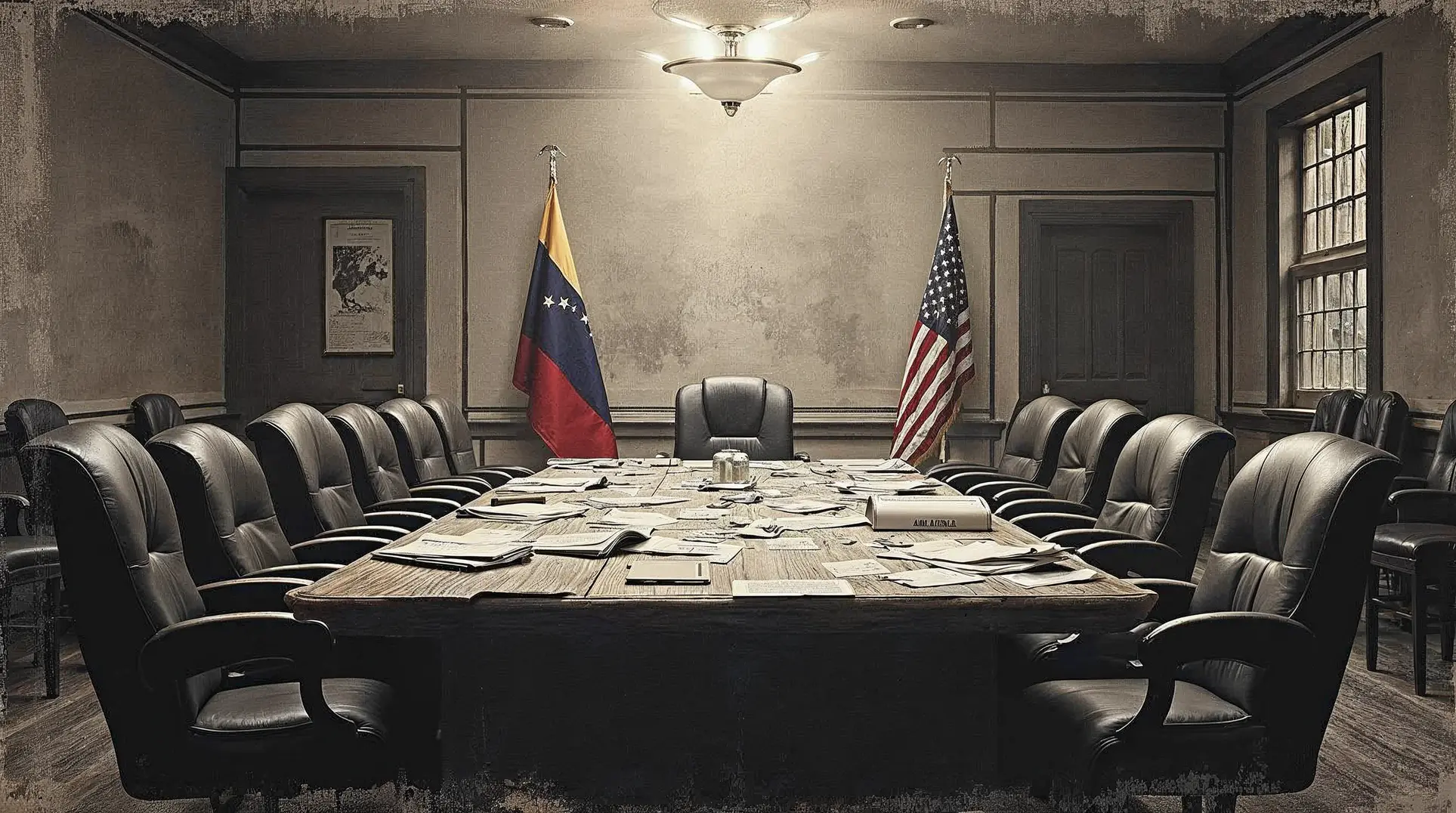
Venezuela's acting president has extended an unexpected olive branch to Washington, proposing "cooperation oriented towards shared development" just days after U.S. forces captured Nicolás Maduro in a brazen assertion of American power in the Western Hemisphere. Delcy Rodríguez's Sunday statement, directly addressing President Donald Trump, marks a striking reversal from her initial defiant stance that recognized Maduro as Venezuela's "only" legitimate leader.
The conciliatory overture arrives amid explicit threats from Washington. Trump has warned Rodríguez she will "pay a very big price" for non-compliance, while signaling his intention to facilitate U.S. oil companies' entry into Venezuela's resource-rich territory. This juxtaposition—public diplomacy from Caracas against coercive ultimatums from Washington—reveals the fundamental asymmetry of power now shaping Venezuela's political trajectory.
The arithmetic of survival
Rodríguez's rhetorical pivot follows a predictable pattern for regimes confronting overwhelming force. Her Sunday statement invoked "international law" and "lasting community coexistence," diplomatic formulations designed to appeal to multilateral norms while acknowledging the new reality of American military intervention. The inclusion of language about "our peoples and our region" deserving "peace and dialogue, not war" represents a calculated appeal to hemispheric solidarity and Trump's stated preference for negotiated outcomes over prolonged conflict.
This shift is not ideological conversion but strategic adaptation. The Venezuelan state apparatus remains intact, but its leadership now operates without the protective buffer that Maduro's two-decade entrenchment provided. Rodríguez faces a binary choice: accommodate U.S. demands to some degree or risk the fate her predecessor met. Her conciliatory language suggests Caracas has chosen the former, at least publicly.
The speed of this recalibration is telling. Days, not weeks, separated her defiant recognition of Maduro from her appeal for cooperation. This compressed timeline indicates that internal deliberations within the Venezuelan leadership have concluded that resistance carries unacceptable costs. Whether this represents genuine capitulation or temporary tactical retreat remains the central question.
Members are reading: How Venezuela's pivot exposes the return of sphere-of-influence politics and what it means for great power competition.
The regional calculation
The international response illuminates the broader stakes. Russia and China have condemned the U.S. action as a violation of sovereignty, but neither has signaled military support for the post-Maduro Venezuelan government. This restraint reflects their own calculations about defending distant clients against a superpower asserting dominance in its immediate periphery. Regional actors have expressed varying degrees of concern, but none have offered concrete support to Caracas.
This isolation strengthens Washington's hand and narrows Rodríguez's options. Without external balancers willing to challenge American intervention, Venezuela's acting government must reach an accommodation with Washington or face escalating pressure. The broader pattern of U.S. assertiveness in what it considers its sphere of influence suggests that Trump views regional dominance as non-negotiable, particularly regarding resource-rich states that have aligned with American adversaries.
Rodríguez's appeal for "shared development" attempts to reframe the relationship in mutually beneficial terms, but the underlying dynamic remains coercive. Washington's preparation for strikes on Venezuelan military installations prior to Maduro's capture demonstrated its willingness to use force; the question now is whether cooperation from Caracas can forestall further military action or merely delays it.
The outcome will establish parameters for how great powers manage challenges within their spheres of influence in the coming decade. If Rodríguez's cooperative approach yields a settlement that preserves her position while accommodating U.S. interests, it may provide a template for managing similar transitions elsewhere. If Washington rejects her overture and pursues complete regime replacement, it signals that accommodation offers no protection against determined hegemonic assertion. Either way, the Venezuelan case demonstrates that in geopolitics, power asymmetries ultimately determine outcomes—regardless of diplomatic niceties or appeals to international law.
Subscribe to our free newsletter to unlock direct links to all sources used in this article.
We believe you deserve to verify everything we write. That's why we meticulously document every source.


