


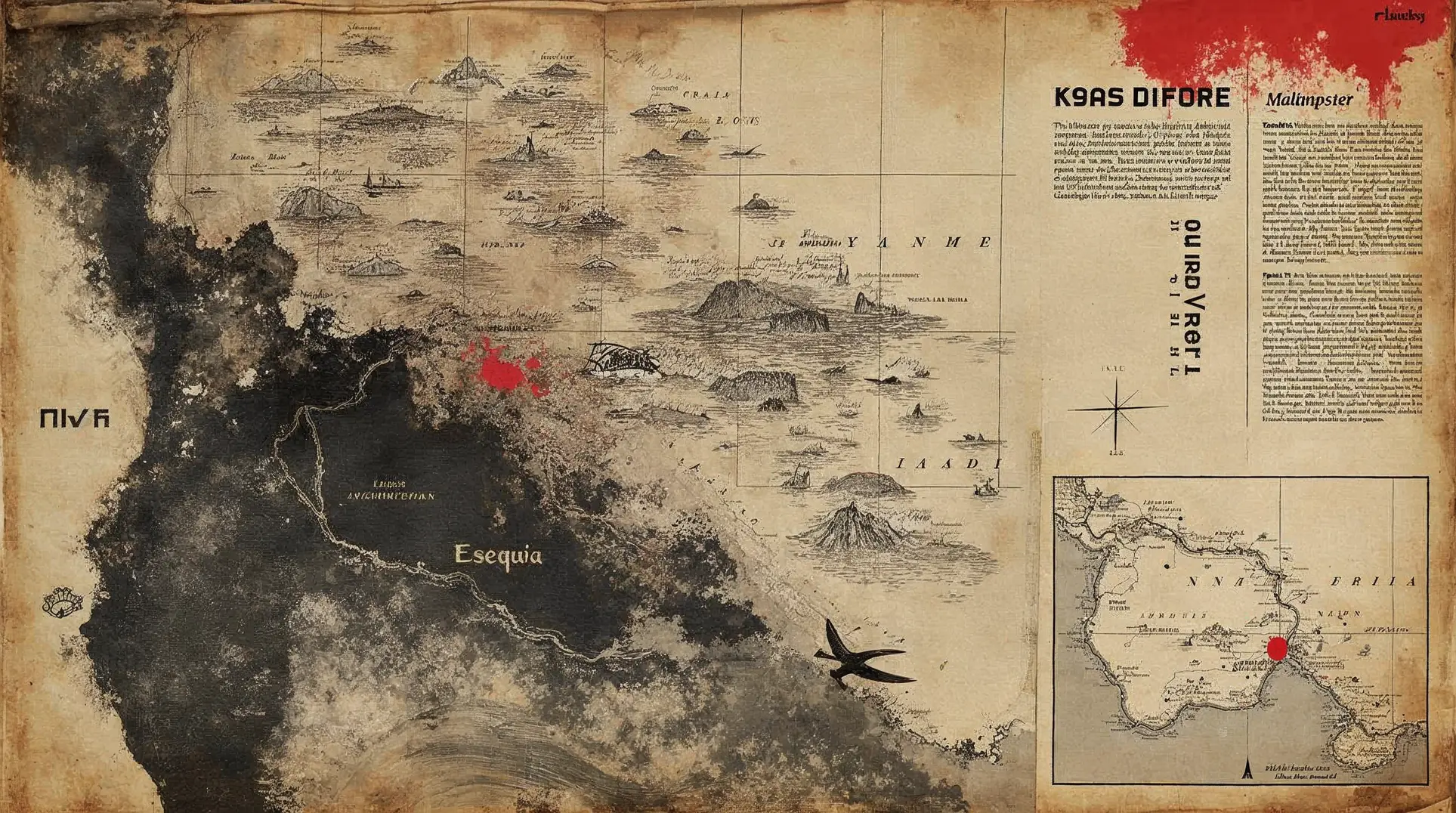
Venezuelan interim President Delcy Rodríguez arrived at the International Court of Justice in The Hague on May 10, 2026, to defend Venezuela's territorial claims over the oil-rich Essequibo region in a dispute with Guyana. The appearance marks Rodríguez's first official visit outside the Caribbean since assuming office in early 2026 following the capture of former President Nicolás Maduro and the subsequent engagement of Venezuela's interim government with international forums.
Rodríguez announced on social media Saturday that she would personally address the ICJ to uphold Venezuelan sovereignty over the disputed territory, which encompasses approximately two-thirds of Guyana's current landmass and contains significant offshore oil deposits discovered by ExxonMobil. The interim president emphasized that Venezuela rejects the ICJ's jurisdiction while simultaneously participating in oral hearings scheduled to conclude May 11.
ICJ proceedings enter critical phase
The court began hearing the merits of the case on May 4, with Guyana presenting arguments seeking confirmation of the 1899 arbitral award that established the current border. Venezuela is scheduled to present its position on May 6, arguing that the 1966 Geneva Agreement provides the sole legal framework for resolving the dispute and that the colonial-era 1899 ruling is invalid.
Venezuelan officials maintain that the Essequibo River represents the natural boundary between the two countries, rejecting the century-old arbitration Venezuela has long characterized as fraudulent. Guyana seeks ICJ validation that the 1899 border remains legally binding under international law.
The dispute has intensified significantly since ExxonMobil's discovery of massive offshore oil reserves in the region, transforming a historical territorial claim into a geopolitical flashpoint with major economic implications. The offshore fields represent potential revenue streams worth billions of dollars, raising the stakes considerably for both governments.
Members are reading: How Venezuela's international engagement shapes its legal strategy in the high-stakes Essequibo dispute
High stakes for regional energy security
The Essequibo dispute carries implications beyond bilateral relations. ExxonMobil's offshore operations have continued despite Venezuelan objections, generating revenue that has transformed Guyana's economy. Venezuela's persistent claims create legal uncertainty that could affect future investment and exploration in the contested maritime zones.
Rodríguez's appearance at The Hague demonstrates the interim government's intent to maintain Venezuela's long-standing territorial position while engaging through international legal mechanisms. The oral hearings conclude May 11, though any final ICJ ruling on the merits could take years to issue.
Subscribe to our free newsletter to unlock direct links to all sources used in this article.
We believe you deserve to verify everything we write. That's why we meticulously document every source.


