


U.S. Vice President JD Vance touched down at Emmen Air Base in Switzerland entering peace negotiations with Iran at a moment when the provisional framework agreed to last week faces immediate challenge. Iran's military claims to have re-closed the Strait of Hormuz in response to what Tehran characterizes as ceasefire violations in Lebanon, while U.S. Central Command maintains the vital waterway remains open to commercial traffic.
The Swiss talks represent a narrow 60-day window to translate the 14-point provisional agreement signed by Presidents Trump and Pezeshkian into technical implementation. The framework explicitly calls for a ceasefire on all fronts, including Lebanon, and the reopening of the Strait of Hormuz. That both conditions are now contested before technical negotiations have begun signals the fragility of the diplomatic foundation Vance must build upon.
Contradictory assessments of the strait
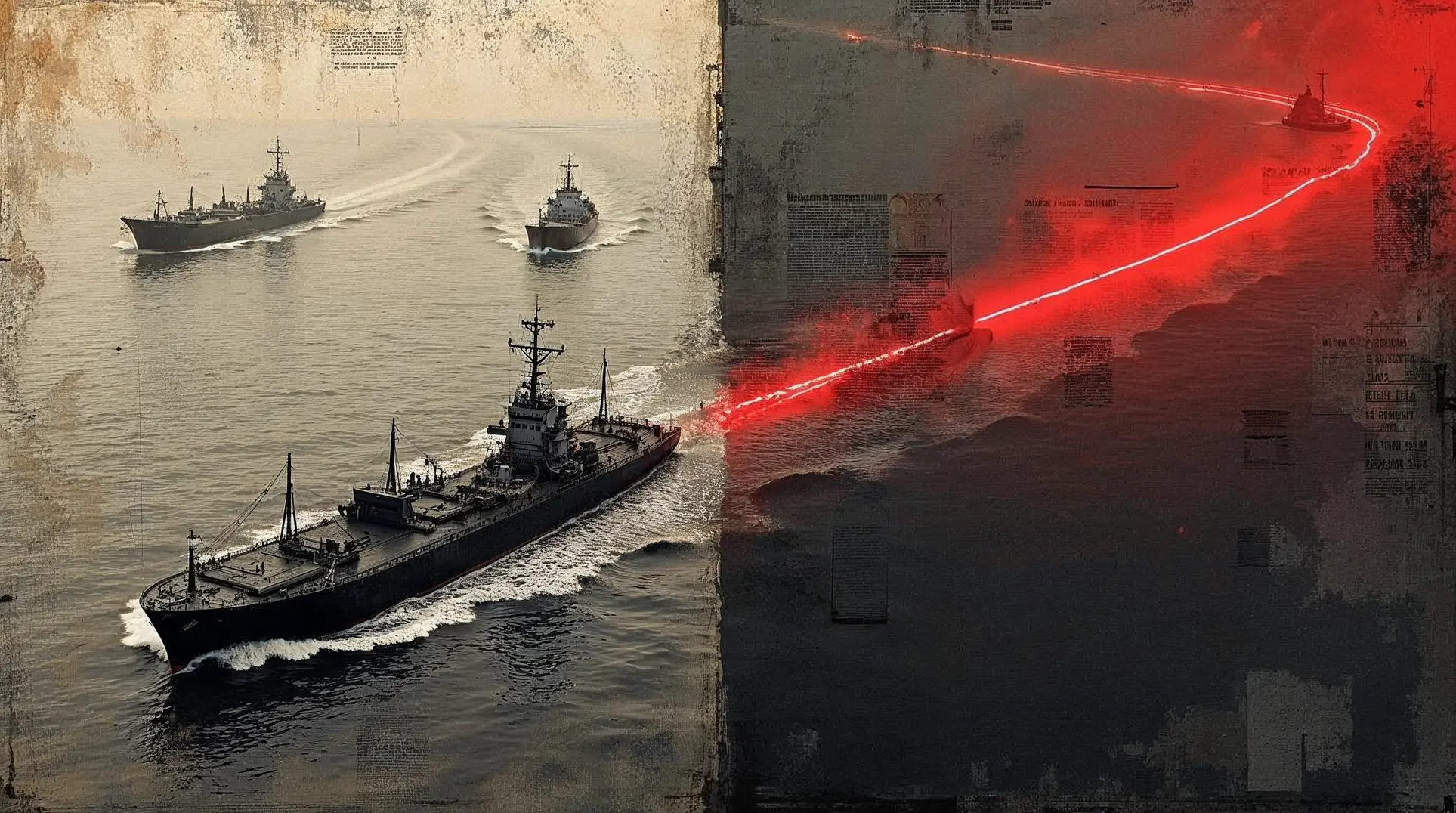
The dispute over the Strait of Hormuz—through which roughly one-fifth of global oil and significant gas supplies transit—centers on fundamentally incompatible claims. Iran's military command announced closure measures tied directly to Israeli strikes against Hezbollah positions in southern Lebanon, framing the action as enforcement of the ceasefire provisions Tehran believes Washington has failed to uphold.
U.S. Central Command's assessment that commercial shipping continues without disruption raises questions about the nature of Iran's claimed closure. Whether this represents a partial interdiction, increased harassment of vessels, or primarily rhetorical positioning remains unclear. Vance's public downplaying of the situation suggests U.S. officials view the claim as negotiating leverage rather than operational reality, though the divergent narratives complicate efforts to establish shared ground for technical talks.
The strait has historically served as Iran's most immediate form of economic leverage, given its role as a global energy chokepoint. That Tehran has invoked this mechanism before implementation discussions have commenced indicates either significant internal pressure on Iranian negotiators or a calculated effort to establish maximalist positions early in the technical phase.
Lebanon's conflict as diplomatic obstacle
Members are reading: How the proxy warfare paradox exposes structural flaws in bilateral diplomacy that neither economic incentives nor political will can overcome.
Implementation under immediate pressure
Vance's mission focuses on translating broad commitments into specific technical terms: nuclear enrichment limits, verification protocols, the mechanics of asset release, and ceasefire monitoring arrangements. Pakistan and Qatar are providing intermediary support, a diplomatic architecture that suggests both principals recognize the need for buffer communication channels.
The previous delay of the Switzerland meeting underscores the process's vulnerability to external events. With only 60 days to finalize technical details, any extended disruption or escalation in Lebanon or the Strait of Hormuz could exhaust the provisional agreement's timeline before implementation terms are settled.
The focus on nuclear limits and ceasefire mechanics reflects the interim agreement's dual-track approach: addressing Iran's nuclear program while simultaneously managing immediate regional conflicts. Whether these tracks can advance in parallel when regional violence actively contradicts one set of commitments presents the negotiators' central challenge.
The Switzerland talks open under conditions that test whether bilateral diplomacy can succeed when regional conflicts involve actors beyond direct control of either negotiating party. Vance arrives with economic incentives and political mandate but faces immediate disputes over basic facts—whether the Strait of Hormuz is closed, whether Lebanon ceasefire terms are being honored, and which party bears responsibility for violations.
The 60-day implementation window creates urgency, but also inflexibility. If the Lebanon conflict continues or the Hormuz dispute escalates, the technical negotiations may become irrelevant before they conclude. The provisional framework's viability depends not on what happens inside Swiss negotiating rooms, but on whether violence in Lebanon and shipping disruptions in the Gulf can be contained long enough for diplomacy to establish verifiable terms both sides have incentive to maintain.
Subscribe to our free newsletter to unlock direct links to all sources used in this article.
We believe you deserve to verify everything we write. That's why we meticulously document every source.


