


Key takeaways
- Flight trackers show nine to ten tankers and three Ospreys left Mildenhall on 9 November after a WSJ-reported Iran threat.
- Officials have not said what the threat was, and no public evidence identifies its source, method or target.
- Fairford rests on a prime-ministerial attribution and charges, but police found no explosives and no court has tested it.
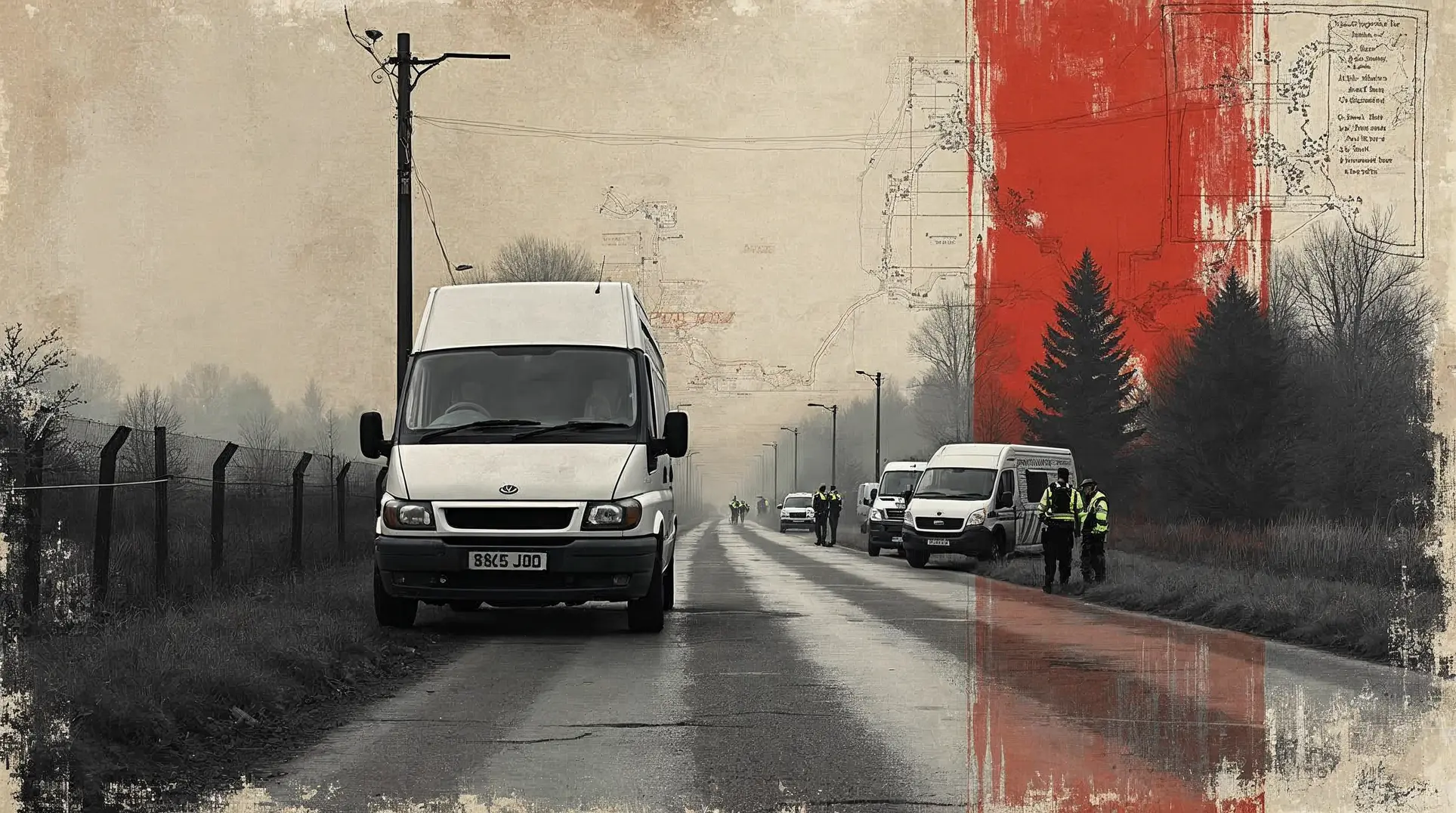
The US military moved refuelling tankers and V-22 Osprey tiltrotor aircraft out of RAF Mildenhall in Suffolk, eastern England, on Monday 9 November. The Wall Street Journal (WSJ) described the move as a response to a threat from Iran. Citing people familiar with the matter, it said US officials were still discussing the precise nature of the threat. Reuters relayed the report.
According to the WSJ, two tankers were diverted to Germany earlier on Monday and more followed later that day. Flight-tracking data puts the total at nine KC-135 tankers, according to the Glasgow Times and AeroTime, which counted two of them as transient tankers, and at 10, according to CBS News, plus three Ospreys. CBS tracked tanker destinations to Spangdahlem and Ramstein air bases in Germany, Morón in southern Spain and Glasgow Prestwick in Scotland, while CNN's own flight-tracking analysis counted 10 tankers: four to Spangdahlem, one to Ramstein, four to Morón and one to Prestwick. Sky News and NBC reported that the Ospreys went to nearby RAF Lakenheath. A US official told the WSJ that security at both bases rose to FPCON Charlie.
What officials have said
FPCON Charlie is the second-highest level in the Pentagon's five-tier force protection system. It applies when intelligence indicates that terrorist action against personnel or facilities is likely. Neither the US Air Force nor US European Command (EUCOM) has said what prompted it. They said aircraft "rotate between installations and operating locations for a variety of reasons including training and real world requirements". They added that they would not discuss movements for operational security reasons. The UK Ministry of Defence said it does not routinely comment on the activity of other nations.
Cabinet minister Lucy Powell told Sky News she could not comment on "those sort of live operations". Lord Ricketts, a former UK National Security Adviser, told BBC Radio 4 on Tuesday: "Nobody knows at this stage what this information was. I suspect part of it is an abundance of caution." No public detail identifies the source, method or target of the warning.
Not every movement is necessarily linked to it. Ada Derana reported that the aircraft that landed at Prestwick on Monday belongs to the Nebraska Air National Guard and could have been on a regular stop before heading back to base. AeroTime, citing The War Zone, reported that Lakenheath urged residents on 9 November to report suspicious activity, including unauthorised drone flights. No source connects that appeal to the threat.
Observers are reading: how the Fairford charges, the missing evidence and Iran's signalling compare with the Mildenhall warning, and what the sources cannot yet show.
Become an Observer, it's free. Get full access to all Crisis.Zone analysis, briefings and breaking coverage.
What to watch
"Effectively over" describes the conventional war. The Mildenhall move points to a separate problem: how a host nation protects high-value US aircraft against low-signature threats. Mildenhall hosts the 100th Air Refueling Wing, the only permanently based US Air Force tanker wing in Europe. No source says Iran targeted tankers specifically. This is analysis, not a finding: the move shows that US authorities took a warning seriously. It does not show an imminent attack or Iranian capability to carry one out.
The decision to disperse appears to have been made by US officials, while the House of Commons Library says operational use of UK bases is a joint decision. The MoD's refusal to comment shows who is speaking. Four things will clarify the picture: the Fairford court process, whether US officials ever say what the Mildenhall threat was, whether the tankers return, and whether the Qatar-mediated contacts, which Tehran denies are talks, hold.
Become an Observer (it's free) to unlock direct links to all sources used in this article.
We believe you deserve to verify everything we write. That's why we meticulously document every source.


