


Protest organisers give Zelensky until 24 July to reinstate Fedorov and remove Syrskyi or face nightly rallies
Protest organisers in Kyiv have given President Volodymyr Zelensky until Friday, 24 July, to reinstate former defence minister Mykhailo Fedorov and dismiss Commander-in-Chief Oleksandr Syrskyi, or face open-ended nightly demonstrations starting 27 July. The ultimatum, issued by veteran organiser Dmytro Koziatynskyi on Sunday, followed the fourth consecutive day of protests that drew thousands to Kyiv's Ivan Franko Theatre and thousands more across at least a dozen cities, including Odesa, Kharkiv and Lviv.
"President created this crisis and must solve it," Koziatynskyi said. "If by Friday adequate decisions don't appear, I call for an indefinite protest." The demonstrations mark only the second time since Russia's 2022 invasion that thousands have taken to Ukrainian streets — the first came a year ago, over Zelensky's move against anti-corruption bodies. This time the target is Ukraine's military command structure itself, at a moment when Zelensky can least afford institutional rupture.
Weekend consultations, no decision yet
Zelensky spent Saturday in extended talks with both Fedorov and Syrskyi, telling the nation Sunday evening that "decisions regarding the army will be worked out" and that he "hears what people are saying." He has scheduled "key conversations" with top security officials for Monday, 20 July. Multiple outlets — the Financial Times, New York Times and NBC News — report Zelensky is actively weighing Syrskyi's removal, contingent on finding a successor who can hold the 1,200km frontline. FT sources say Zelensky's recent meetings with commanders from at least six corps, including the 8th Air Assault and 10th Army, doubled as informal interviews for the post.
The dispute traces back to the cabinet reshuffle that removed Fedorov after just six months as defence minister, part of a broader overhaul Zelensky initiated alongside the departure of Prime Minister Yulia Svyrydenko. What began as a routine personnel change has become the most acute internal crisis of Zelensky's wartime presidency.
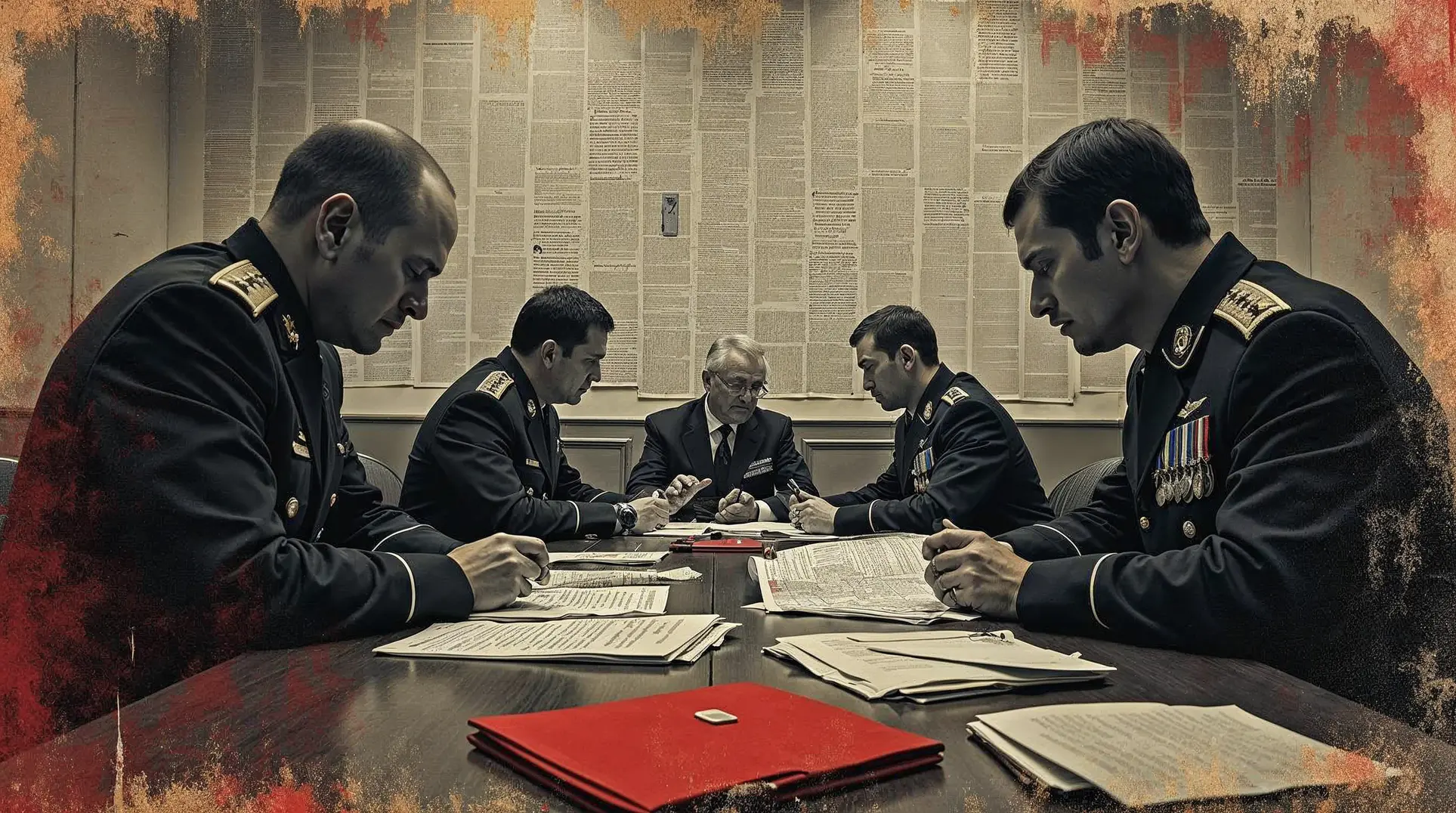
Observers are reading: why the officer most protesters want to replace Syrskyi may be positioning himself, not being drafted.
Become an Observer — it's free. Get full access to all Crisis.Zone analysis, briefings and breaking coverage.
The rift beneath the ultimatum
Fedorov, 35, has no military background but built his reputation on drone procurement and asymmetric-strike doctrine — the same modernisation drive behind Germany's recent €90 million order for 50,000 AI-guided Ukrainian-made drones. He accuses Syrskyi, 60, a Soviet-trained general credited with defending Kyiv but dogged by high-casualty tactics, of blocking his reforms. "Instead of working out how to asymmetrically defeat Russia, he has worked out how to split the country," Fedorov said. Protesters' placards — "Fedorov = more Russian deaths, Syrskyi = more Ukrainian deaths" — capture the generational divide now running through Ukraine's war effort.
Russia's largest ballistic missile barrage in weeks struck Kyiv the night the protests peaked, killing at least six; Ukraine answered with roughly 400 drones against Moscow. The war has not paused for the argument over how to fight it — if anything, Moscow's timing suggests it is watching Kyiv's internal strain as closely as anyone.
Become an Observer — it's free — to unlock direct links to all sources used in this article.
We believe you deserve to verify everything we write. That's why we meticulously document every source.


