


Key takeaways
- France deployed 70,000 police and gendarmes on October 24, and nearly 1,000 people were detained nationwide during the protests.
- Rerouted marches kept damage away from city centres, but clashes still erupted at end points in Paris, Marseille and other cities.
- Turnout figures diverge sharply: the Interior Ministry counted 410,000 nationwide, while the CGT union federation claimed about 800,000.
- French 10-year bond yields passed 5.0% for the first time since 2002, narrowing the government's fiscal room.
- The CGT has called for strikes to spread from November 5, a date Jean-Luc Mélenchon presents as the start of a general strike.
France deployed 70,000 police and gendarmes on Saturday, October 24, for a nationwide day of protest, and nearly 1,000 people were detained by the end of the day. That was 10,000 more officers than on October 17, when protests and riots brought about 550,000 people onto the streets, according to the Interior Ministry. In Paris, more than 20 metro stations closed. The Louvre, the Musée d'Orsay, the Grand Palais and the Art Basel fair shut their doors.
The marches were largely peaceful. Trouble came at dusk, as rallies reached their end points. Interior Minister Laurent Nuñez credited the operation to one change: "What changed was anticipation." Turnout is disputed. The Interior Ministry counted 410,000 people nationwide and 110,000 in Paris. The CGT (Confédération générale du travail) union federation claimed about 800,000 nationwide and 250,000 in Paris.
Rerouted marches, familiar nightfall clashes
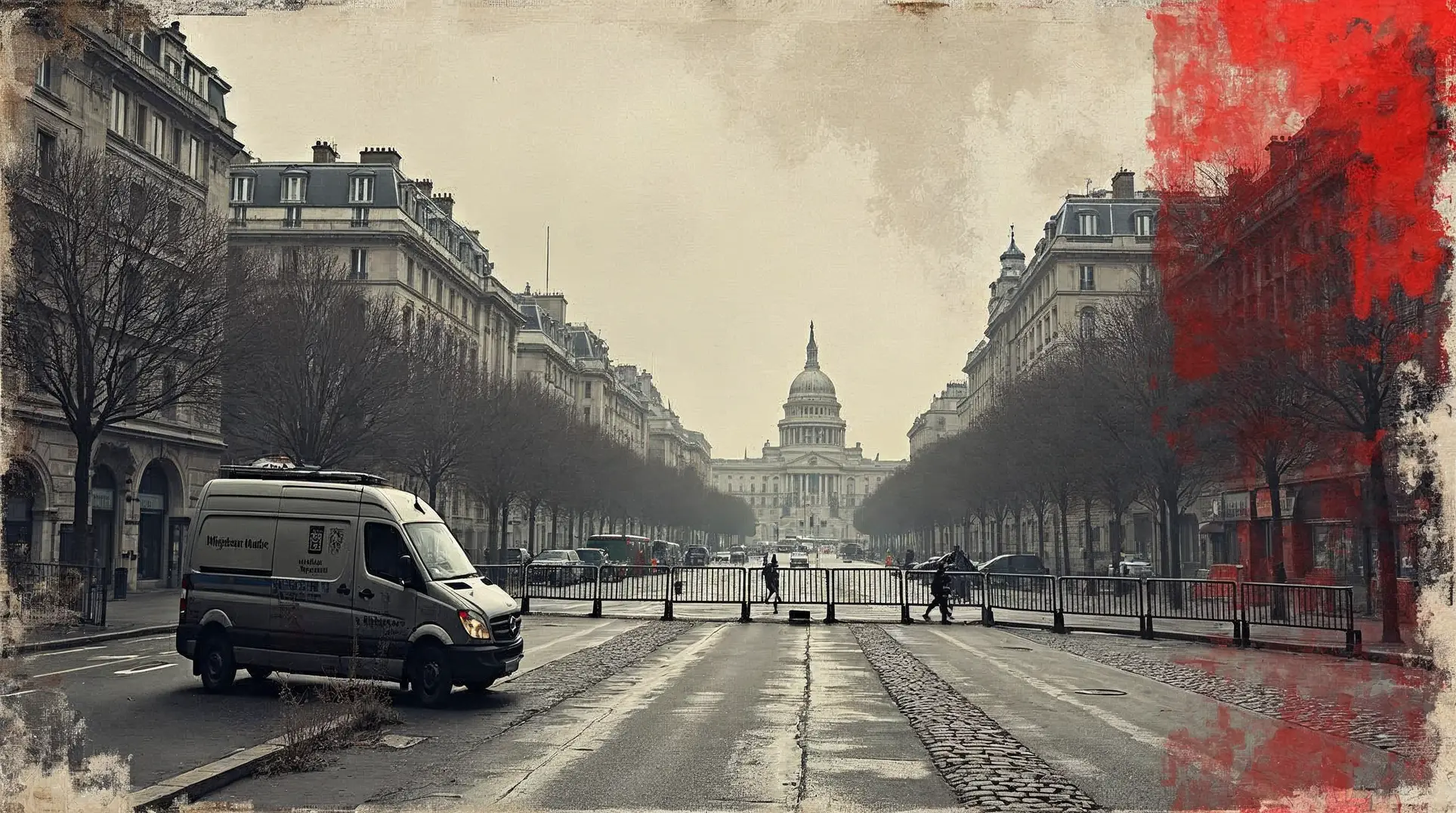
The state moved the protests before they began. It banned the central Paris route from Bastille to Nation. The CGT and Force Ouvrière (FO) unions agreed under protest to march along peripheral routes, from Porte d'Italie to Porte de Vincennes. Paris police ran more than 3,000 stop-and-searches, which produced 65 arrests. Nationwide, more than 135 people were arrested pre-emptively during morning bag checks. Officers seized weapons including metal balls, lead pellets, fireworks, slingshots, steel balls, improvised weapons, a katana and airsoft weapons, Interior Minister Laurent Nuñez said. In Orléans, 11,000 people by the police count, and 26,000 by the organisers' count, demonstrated peacefully outside the congress of Marine Le Pen's National Rally (RN).
At Porte de Vincennes, police used tear gas, stun grenades and water cannons against a bloc of about 500 hooded youths. Car dealerships on Cours de Vincennes had their windows smashed. In Marseille, near Porte d'Aix, demonstrators lit rubbish barricades, threw stones and looted shops, including two jewellery stores and a supermarket. Clashes also broke out in Lyon, Bordeaux, Lille, Nantes, Grenoble and Rennes. In Toulouse, a 20-year-old man suffered severed fingers. Another person suffered serious trauma in Clermont-Ferrand.
The movement began in mid-September with high school walkouts in Créteil over crumbling buildings, teacher shortages and the Parcoursup university admissions portal. It has since widened to inflation and fuel prices. Eva Ikhlef, a 19-year-old student in Marseille, said: "The people criticize us when things get broken. But it is only when things get broken that we get the attention of the authorities."
Observers are reading: how peripheral containment, bond-market stress and Macron's final year interact, and what that means for the executive's room to manoeuvre.
Become an Observer, it's free. Get full access to all Crisis.Zone analysis, briefings and breaking coverage.
The next date is November 5
According to Boursorama, Jean-Luc Mélenchon of La France Insoumise (LFI) said a general strike was coming from November 5, at the call of CGT leader Sophie Binet. Mélenchon denounced the route changes on Saturday: "There really is a deliberate attempt to provoke... A general strike looms over the government for the 5th of November."
Saturday showed what a 70,000-strong deployment can do. It kept most commercial districts intact and, in Nuñez's account, spared public buildings. It did not address the grievances that brought students from Créteil and workers from across the country into the same streets. Le Pen opened her campaign in Orléans the same weekend, and the executive is entering the pre-election period with its tools largely confined to policing.
Security surges buy operational time. Whether they buy anything more will depend on decisions the government has not yet taken before November 5.
Become an Observer (it's free) to unlock direct links to all sources used in this article.
We believe you deserve to verify everything we write. That's why we meticulously document every source.


