


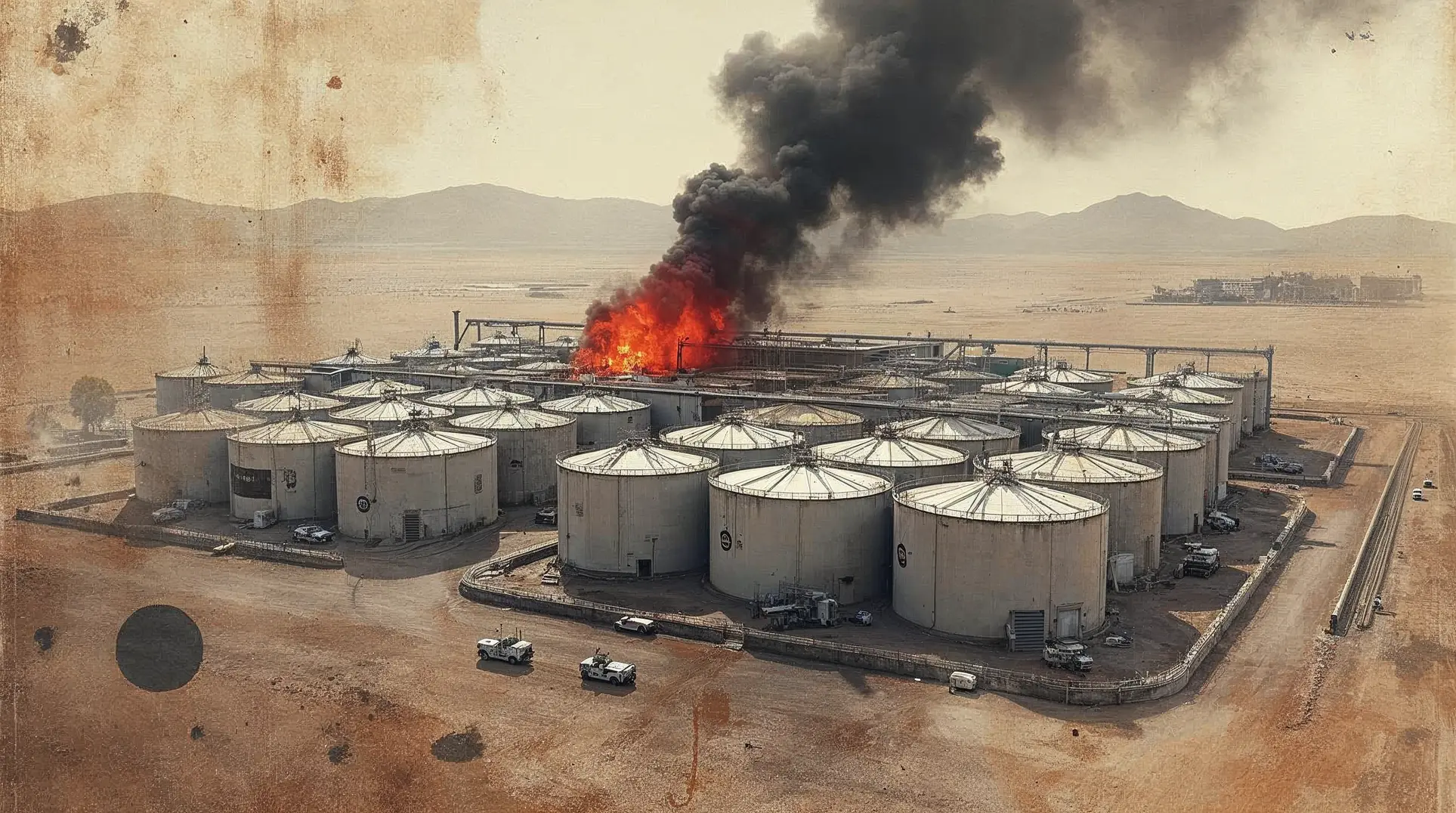
The United Arab Emirates temporarily shut down its airspace on Tuesday, March 17, 2026, following a new wave of Iranian missile and drone attacks that triggered air defense interceptions over Dubai and ignited a fire at an oil tank farm in Fujairah. Authorities reopened the airspace shortly after confirming stabilization, though missile warning alerts were issued across Dubai.
Explosions were reported over Dubai as UAE military air defenses engaged incoming projectiles. The drone strike on Fujairah's oil tank farm caused a fire but no reported injuries, according to initial reports. Fujairah serves as a critical oil export hub that bypasses the Strait of Hormuz, where Iranian forces have intensified maritime attacks since early March.
Escalating regional conflict
The attacks coincide with Israel's announcement of "wide-scale strikes" across Tehran and intensified operations against Hezbollah in Lebanon. This represents a significant escalation in the ongoing conflict between the US and Israel against Iran that began February 28, 2026. Regional spillover effects include a Monday strike on the US Embassy in Riyadh and a Sunday attack on a Bahrain desalination plant.
Since February 28, Iran has launched hundreds of projectiles at the UAE. Reports indicate varying tallies: one account states 285 ballistic missiles, 1,567 drones, and 15 cruise missiles resulting in 7 deaths and 145 injuries. Another reports 186 ballistic missiles (172 intercepted) and 812 drones (57 impacts), causing 3 deaths and 70 injuries. Previous attacks have targeted Fujairah's port and Dubai's international airport, disrupting flights and oil loading operations.
Members are reading: How the UAE's position as a non-combatant ally shifts as Iran targets alternative energy routes.
Immediate impact assessment
The temporary airspace closure disrupted flight operations at major UAE hubs, though authorities moved quickly to restore normal traffic after confirming threat mitigation. The incident underscores the vulnerability of civilian infrastructure in a conflict that has expanded well beyond initial combatants.
Iran has consistently argued that US military bases in Gulf countries make those states legitimate targets, a position that places the UAE and other regional allies in an increasingly precarious position. The conflict's trajectory now depends on whether Gulf states can maintain defensive postures without triggering the offensive operations some officials reportedly consider.
Subscribe to our free newsletter to unlock direct links to all sources used in this article.
We believe you deserve to verify everything we write. That's why we meticulously document every source.


