


White House framing as counterterrorism obscures escalation from sanctions to kinetic enforcement, raising act-of-war debate in Congress
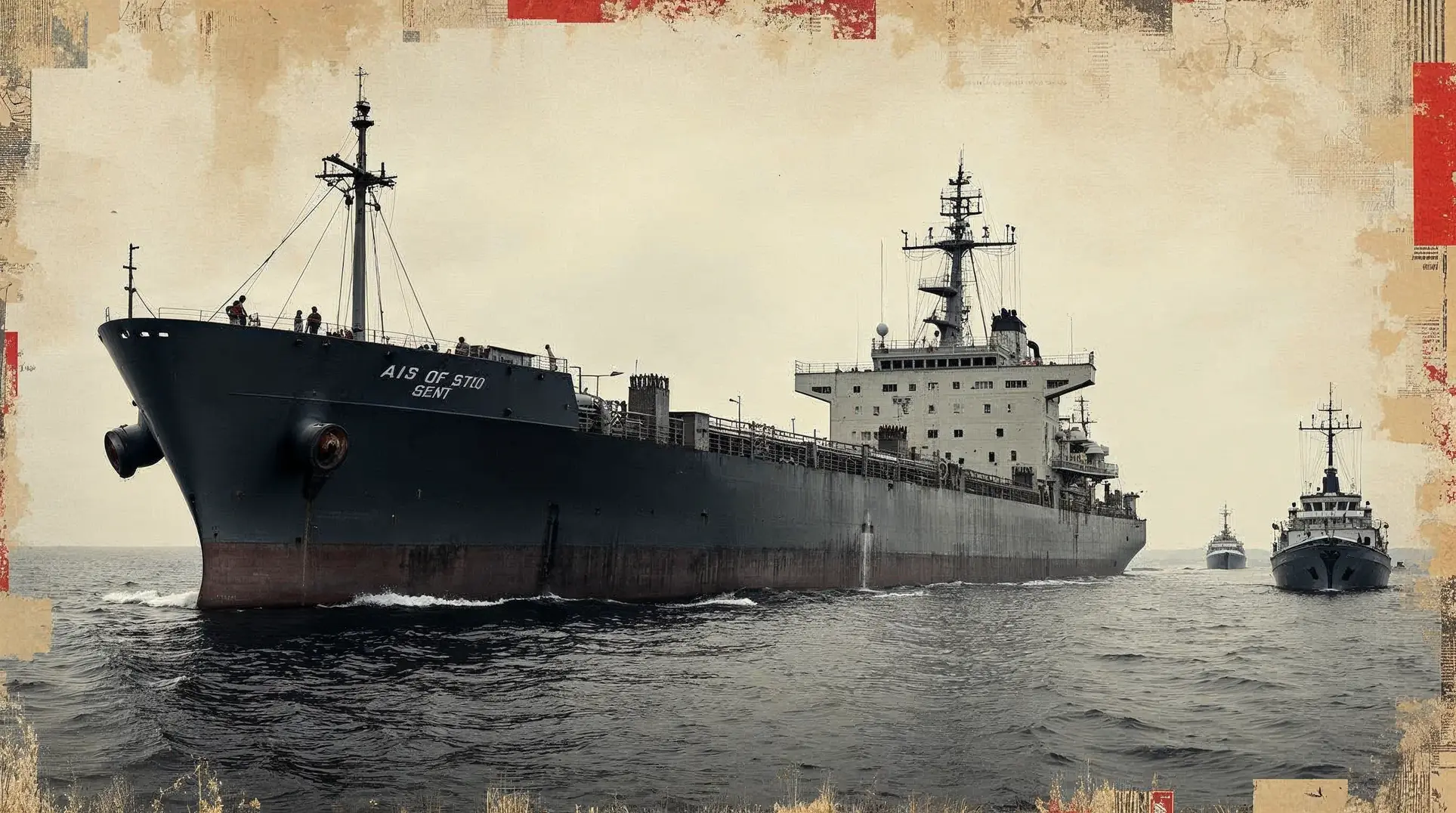
On December 16, 2025, U.S. President Donald Trump ordered a "total and complete" blockade of all U.S.-sanctioned oil tankers entering or leaving Venezuela, targeting the primary revenue source of the Maduro government. Announced via Truth Social, the directive declared Venezuela's regime a "foreign terrorist organization" and framed the operation as a response to drug trafficking, terrorism, and human trafficking. Yet the legal instrument, enforcement mechanism, and jurisdictional basis for physically stopping vessels in international waters remain undefined, opening a widening gap between the administration's public posture and the legal thresholds that separate economic sanctions from acts of war.
The blockade order follows a six-week buildup in the Caribbean that has moved Washington from financial pressure to kinetic enforcement. That transition—driven by military deployments, vessel seizures, and lethal strikes on civilian boats—now places U.S. policy at a crossroads: the more effectively the blockade chokes Maduro's oil revenue, the more it resembles an undeclared naval war, with all the escalatory dynamics that entails.
From sanctions to interdiction
The shift began on December 10, when U.S. forces seized the sanctioned tanker Skipper off Venezuela's coast. The vessel, carrying an estimated 1.8 million barrels of crude, had been sanctioned previously and was allegedly used to move Venezuelan and Iranian oil through complex transshipment schemes. The seizure was the first physical capture of a sanctioned tanker in Venezuelan waters since the 2019 energy sanctions regime pushed Caracas into reliance on a "shadow fleet" of spoofing-enabled, false-flagged vessels operating beyond conventional enforcement reach.
By mid-December, the U.S. had surged the aircraft carrier USS Gerald R. Ford and nearly a dozen warships into the Caribbean, forming an arc offshore with over 10,000 personnel at sea. The carrier strike group includes destroyers, cruisers, amphibious ships, special operations support, and maritime patrol aircraft—a posture sufficient for strikes and interdiction, though insufficient for a full-scale invasion according to CSIS analysis. Since September 2025, the administration has conducted lethal strikes on alleged drug-smuggling vessels in the Caribbean and Eastern Pacific, killing at least 95 people in 25 known attacks, according to reporting by NPR and Newsweek. No public evidence has been provided that the destroyed vessels were carrying narcotics.
Trump has stated that Nicolás Maduro's "days are numbered" and has not ruled out ground operations. White House Chief of Staff Susie Wiles told Vanity Fair that any land operation would require congressional authorization: "If he were to authorize some activity on land, then it's war, then (we'd need) Congress."
Members are reading: How the legal framing of counterterrorism masks a de facto naval blockade, creating escalation risks the administration cannot control.
Narrowing space between pressure and war
The blockade accelerates a dynamic already visible in the Caribbean buildup and boat strikes: Washington is compressing the space between economic coercion and military action, narrowing off-ramps and increasing the likelihood of miscalculation. Venezuela has already launched a massive mobilization in response to the U.S. naval presence, raising the risk of maritime harassment, asymmetric responses, or incidents involving civilian shipping. Each interdiction raises the stakes; each seizure invites retaliation or legal challenge in international forums.
The paradox is structural: a blockade effective enough to cut Maduro's oil revenue becomes, by virtue of that effectiveness, an act of war under customary international law—regardless of how it is labeled. The administration's reliance on counterterrorism framing cannot indefinitely substitute for the congressional authorization and coalition-building that sustained prior U.S. interventions in the region. What remains unclear is whether the administration intends to sustain the blockade at scale, risking a prolonged quasi-war footing, or whether the order is designed primarily as signal and leverage. Either way, the shift from sanctions to interdiction has moved U.S. policy into a zone where the distinction between coercion and conflict collapses, and the risk of unintended escalation grows with each hull stopped at sea.
Subscribe to our free newsletter to unlock direct links to all sources used in this article.
We believe you deserve to verify everything we write. That's why we meticulously document every source.


