


President Donald Trump convened his senior national security team at the White House Monday evening to discuss Venezuela policy, hours after confirming he had recently spoken with Venezuelan President Nicolás Maduro. The 5 p.m. Oval Office meeting brought together Defense Secretary Pete Hegseth, Joint Chiefs Chairman Gen. Dan Caine, Secretary of State Marco Rubio, Chief of Staff Susie Wiles, and Deputy Chief of Staff Stephen Miller—a configuration that signals both military options and diplomatic calculations remain in play. The session comes as Caracas prepares to investigate U.S. lethal strikes on suspected drug-trafficking vessels, operations that have killed more than 80 people since early September, according to compiled reporting.
Venezuela's National Assembly announced it will launch a formal inquiry into the boat strikes, which have drawn sharp criticism from human rights advocates over reports of an alleged "double-tap" strike that killed survivors. The administration maintains it is targeting narco-traffickers under existing counter-drug authorities, but the legal basis for its campaign is narrower—and more contested—than its rhetoric suggests, raising fundamental questions about due process, proportionality, and whether a drug interdiction mission has morphed into coercive pressure on a sovereign state.
From maritime strikes to land operations
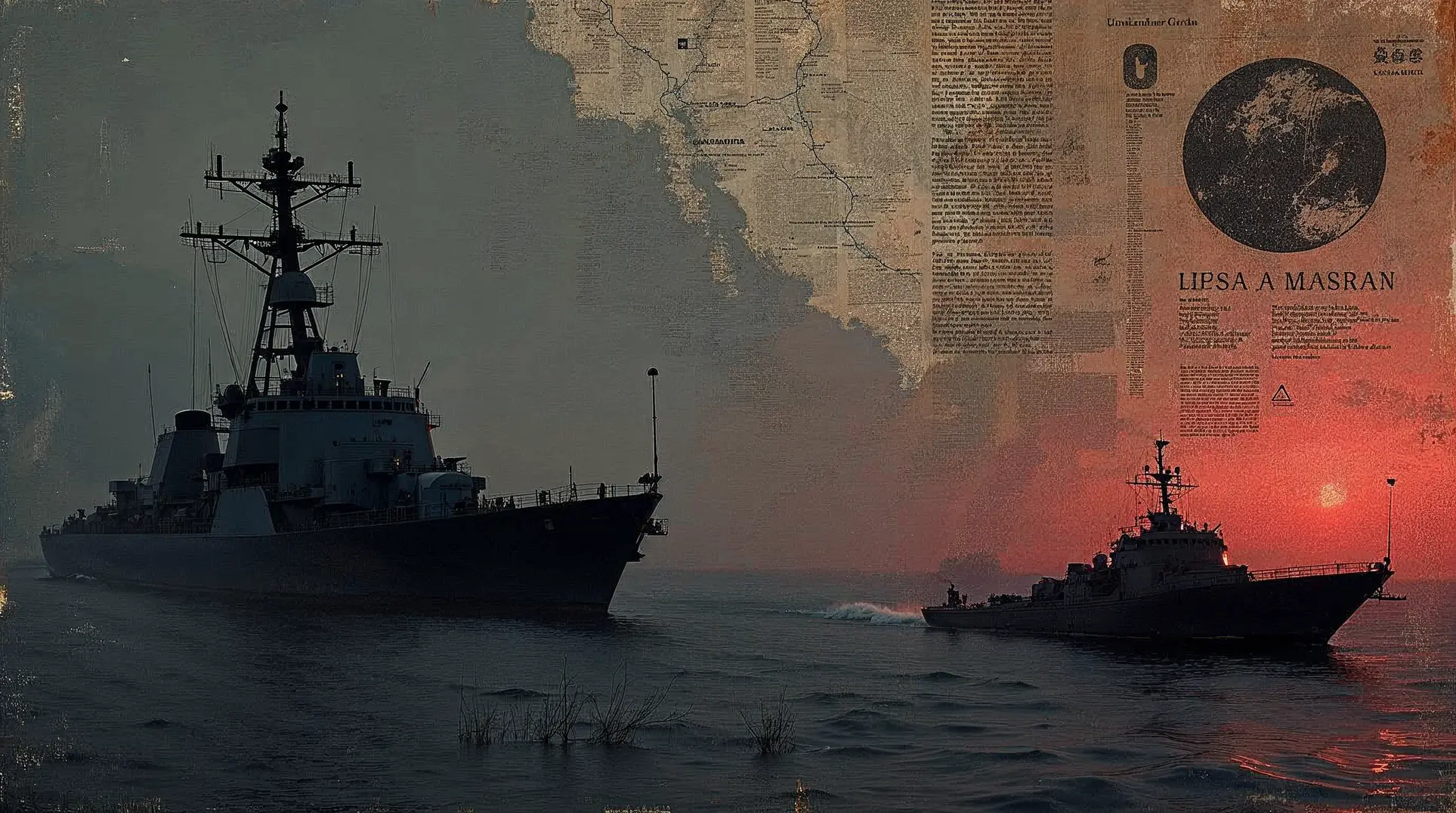
Operation Southern Spear has assembled more than a dozen U.S. warships and roughly 15,000 personnel in the Caribbean and Eastern Pacific, including the USS Gerald R. Ford carrier strike group and ten F-35 stealth fighters stationed in Puerto Rico. The maritime strike campaign began in early September and has expanded geographically and in tempo through the fall, with casualty figures climbing steadily. The Department of Justice Office of Legal Counsel issued an opinion authorizing lethal force against suspected drug vessels at sea, but CNN reporting to lawmakers confirms that opinion does not cover strikes inside Venezuelan territory.
Trump has publicly signaled that the campaign will soon move ashore. "We'll be starting to stop them by land also," he told service members over Thanksgiving. "The land is easier… very soon." On November 29, he declared Venezuelan airspace "closed in its entirety," warning pilots, airlines, and traffickers to avoid the country's sovereign airspace—a pronouncement Caracas denounced as a "colonialist threat." Republican Sen. Markwayne Mullin has said the United States offered Maduro an opportunity to leave for Russia or another destination, underscoring the administration's dual-track posture of pressure and potential negotiation.
Members are reading: Why the legal basis for maritime strikes does not extend to land operations, and what "dual-use" targeting inside Venezuela would mean for international law.
Escalation risk in a narrow margin
The human cost of the maritime campaign is already substantial and documented. The legal justification for expanding it to land is unsettled. The political objective—whether genuine counter-narcotics interdiction or coercive pressure on Maduro's government—remains ambiguous, undermined by simultaneous signals of military escalation and diplomatic outreach. Venezuela has responded predictably, mobilizing defensive preparations and framing U.S. actions as interventionist aggression. In such an environment, close-proximity air and naval operations carry high risk of misidentification, accident, or deliberate escalation.
The institutional path forward lies in transparency and accountability, not further militarization. Congress has been sidelined in war powers deliberations; the legal opinions governing lethal force have not been made public; and the operational details of strikes that have killed more than eighty people remain opaque. If the administration believes its campaign is legally sound and operationally justified, it should subject that belief to legislative and judicial scrutiny rather than rely on classified legal memos and expansive readings of executive authority. The stakes are not only regional stability and U.S. legal precedent, but the lives of those caught—often without due process or adequate identification—in the crossfire of a counter-drug mission that increasingly resembles something else.
Subscribe to our free newsletter to unlock direct links to all sources used in this article.
We believe you deserve to verify everything we write. That's why we meticulously document every source.


