


The signing ceremony in neutral territory on December 27, 2025, was brief and formal. Thai Defence Minister Natthaphon Narkphanit and Cambodian Defence Minister Tea Seiha exchanged documents that brought a noon ceasefire to a border conflict that had claimed at least 101 lives over 20 days. The agreement prohibits further military movements, bans military airspace violations, and conditionally promises the return of 18 Cambodian prisoners of war if the truce holds for 72 hours.
Yet the measured optimism in both capitals reflects hard-earned realism. This is not the first ceasefire between Thailand and Cambodia, and the collapse of previous agreements—including a U.S.-brokered truce in July and the October Kuala Lumpur Declaration—demonstrates that signing documents is far easier than enforcing them. With over 500,000 people displaced and communities on both sides demanding accountability, the structural dynamics that drive this cyclical conflict remain largely unaddressed.
The December escalation
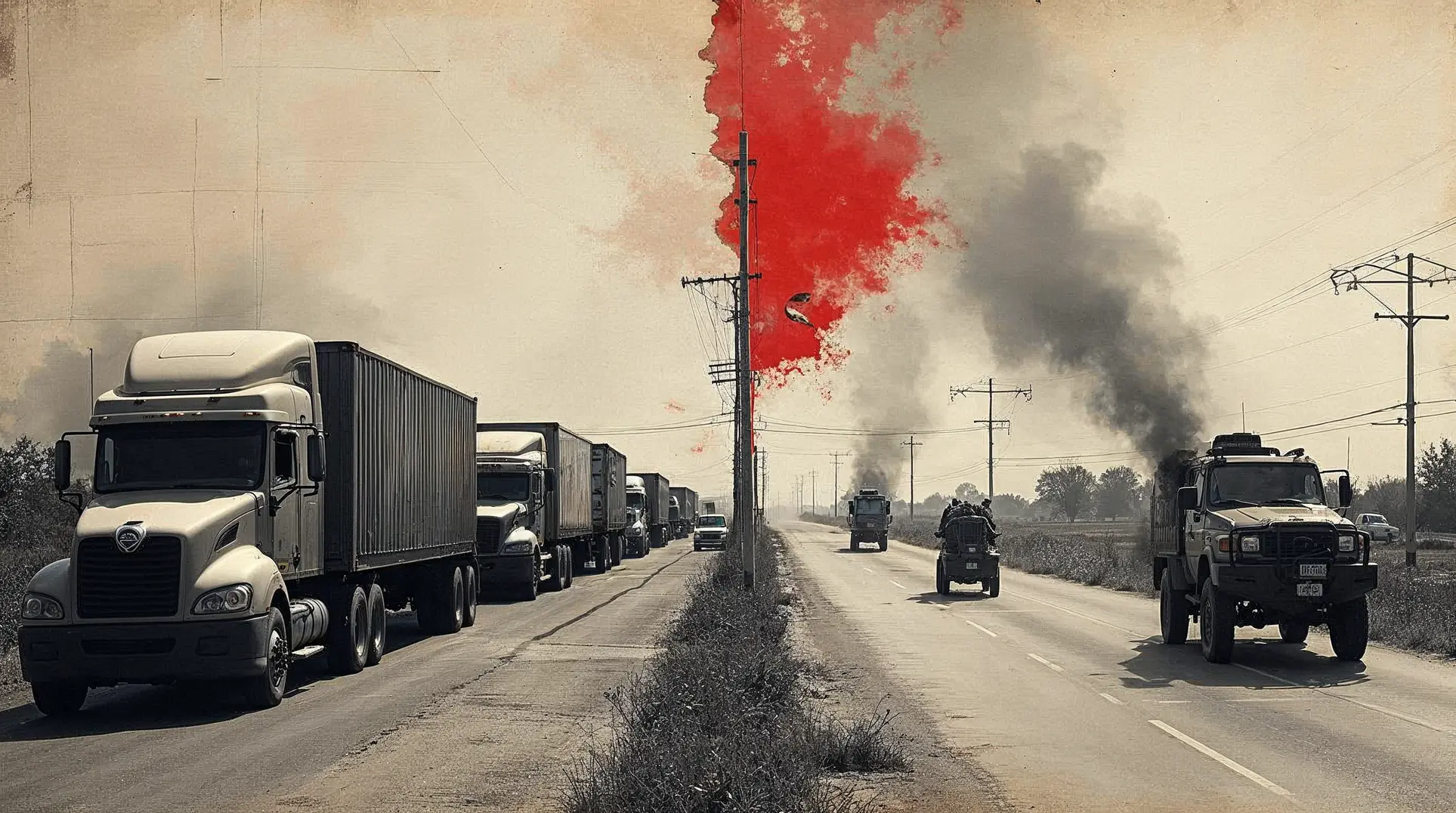
The fighting that resumed in early December represented the worst violence along the Thai-Cambodian border in years. Thai F-16 airstrikes targeted positions in Cambodia's Banteay Meanchey province, while Cambodian forces responded with rocket and artillery barrages that reached civilian areas kilometers from the disputed zone. Both governments accused the other of initiating hostilities and deliberately targeting non-combatants—accusations that quickly became self-reinforcing justifications for escalation.
The deadly clashes forced border village evacuations and created a humanitarian crisis that neither Bangkok nor Phnom Penh could ignore. Thai Prime Minister Anutin Charnvirakul faced domestic pressure to demonstrate strength while simultaneously managing economic relationships worth billions in bilateral trade. Cambodian Prime Minister Hun Manet, governing in the shadow of his father's legacy, needed to project sovereignty over contested territory without jeopardizing development partnerships.
The intensity of the December fighting revealed how quickly incidents can spiral in an environment where verification mechanisms are absent and nationalist sentiment runs high. What began as accusations of border incursions became full-scale combat operations involving air power and heavy artillery—a pattern both countries have experienced repeatedly but seemingly cannot break.
Mediation's limited reach
Diplomatic efforts ran parallel to the fighting, creating the paradoxical spectacle of ASEAN meetings discussing observer deployments while airstrikes continued. Malaysian Prime Minister Anwar Ibrahim leveraged Malaysia's ASEAN chair position to facilitate dialogue, while both the United States and China offered mediation support. Former President Donald Trump and Secretary of State Marco Rubio engaged directly with both governments, attempting to recreate the success of the July ceasefire.
Yet these external interventions, regardless of geopolitical weight, could not overcome the fundamental verification gap that fuels the conflict cycle. The Kuala Lumpur Declaration established terms for an ASEAN Observer Team, but the mechanism was not operationally deployed before fighting resumed. Without credible, on-the-ground monitoring accepted by both sides, each accusation of ceasefire violation becomes a matter of competing national narratives rather than verifiable fact.
Members are reading: Why billions in bilateral trade fails to prevent escalation, and the structural gap in ASEAN's integration model.
The verification imperative
The success of the December 27 ceasefire depends less on the commitment of Thai Defence Minister Narkphanit and Cambodian Defence Minister Tea Seiha than on the operational deployment of credible monitoring. Both governments have agreed in principle to temporary observation arrangements, but the details—command structure, rules of engagement, investigative authority, reporting chains—remain contested. Previous agreements have foundered on precisely these implementation questions.
The 72-hour conditional release of Cambodian POWs represents a confidence-building measure, but one that highlights the shallow reservoir of trust. In an environment where verification is robust, prisoner releases would be automatic humanitarian obligations rather than conditional diplomatic bargaining chips. The framing reveals how far both sides remain from the institutional trust necessary for durable peace.
Fragile foundations
The December 27 ceasefire represents a necessary but insufficient step toward ending the Thailand-Cambodia border conflict. It creates space for humanitarian relief, allows displaced populations to begin tentative returns, and provides political cover for leaders in both capitals to pursue de-escalation. But the historical pattern suggests that agreement documents matter far less than the verification mechanisms that implement them.
The real test begins now: whether the ASEAN Observer Team can be deployed with sufficient authority and acceptance to investigate the inevitable next incident, and whether Prime Ministers Anutin and Hun Maet can withstand domestic nationalist pressure when that investigation produces uncomfortable findings. Economic interdependence creates incentives for peace, but without credible institutions to manage sovereignty disputes, those incentives remain vulnerable to the next accusation, the next casualty, and the next cycle of escalation. The structure of the conflict remains unchanged; only the timeline has been reset.
Subscribe to our free newsletter to unlock direct links to all sources used in this article.
We believe you deserve to verify everything we write. That's why we meticulously document every source.


