


In November 2025, Taliban authorities accused Pakistan of conducting airstrikes in Afghanistan's Khost province that killed at least ten civilians—nine children and one woman—marking the most acute humanitarian flashpoint since October's week-long cross-border escalation. Taliban spokesman Zabihullah Mujahid stated on X that "Pakistani invading forces bombed the house of a local civilian resident" in Khost's Gurbuz district, killing five boys, four girls, and one woman. The strikes reportedly occurred one day after a suicide attack on a security compound in Pakistan's Peshawar city. Additional Taliban reports alleged strikes in Kunar and Paktika provinces injured four more people. Pakistan did not immediately comment on the allegations.
The incident crystallizes a security dilemma that Qatar and Turkey mediation has managed but cannot resolve: Pakistan asserts necessity to strike Tehrik-i-Taliban Pakistan (TTP) militants operating from Afghan soil when Kabul will not or cannot act, while Taliban authorities condemn cross-border strikes as sovereignty violations that kill civilians and risk wider war. Each side frames its approach as defensive. The net effect is an escalatory cycle punctuated by short ceasefires, constrained but not halted by economic interdependence—trade corridors, border markets, and refugee flows that impose real costs when disrupted but do not eliminate the underlying sanctuary dispute.
October escalation and ceasefire fragility
The Khost allegations followed a compressed October escalation cycle. On October 9, Pakistani airstrikes reportedly targeted TTP leadership in Kabul, Khost, Jalalabad, and Paktika, including TTP chief Noor Wali Mehsud; TTP later released unverified audio and video claiming Mehsud survived. The night of October 11–12 saw Afghan Taliban attacks on Pakistani military posts along the 2,640-kilometer Durand Line border that Afghanistan has never formally recognized. Pakistan continued offensives despite Taliban ceasefire calls; local reports alleged Pakistani drone strikes in Kandahar and Helmand on October 12 killed nineteen Taliban fighters, though Taliban officials did not confirm those figures.
Heavy clashes around Spin Boldak on October 15 produced civilian casualties. Pakistan announced further "precision" strikes inside Afghanistan. On October 19, Qatar announced a ceasefire agreed by both sides after mediation by Qatar and Turkey (Turkey-Qatar mediation efforts). The United Nations Assistance Mission in Afghanistan (UNAMA) later reported thirty-seven Afghan civilian deaths and 425 injuries linked to the week-long cross-border violence—a verified anchor amid competing narratives.
The ceasefire proved fragile. After a forty-eight-hour window set by Pakistan, airstrikes hit Paktika; Taliban authorities alleged civilian casualties including athletes, while Pakistan said it struck the Hafiz Gul Bahadur Group, a TTP faction. The November Khost strikes, allegedly killing nine children, followed that pattern: tactical pauses punctuated by resumed operations tied to domestic pressure in Pakistan. Mid-November operations in Khyber Pakhtunkhwa reportedly killed TTP-linked militants, signaling sustained internal demands for cross-border action.
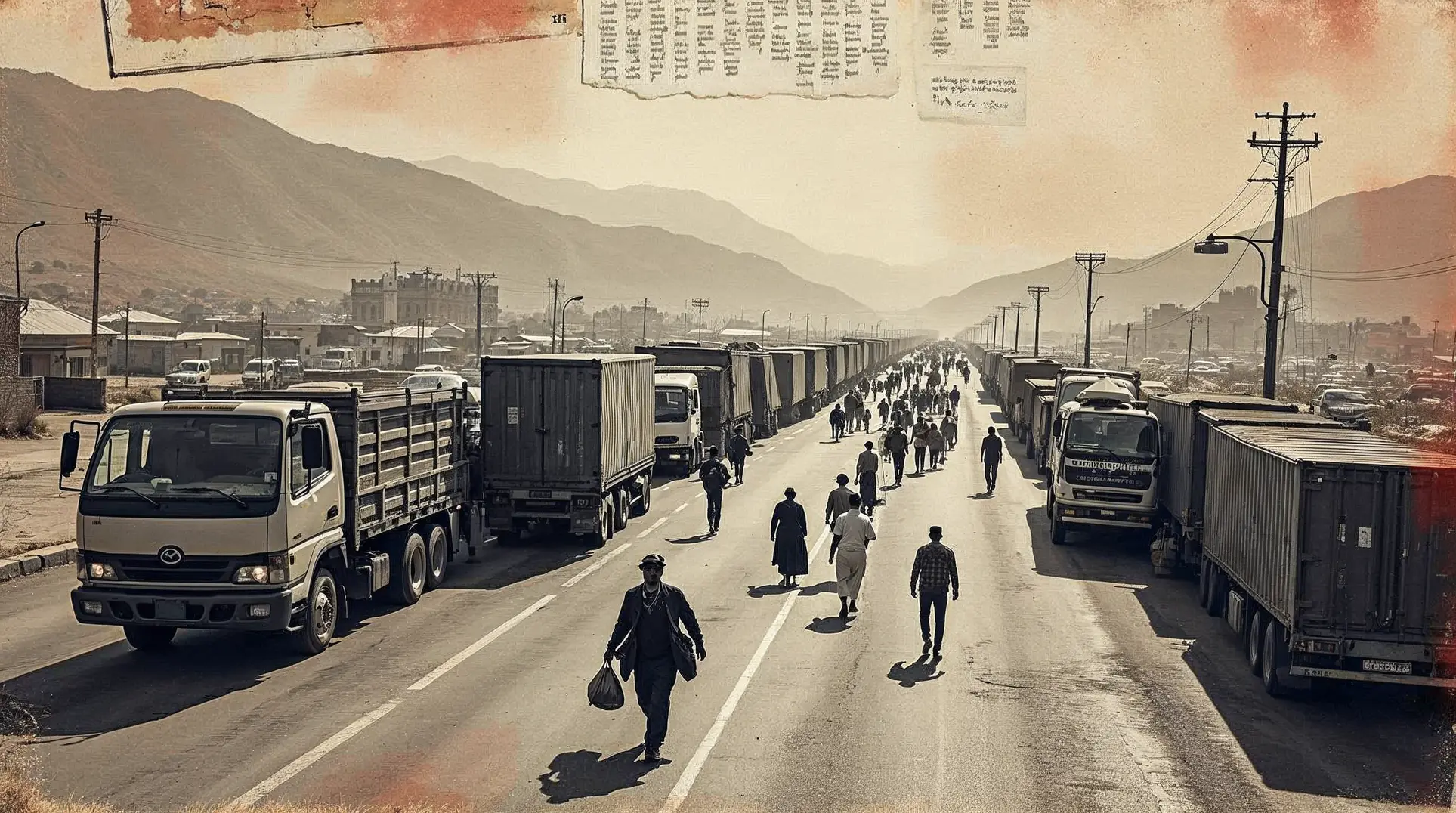
Members are reading: How economic interdependence shapes—but cannot resolve—the Pakistan-Taliban sanctuary dispute and ceasefire cycles.
Regional rivalries and trigger risks
The October strikes coincided with Afghan Foreign Minister Amir Khan Muttaqi's visit to India, injecting India-Pakistan rivalry perceptions into timing debates (India's exploitation of Afghanistan crisis). While New Delhi's engagement with Kabul shapes Islamabad's threat calculus, the core driver remains TTP sanctuary dynamics rather than great-power triangulation.
Forward risks cluster around three triggers: further high-casualty suicide attacks in Pakistan's northwest, which create domestic political imperatives for retaliation; verified evidence of high-value TTP targets in Afghanistan, which Pakistan will likely strike regardless of ceasefire commitments; and Taliban retaliation against Pakistani posts, which could escalate beyond current tit-for-tat patterns. Prolonged closure of key border crossings would impose costs that incentivize de-escalation but also deepen grievances on both sides.
What would change the calculus? Verifiable Taliban action against TTP leadership or infrastructure, coupled with third-party monitoring mechanisms to certify compliance—a framework Qatar and Turkey mediation has not yet achieved. Absent such mechanisms, the cycle of limited strikes, civilian harm allegations, economic retaliation, and fragile ceasefires will likely persist. The Khost deaths underscore that each iteration carries humanitarian costs that erode the political space for compromise and test the limits of interdependence as a stabilizing force in a rivalry defined by incompatible sovereignty and security claims.
Subscribe to our free newsletter to unlock direct links to all sources used in this article.
We believe you deserve to verify everything we write. That's why we meticulously document every source.


