


- The October 19 Doha ceasefire between Afghanistan and Pakistan emerged after deadly border violence but doesn't address fundamental sovereignty disputes over the contested Durand Line.
- Pakistan's decades-long jihadi proxy strategy has backfired catastrophically—the TTP now operates from Afghan sanctuary with Taliban tolerance, creating an unsolvable security paradox.
- Turkey and Qatar's Istanbul mediation offers crisis management, not resolution—regional powers' contradictory interests ensure no single external actor can impose a lasting settlement.
The announcement that Afghanistan and Pakistan will convene for a second round of crisis talks in Istanbul arrives wrapped in familiar diplomatic language—"constructive dialogue," "sustainable mechanisms," "regional stability." Yet beneath this veneer of procedural optimism lies a more sobering reality: the ceasefire brokered in Doha on October 19 was agreed upon following a week of fierce border fighting, though its durability remains uncertain given the underlying grievances that have not been addressed and the fact that neither side can afford the immediate costs of continued escalation. The talks in Turkey, therefore, represent less a pathway to resolution than a temporary pause in a conflict that has been gestating for decades, fed by the structural contradictions of the Afghan-Pakistan relationship itself.
The recent violence—which left at least 37 civilians dead and 425 injured according to UNAMA figures, and saw Pakistani airstrikes hit targets as far as Paktika Province—was the bloodiest chapter in this relationship in years. But it was hardly unprecedented. What makes this moment distinct is not the scale of violence but the geopolitical context: a Taliban-governed Afghanistan facing international isolation, a Pakistan grappling with internal security crises and economic fragility, and a regional order where traditional power brokers (Saudi Arabia, Iran) find themselves increasingly competing with newer mediators (Qatar, Turkey) for influence.
The question, then, is whether Turkish and Qatari mediation can succeed where decades of bilateral negotiations, Pakistani military pressure, and international engagement have failed. To answer this requires looking beyond the immediate crisis to the structural factors that make the Afghan-Pakistan border not just a line on a map, but a fault line of competing nationalisms, sectarian politics, and the unfinished business of decolonization.
The Durand Line: Geography as contested history
At the heart of the Afghan-Pakistan crisis lies a border that one side has never recognized. The Durand Line, drawn in 1893 by British diplomat Mortimer Durand to delineate the spheres of influence between British India and the Emirate of Afghanistan, cuts through Pashtun tribal territories with the surgical precision of colonial cartography and the lasting damage of imposed division. For Afghanistan, successive governments—monarchist, communist, mujahideen, Taliban—have maintained that the line is illegitimate, a temporary arrangement that should have expired with British withdrawal from the subcontinent. For Pakistan, it is an international border, recognized by the international community, and non-negotiable.
This is not merely an academic dispute. The Durand Line's contested status shapes every dimension of the current crisis. When Pakistan accuses the Taliban government of providing sanctuary to Tehreek-e-Taliban Pakistan (TTP) militants, Kabul's response is framed not just as a denial but as a rejection of Pakistani sovereignty claims over Pashtun-majority areas. When Afghanistan objects to Pakistani airstrikes in Paktika, it is asserting not just territorial integrity but historical grievance. The border, in other words, is not a neutral line that happens to be violated; it is itself the violation, from the Afghan perspective.
This structural reality makes mediation extraordinarily difficult. How do you negotiate a "verifiable peace mechanism" when the parties cannot even agree on where the border should be? Pakistan's reported proposal for intelligence sharing, real-time monitoring, and third-party oversight assumes a functional border that both sides recognize. Afghanistan's position—that Pakistan has no business dictating security arrangements on Afghan soil—reflects a fundamentally different conception of sovereignty. The mediators in Istanbul will have to navigate this contradiction without explicitly addressing it, a diplomatic high-wire act that privileges process over substance.
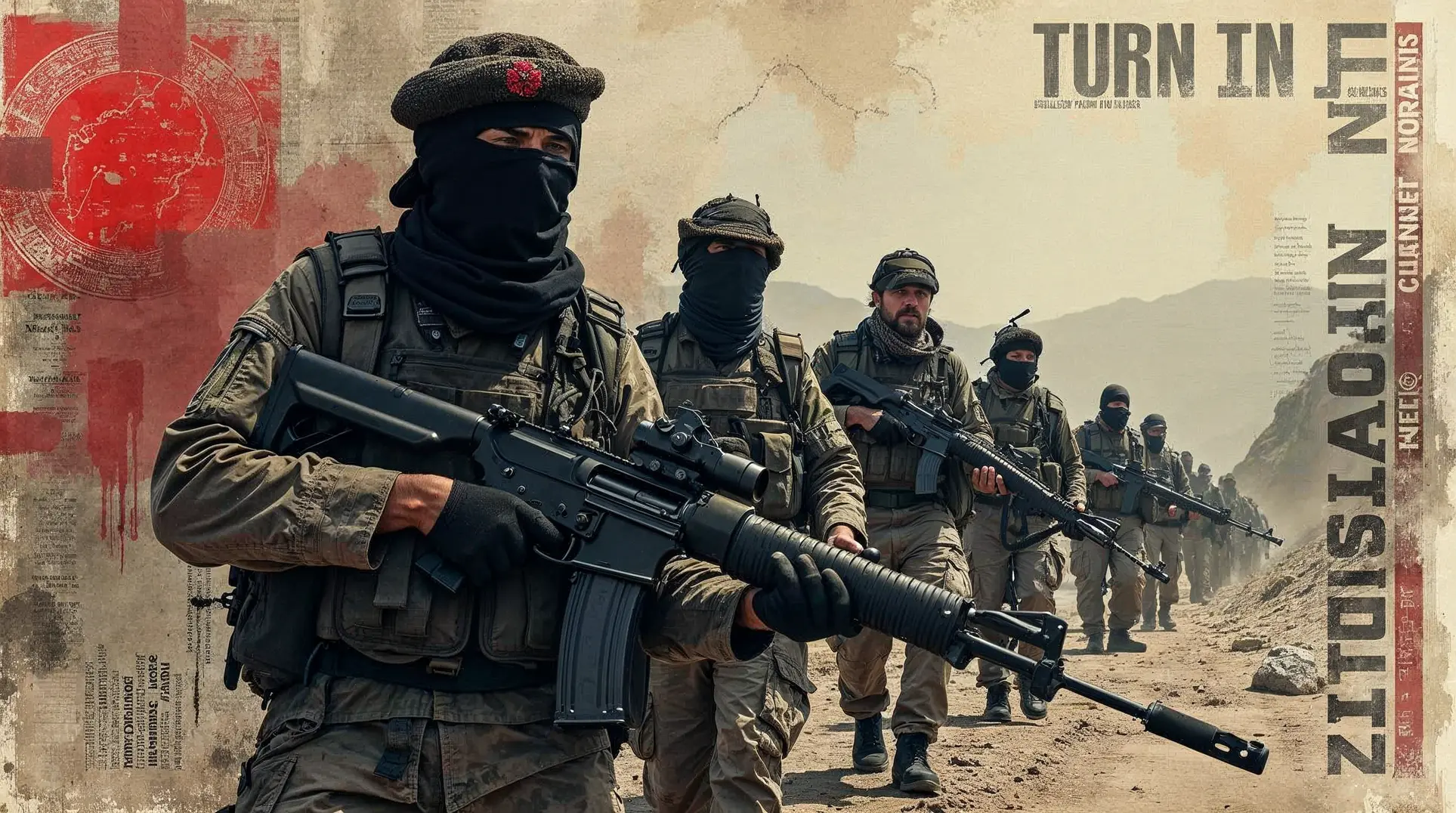
Discover how Pakistan's strategic cultivation of jihadist proxies spawned the TTP—a force now waging existential war against its creator from Afghan sanctuary. The devastating paradox explained.
The mediators: Why Turkey and Qatar seek influence on the frontier
The choice of Turkey and Qatar as primary mediators for the Afghan-Pakistan crisis is not accidental—it reflects the changing architecture of influence in the Muslim world and the particular ambitions of both states to position themselves as indispensable brokers of regional conflicts. But their involvement also introduces new complexities, as neither is a neutral arbiter in the conventional sense.
Turkey's role, and the selection of Istanbul as the venue for talks, signals Ankara's continued investment in Afghanistan as a sphere of influence. Turkey has deep historical ties to Afghanistan, rooted in shared Ottoman-era Islamic heritage and ethnic connections with Turkic minorities in northern Afghanistan. More significantly, Turkey was one of the few NATO members to maintain a working relationship with the Taliban throughout their insurgency and after their return to power, positioning itself as a potential bridge between the Taliban and the international community. President Recep Tayyip Erdoğan's neo-Ottoman foreign policy vision sees Turkey as a natural leader of Sunni Muslim nations, a role that requires active engagement in conflicts from Libya to Syria to Central Asia.
Qatar's involvement is equally strategic. The Gulf emirate has built an entire foreign policy around mediation, using its vast natural gas wealth to fund diplomatic initiatives that enhance its international profile and protect it from larger, more powerful neighbors. Qatar hosted the US-Taliban talks that led to the 2020 Doha Agreement and maintains the Taliban's political office on its soil. It has also mediated between Israel and Hamas, as evidenced by its central role in recentGaza ceasefire negotiations, and has positioned itself as an interlocutor between Iran and the West on nuclear issues.
For both Turkey and Qatar, success in mediating the Afghan-Pakistan crisis would enhance their credentials as essential players in regional security architecture at a time when traditional powers (Saudi Arabia, Iran, even the United States) appear less capable or willing to manage South Asian conflicts. But this also means their mediation carries specific interests. Turkey wants to maintain influence in Afghanistan and demonstrate its value to both NATO allies and regional partners. Qatar seeks to consolidate its role as the indispensable mediator for conflicts involving Islamist movements, a niche that also serves its complicated relationship with the Muslim Brotherhood and its rivalry with Saudi Arabia and the UAE.
These interests do not necessarily undermine mediation—indeed, mediators often succeed precisely because they have stakes in the outcome. But they do shape the parameters of what is possible. Turkey and Qatar are unlikely to push for solutions that might strengthen Pakistani claims to sovereignty over disputed border regions at Afghanistan's expense, as that would alienate the Taliban government with which both maintain relationships. Nor are they likely to demand Taliban concessions on the TTP that would fracture Taliban unity or undermine their Islamic credentials. What they can offer is a framework for de-escalation, confidence-building measures, and the political cover for both sides to step back from the brink—which may be the most realistic outcome achievable.
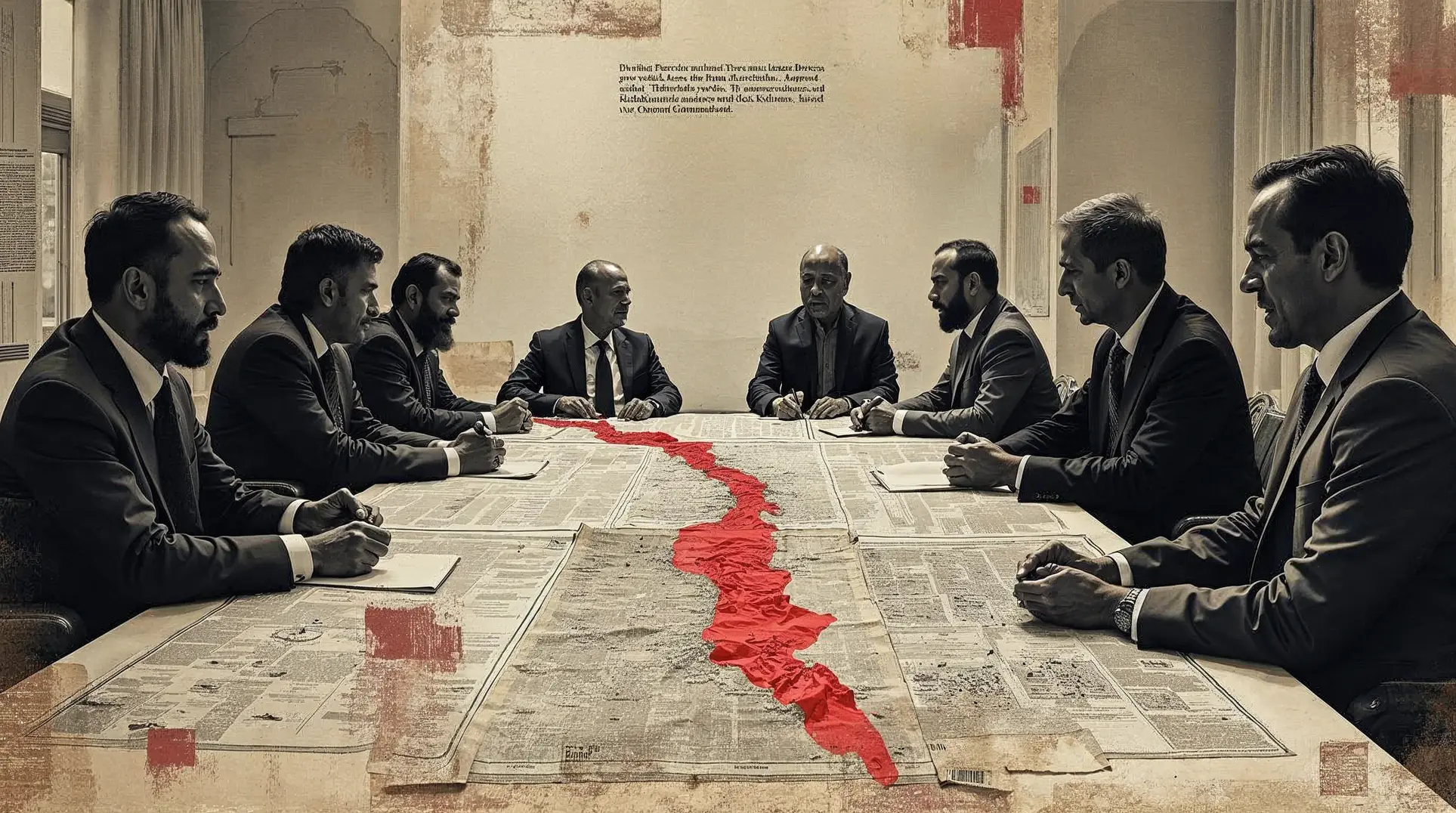
Uncover why China backs Pakistan while courting Kabul, why India embraces the Taliban against Islamabad, and how Iran, Russia, and Saudi Arabia's contradictory stakes doom simple solutions.
The pattern of failed peace: Lessons from previous TTP negotiations
Pakistan's history of negotiating with the TTP offers a sobering preview of the challenges facing the Istanbul talks. Between 2021 and 2022, the Pakistani government, with Afghan Taliban mediation, held multiple rounds of negotiations with TTP leadership. These talks were premised on the belief that the Afghan Taliban's return to power created an opportunity for the TTP to be pressured into a settlement. The Afghan Taliban, grateful for Pakistan's support during their insurgency, would deliver the TTP; Pakistan would gain security guarantees; and violence would decrease.
The reality proved more complicated. The talks collapsed repeatedly over fundamental incompatibilities. The TTP demanded the reversal of FATA's merger into Khyber Pakhtunkhwa, the withdrawal of military forces from tribal areas, and the imposition of strict Sharia law—conditions that would have required Pakistan to effectively cede sovereignty over significant territory. Pakistan demanded TTP disarmament, renunciation of violence, and submission to Pakistani law—conditions the TTP viewed as surrender. Attempts at compromise, including ceasefire agreements, repeatedly broke down as hardline factions within the TTP rejected any settlement short of their maximal demands.
What these failed negotiations revealed is the structural problem at the heart of Pakistani-TTP relations: the TTP is not a unified organization with clear command and control but a loose confederation of groups with varying ideologies, grievances, and objectives. Agreements reached with some commanders are not binding on others. The TTP leadership in Afghanistan cannot necessarily control factions operating inside Pakistan. And the ideological nature of the conflict—the TTP's belief that Pakistan's state structure is un-Islamic—makes compromise existentially difficult. You cannot negotiate away someone's fundamental conception of religious obligation.
The relevance to the current Afghan-Pakistan crisis is direct. Pakistan will seek mechanisms to prevent cross-border TTP attacks; Afghanistan will claim it cannot control non-state actors operating on its territory; and the TTP will continue exploiting the ambiguities of Taliban governance and the porosity of the border to sustain operations. Without TTP representation at the negotiating table, any agreement between Afghanistan and Pakistan regarding border security will be incomplete. But including the TTP would require Pakistan to negotiate directly with a group it designates as terrorists and would give the TTP international legitimacy it currently lacks—a step Islamabad cannot accept.
Prospects for success: What a realistic outcome looks looks like
If the Istanbul talks are to produce anything beyond symbolic gestures and temporary de-escalation, they will need to establish mechanisms that address immediate security concerns without attempting to resolve irresolvable historical disputes. This means focusing on tactical cooperation rather than strategic alignment, on crisis management rather than permanent peace.
A realistic outcome might include:
A formalized ceasefire monitoring mechanism with Turkish and Qatari observers stationed at key crossing points along the Durand Line, providing third-party verification of violations and creating a channel for rapid de-escalation when incidents occur.
Intelligence sharing protocols focused specifically on imminent threats, allowing Pakistan to communicate actionable intelligence about TTP movements to Afghan authorities without requiring formal recognition of Pakistani jurisdiction.
Humanitarian corridors and confidence-building measures to reduce civilian suffering in border areas, including coordination on health services, education, and economic development in communities affected by conflict.
Regular diplomatic engagement at multiple levels—not just crisis talks but ongoing working groups on specific issues (border management, counter-narcotics, trade)—to create institutional relationships that survive individual crises.
What such an outcome would *not* include is equally important: resolution of the Durand Line dispute, elimination of the TTP as a fighting force, transformation of the Taliban into a government willing to subordinate Islamic solidarity to Pakistani security interests, or creation of a strategic partnership between Afghanistan and Pakistan based on shared interests rather than mutual suspicion.
This modest definition of success may disappoint those who hope for a breakthrough, but it reflects the structural realities that constrain all parties. Pakistan cannot eliminate the TTP through military force alone and lacks the leverage to compel Taliban cooperation. Afghanistan cannot afford another war with Pakistan but will not accept Pakistani sovereignty claims over disputed territories. Turkey and Qatar can facilitate dialogue but cannot impose settlements on either party. And the regional powers with stakes in the outcome will continue pursuing contradictory objectives that complicate any bilateral agreement.
Conclusion: Mediation as indefinite management
The second round of talks in Istanbul will likely produce some form of agreement—mediators rarely allow high-profile negotiations to collapse publicly. There will be joint statements about commitment to peace, mechanisms for dialogue, and frameworks for cooperation. Pakistan and Afghanistan will both claim diplomatic victory. Turkey and Qatar will highlight their indispensable roles as mediators. And violence along the Durand Line will eventually resume, because the talks do not address—cannot address—the fundamental incompatibilities that generate conflict.
This is not an argument for abandoning mediation but for understanding its limits. In conflicts rooted in contested borders, proxy warfare, and irreconcilable nationalist narratives, mediation functions less as a path to resolution than as a mechanism for managing escalation. The value of the Istanbul talks lies not in their potential to create lasting peace but in their capacity to create space for de-escalation, to establish channels of communication that might prevent the next crisis from spiraling into full-scale war, and to provide both sides with diplomatic alternatives to military action.
The structural factors that make the Afghan-Pakistan frontier a persistent conflict zone—the Durand Line's contested status, the TTP's sanctuary in Afghanistan, Pakistan's historical use of militant proxies now turned inward, the competing regional interests of India, China, Iran, and others—will not be resolved in Istanbul or anywhere else in the foreseeable future. What can be achieved is crisis management: mechanisms to reduce violence, channels to prevent miscalculation, and frameworks to ensure that when the next escalation comes, there are alternatives to warfare.
For Turkey and Qatar, this represents a success—demonstrated relevance as regional mediators and enhanced diplomatic capital for future conflicts. For Afghanistan and Pakistan, it offers temporary respite from immediate security pressures without requiring either to abandon core positions. For the region's populations, particularly those living along the contested border who bear the direct costs of this conflict, it means continued insecurity, interrupted occasionally by diplomatic pauses that buy time without delivering resolution.
The question, then, is not whether the Istanbul talks will succeed but what success means in a context where the structural drivers of conflict remain unchanged. Can mediation succeed where force has failed? Only if success is redefined as management rather than resolution, as crisis prevention rather than permanent peace, and as the maintenance of diplomatic channels even when fundamental issues remain unresolved. In this more modest framing, the talks in Turkey may indeed achieve something valuable—not the end of the Afghan-Pakistan frontier conflict, but perhaps the prevention of its next deadly chapter. For now, that may be the most that can be hoped for, and perhaps the most that external mediation can realistically deliver.
Subscribe to our free newsletter to unlock direct links to all sources used in this article.
We believe you deserve to verify everything we write. That's why we meticulously document every source.


