


General Nerdah Mya's declaration of the "Republic of Kawthoolei" on January 5, 2026, from a border outpost in Myawaddy district represents more than symbolic theater. The announcement of a full governmental structure—with Nerdah Mya as president, alongside a vice president and prime minister—transforms his Kawthoolei Army (KTLA) from a breakaway militia into a self-proclaimed state entity. The location matters: Shu Khali village sits directly opposite Thailand's Tak province, positioning this new political claim at a critical junction of cross-border trade, refugee flows, and regional security calculations.
The Karen National Union (KNU), the internationally recognized political body representing Karen aspirations for over seven decades, responded with immediate condemnation. In formal statements, the KNU disavowed any connection to the new republic, characterizing the KTLA as a splinter faction whose unilateral move undermines both Karen unity and the broader Spring Revolution against military rule. This public rupture exposes a fundamental strategic divergence: the KTLA's maximalist push for immediate independence versus the KNU's commitment to a federal democratic union negotiated with the National Unity Government (NUG) and other ethnic armed organizations. For Myanmar's fragmented resistance landscape, the declaration introduces a new fault line precisely when cohesion matters most.
Competing visions for Karen self-determination
The ideological gap between the KTLA and KNU reflects competing theories of ethnic statehood in Myanmar's post-coup environment. Nerdah Mya, leveraging the powerful legacy of his father—the legendary KNU commander Bo Mya—frames Myanmar as a fundamentally failed state from which secession represents the only viable path forward. His declaration invokes international law on self-determination, positioning Kawthoolei independence as an urgent necessity rather than a negotiable outcome. The KTLA's formation followed internal conflicts between Nerdah Mya and the KNU executive committee, suggesting this split emerged from both personal ambition and genuine strategic disagreement.
The KNU's federalist approach operates within a different timeframe and political architecture. Aligned with the NUG and multiple ethnic armed organizations, the KNU has invested in coalition-building toward a post-junta Myanmar where ethnic states exercise substantial autonomy within a restructured union. This vision requires compromise, coordination, and patience—qualities that offer fewer immediate political returns than a bold declaration of statehood. The KNU's rejection of the Kawthoolei republic is thus not merely territorial but existential: it protects the institution's role as the legitimate Karen political voice and preserves its investment in the broader anti-junta coalition.
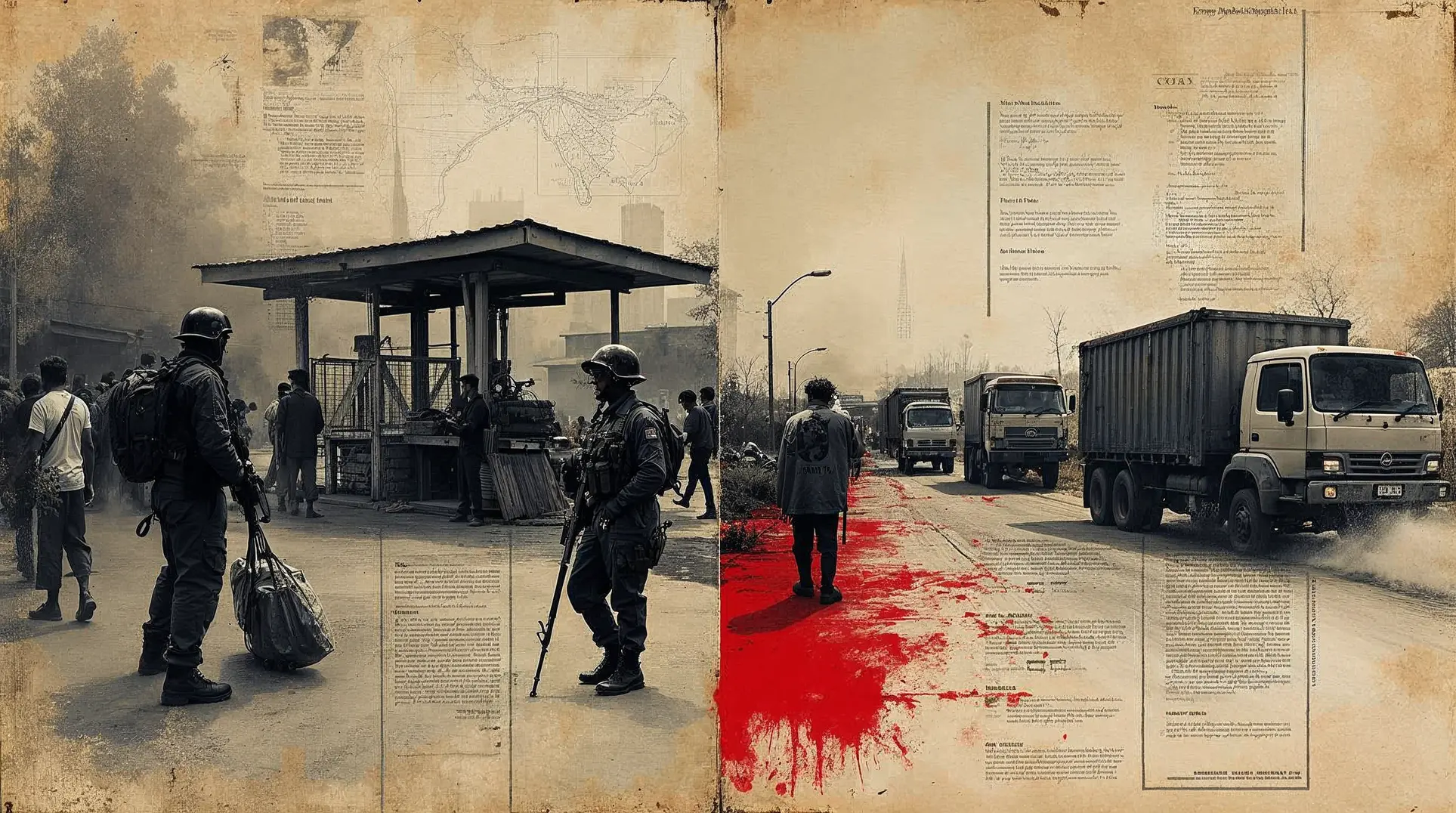
Members are reading: How the border republic declaration reshapes economic competition within resistance networks and forces Thailand into new security calculations.
Stress test for anti-junta institutional cohesion
The broader implications for Myanmar's Spring Revolution center on institutional fragmentation. The NUG has positioned itself as the coordinating center for diverse resistance forces, offering political legitimacy to military operations conducted by People's Defense Forces and ethnic armed organizations. The KTLA's unilateral declaration bypasses this framework entirely, asserting that Karen self-determination does not require NUG approval or coordination with other ethnic movements. If this model spreads—if other ethnic armed groups conclude that immediate statehood claims serve their interests better than coalition-building—the anti-junta movement fragments into competing mini-states rather than coalescing into a unified challenge to military rule.
The KNU's response signals awareness of this risk. By publicly condemning the republic and reaffirming commitment to federal negotiations, the KNU attempts to contain the KTLA's example and reassure coalition partners that Karen forces remain reliable allies. Yet the split demonstrates the fragility of resistance unity. Personal rivalries, generational tensions between commanders, and divergent strategic visions create persistent vulnerabilities that the Myanmar military can exploit through targeted pressure or co-optation efforts. The ongoing brutal phase of Myanmar's civil war makes these internal fractures increasingly costly.
Forward calculus: fragmentation as strategic liability
The Republic of Kawthoolei's viability remains uncertain—statehood declarations carry limited weight without international recognition, territorial control, and institutional capacity. Yet the declaration's impact on resistance cohesion is already measurable. It forces the KNU to dedicate resources to internal legitimacy contests rather than junta confrontation, complicates Thailand's border management, and provides the Myanmar military with potential openings to deepen Karen divisions. The economic competition over border zones may prove more consequential than the symbolic politics of statehood.
For the broader anti-junta coalition, Nerdah Mya's move underscores a structural challenge identified in recent assessments of Myanmar's trajectory: translating battlefield gains into durable political institutions requires unity that personal ambitions and competing visions constantly threaten. Whether the KTLA's republic becomes a permanent feature of Myanmar's fragmented landscape or collapses under external pressure will test both the resistance movement's capacity for self-discipline and Thailand's willingness to tolerate border uncertainty. The Karen fracture, visible in Myawaddy district, reflects systemic fragilities that extend well beyond one ethnic movement's internal politics.
Subscribe to our free newsletter to unlock direct links to all sources used in this article.
We believe you deserve to verify everything we write. That's why we meticulously document every source.


