


The war in Sudan crossed a grim threshold on January 9, 2025, marking 1,000 days of conflict between the Sudanese Armed Forces (SAF) and the Rapid Support Forces (RSF). United Nations agencies marked the milestone with stark warnings: 33.7 million people—two-thirds of Sudan's population—now require humanitarian assistance, making this the world's largest humanitarian emergency. The figures represent a doubling of need since the war began in April 2023, with 9.3 million people internally displaced and 21 million facing acute food insecurity.
The scale of suffering is not accidental but engineered. Both warring parties have weaponized civilian survival, deploying complementary tactics that create a self-perpetuating cycle of destruction. The RSF encircles population centers, choking off essential supplies, while SAF responds with aerial bombardments that destroy the infrastructure needed to sustain life. The result is a manufactured catastrophe that has overwhelmed Sudan's social fabric and exposed the paralysis of international humanitarian mechanisms.
The Kordofan siege: a blueprint for attrition warfare
The dynamics driving Sudan's collapse are most visible in the besieged cities of South and West Kordofan. Kadugli, Dilling, and El-Obeid have endured months of RSF encirclement that blocks food, fuel, and medical supplies from entering. Simultaneously, SAF has intensified drone strikes on these same population centers, killing civilians daily. On a single day in early January, eight children were killed in a North Kordofan attack, according to UN documentation.
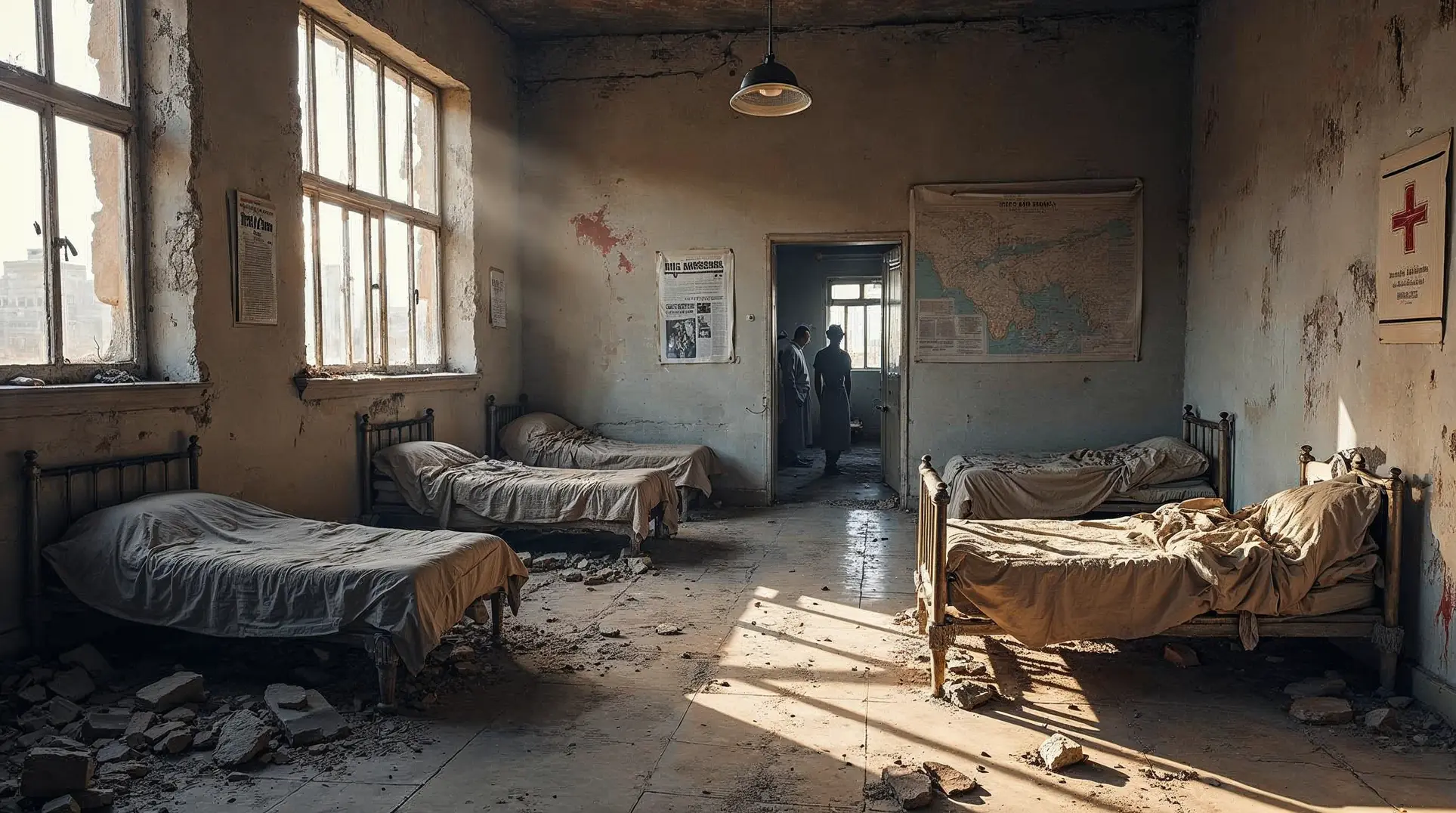
This dual approach creates conditions where survival becomes impossible regardless of military affiliation. The RSF blockades prevent humanitarian actors from delivering basic necessities, while SAF bombardments degrade the few remaining hospitals and clinics still attempting to function. Health facilities have become direct targets: UN agencies have verified over 200 attacks on healthcare infrastructure since the war began, contributing to the closure of 70-80 percent of Sudan's hospitals nationwide.
The siege-and-bombardment pattern in Kordofan is not an isolated phenomenon but a microcosm of tactics deployed across contested territories. Each party blames the other for civilian casualties while perpetuating the very conditions that guarantee mass death through starvation, disease, and direct violence.
Members are reading: Why both warring parties benefit from obstructing aid, and how international paralysis enables mass civilian death as policy.
A crisis of international will
The stalled diplomatic landscape surrounding Sudan reflects broader questions about the value placed on African civilian lives within the current global order. Multiple mediation tracks—led by the African Union, IGAD, Saudi Arabia, and the United States—have produced negligible results. Proposed ceasefires collapse within days, and neither the SAF nor RSF face meaningful consequences for violations. The contrast with international responses to conflicts elsewhere is stark and instructive.
The funding crisis compounds the diplomatic failure. With the humanitarian appeal severely underfunded and access systematically obstructed, aid organizations face impossible choices about which populations to abandon. The decision to scale down the 2026 response plan is an admission that the international humanitarian system cannot function in an environment where belligerents refuse to permit lifesaving work and global donors decline to prioritize the world's largest emergency.
The price of 1,000 days
Sudan's 1,000-day milestone marks more than the duration of violence; it documents the systematic unmaking of a society. The 33.7 million people now dependent on aid represent the successful implementation of attrition warfare designed to destroy civilian resilience. The collapse of healthcare, the displacement of nearly 10 million people, and the engineered food crisis are not unfortunate byproducts but intended outcomes of military strategies employed by both the SAF and RSF.
The international community's failure to respond proportionately to this crisis raises fundamental questions about the future of humanitarian protection norms. What the next 1,000 days will bring depends less on the intentions of the warring parties—which have been clearly demonstrated—than on whether external actors will move beyond rhetorical concern toward the political and economic pressure required to make civilian destruction costly rather than profitable.
Subscribe to our free newsletter to unlock direct links to all sources used in this article.
We believe you deserve to verify everything we write. That's why we meticulously document every source.


