


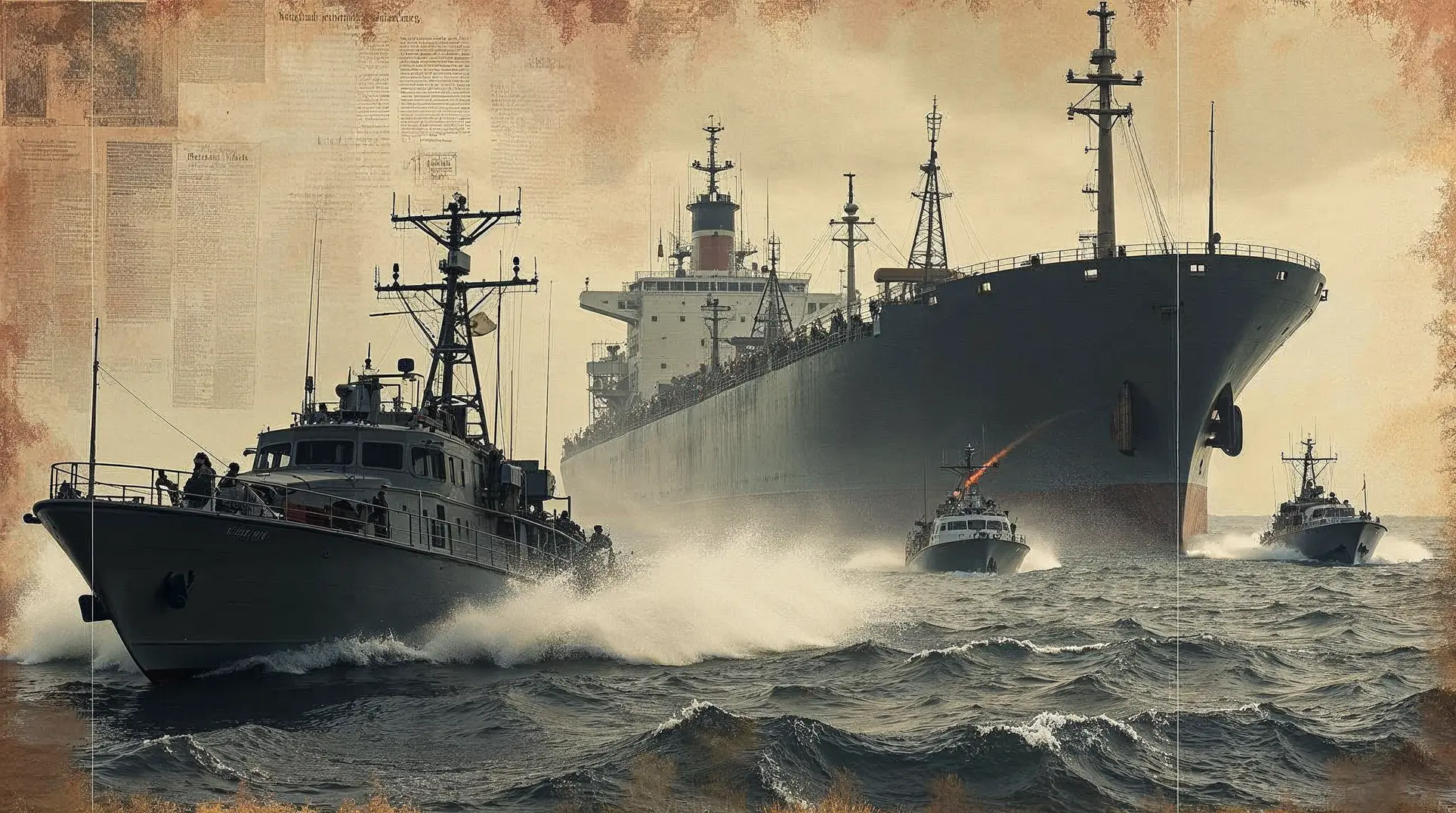
The UK Maritime Trade Operations confirmed a tanker came under fire from Iranian gunboats 20 nautical miles northeast of Oman, according to reports received Thursday. At least two merchant vessels reported being hit by gunfire while attempting to cross the strait, and Iranian state television claimed an oil tanker was "sinking" after being struck. The attacks directly follow Iran's Foreign Minister Abbas Araghchi declaring the Strait of Hormuz "completely open" for commercial vessels during the Lebanon ceasefire.
Iranian military and parliamentary figures immediately contradicted the foreign minister's statement, asserting the strait would not remain open while the U.S. blockade of Iranian ports continues. Ship tracking data shows minimal movement through the waterway despite the "open" declaration, with some vessels reportedly turning back after Iran's military reasserted control over transit operations.
U.S. blockade operations continue
U.S. Central Command confirmed the blockade of Iranian ports began April 13, 2026, with 21 ships turned back since operations commenced. On April 16, Gen. Dan Caine announced U.S. military assets would "actively pursue" any Iranian-flagged vessels or ships providing material support to Iran globally. President Trump stated the naval blockade would remain in effect, creating direct operational conflict with Iran's claim that the strait is accessible to commercial shipping.
The strategic waterway typically carries approximately 20% of the world's daily oil supply. The ongoing U.S.-Israel offensive in Iran began February 28, 2026, with the current situation complicated by a fragile 10-day ceasefire between Israel and Hezbollah in Lebanon. Iran maintains the strait will remain restricted until U.S. operations cease, requiring Iranian authorization and designated routes for any permitted transit.
Members are reading: How contradictory Iranian statements reveal command structure breakdown at critical escalation point
Maritime security deteriorates rapidly
The attacks occur against the backdrop of sustained U.S. military pressure and previous ultimatums regarding strait access. Iranian officials have stated repeatedly that security in the Persian Gulf and Sea of Oman is "either for everyone or for no one," threatening retaliation against regional ports if Iranian facilities remain under blockade.
The conflicting statements from Iranian officials create immediate operational uncertainty for international shipping. Commercial vessel operators attempting to navigate the strait face unclear guidance on transit requirements, with actual control exercised by Iranian naval forces rather than diplomatic channels. The situation develops as global oil markets remain disrupted by the extended closure of the critical chokepoint, with prices elevated since the conflict began in late February.
Subscribe to our free newsletter to unlock direct links to all sources used in this article.
We believe you deserve to verify everything we write. That's why we meticulously document every source.


