


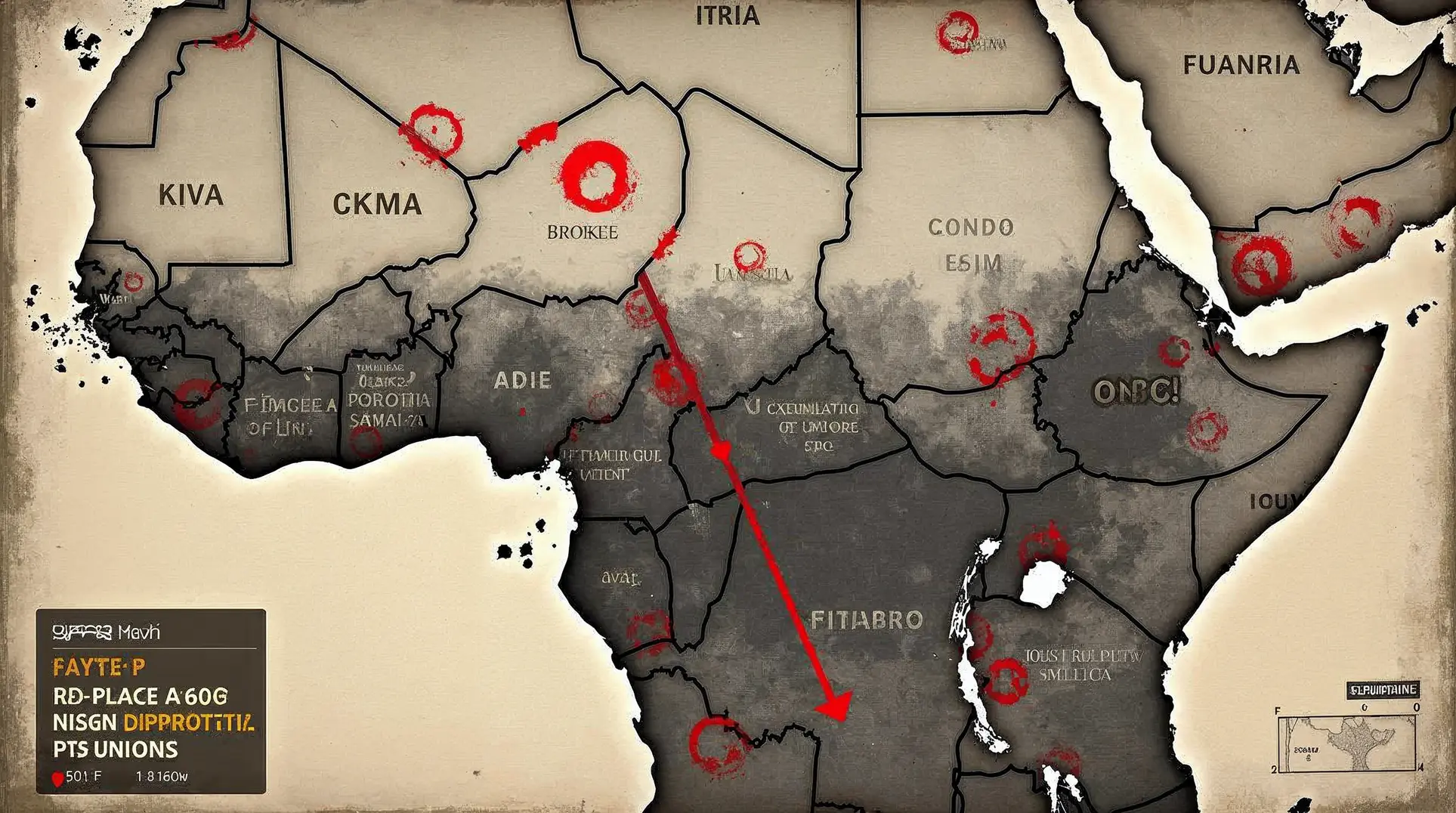
Fighters linked to the Islamic State killed 16 civilians in Mbau village, Beni Territory, North Kivu province on June 2, 2026, in an area where Ebola cases have been confirmed within the past week. The attack occurred near zones where health officials reported two confirmed cases in Beni city and two in Oicha, directly complicating containment efforts for an outbreak that has already spread across three provinces and into Uganda.
Local military spokesperson Lt. Marc Elongo attributed the attack to the Allied Democratic Forces (ADF), an armed group operating with Islamic State affiliation that has escalated civilian targeting in recent weeks. A separate ADF attack over the weekend killed 15 civilians and one soldier in the same territory. The violence restricts movement for surveillance teams, delays case detection, and prevents safe transport of laboratory samples in regions where the Bundibugyo Ebola strain has been spreading since mid-May.
Security crisis impedes containment
The June 2 attack in Mbau demonstrates how armed conflict directly undermines public health operations in eastern Congo. Health teams cannot access areas under militant control. Contact tracing becomes impossible when populations flee violence. Ebola treatment centers face the same threats that led to arson attacks during the 2018-2019 outbreak in North Kivu and Ituri.
The current outbreak, declared May 15, 2026, involves the Bundibugyo virus strain for which no approved vaccine or treatment exists. As of early June, the DRC Ministry of Health reported 363 confirmed cases and 62 confirmed deaths across Ituri, North Kivu, and South Kivu provinces. Uganda recorded 15 confirmed cases and one confirmed death from cross-border transmission. Other reports indicate over 900 suspected cases in eastern regions, primarily Ituri, suggesting significant underreporting in conflict zones where surveillance cannot function.
WHO Director-General Tedros Adhanom Ghebreyesus described the situation as a "catastrophic collision of disease and conflict." The absence of medical countermeasures means response teams must rely entirely on labor-intensive interventions—isolation, contact tracing, safe burial practices—that require security, community cooperation, and functional logistics. Eastern Congo's environment provides none of these consistently.
Members are reading: Why the next 72 hours of access in Beni Territory will determine outbreak trajectory
Operational constraints multiply
The intersection of conflict and disease creates compound vulnerabilities that neither security forces nor health agencies can address independently. Armed groups control territory where cases are suspected. Health teams require military escorts that make communities less willing to cooperate. Each attack forces temporary suspension of surveillance activities, creating blind spots where transmission continues unobserved.
International organizations face the challenge of deploying resources into an active conflict zone where personnel safety cannot be guaranteed. The 2018-2019 North Kivu outbreak required 22 months to contain despite available vaccines and treatments. This outbreak involves a strain with no medical interventions, in an environment where insecurity has increased since 2019.
Subscribe to our free newsletter to unlock direct links to all sources used in this article.
We believe you deserve to verify everything we write. That's why we meticulously document every source.


