


Russian President Vladimir Putin used his December 19 combined press conference and Direct Line call-in to project confidence in Moscow's military position while opening selective diplomatic channels—but only on terms that preserve his core war objectives. Speaking for hours to state journalists and citizens, Putin claimed Russian forces hold the strategic initiative in Ukraine, warned of expanded "buffer zones" if the West rejects talks, and reaffirmed nuclear deterrence adjustments that raise the stakes for NATO allies. The performance underscored a now-familiar pattern: Moscow signals readiness to negotiate while doubling down on demands—territorial control, political concessions, and limits on Ukrainian sovereignty—that Kyiv and European capitals have repeatedly rejected.
The session also showcased Putin's broader narrative across crisis theaters. He defended Russia's Middle East footprint as stabilizing, touted energy and economic resilience despite sanctions, and emphasized outreach to Africa and the Global South as proof the West's isolation campaign has failed. For European security planners, the subtext was unmistakable: Russia sees 2025's diplomatic flux as an opportunity to lock in gains and test Western unity, not to compromise on maximalist aims.
Ukraine: battlefield claims meet diplomatic ultimatum
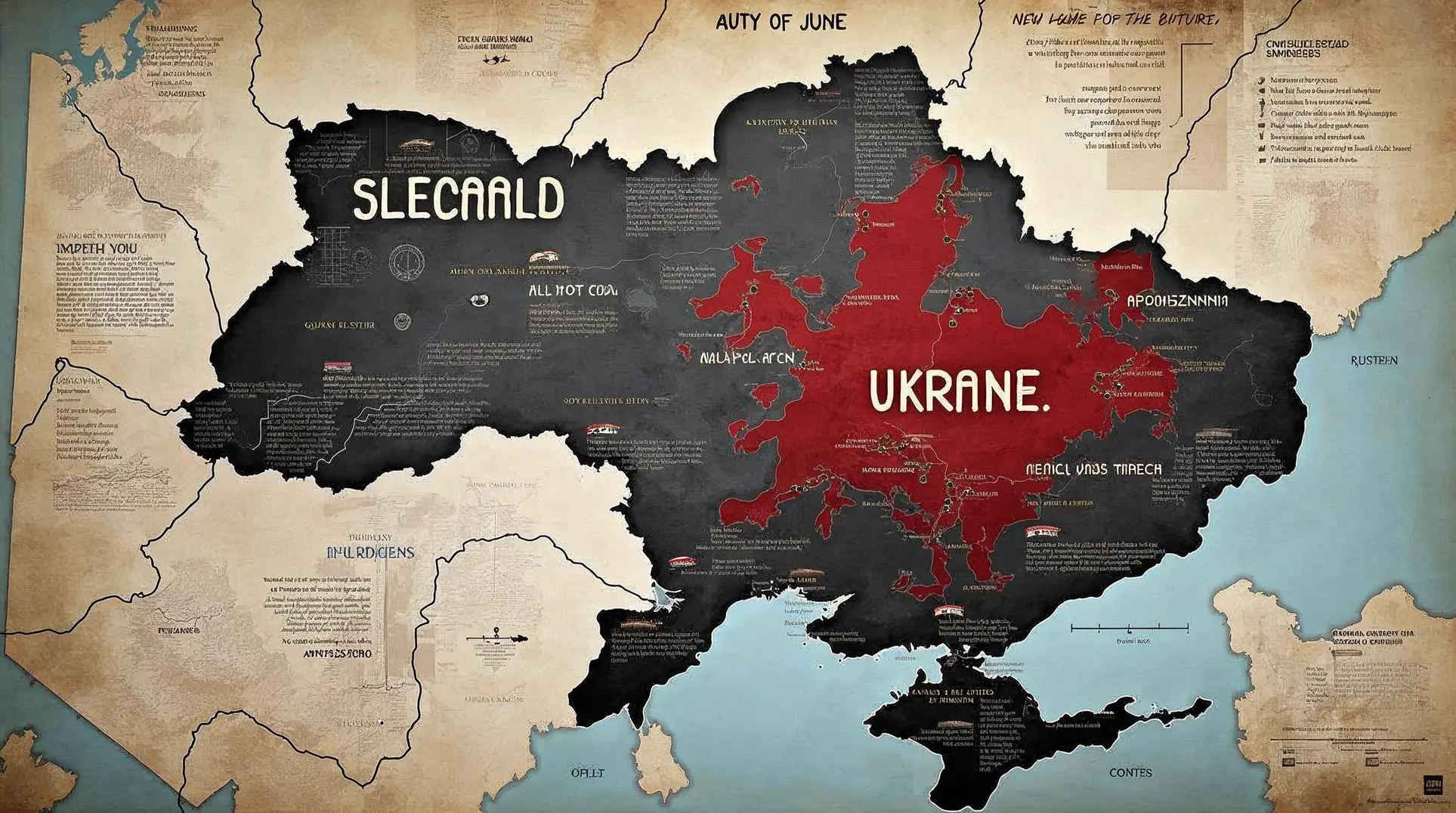
Putin framed Russia's grinding advances in eastern Ukraine as proof of inevitability. "We will achieve our objectives—either through negotiations that address the root causes or by force," he declared, using Moscow's longstanding euphemism for Ukrainian demilitarization and political subordination. He claimed Russian forces are advancing daily and warned that continued Western arms shipments would only prompt Moscow to enlarge a "security buffer zone" along the border, potentially reaching deeper into Kherson and Zaporizhzhia oblasts.
On talks, Putin said Kyiv has presented no serious proposals and accused European governments of blocking progress by insisting on sovereignty guardrails. He dismissed the U.S.-drafted 28-point outline—which would freeze fighting, bar NATO membership, and implicitly recognize some occupied areas—as insufficient, signaling Moscow wants explicit territorial concessions and enforceable limits on Ukraine's future force structure. Putin also warned that any European move to seize frozen Russian state assets would trigger retaliation and undermine trust in the euro zone, framing sanctions as economic warfare that prolongs the conflict.
Independent assessments paint a more complex picture. The Institute for the Study of War notes that while Russia has made incremental territorial gains through attritional positional warfare, claims of imminent Ukrainian collapse are inconsistent with battlefield realities. Moscow's advances are measured in kilometers, not breakthroughs, and come at high cost in personnel and materiel. Ukraine's recent signals that it might consider binding security guarantees instead of NATO membership reflect diplomatic exploration under pressure, but Kyiv has not accepted pre-recognition of occupied territory—the core gap that keeps negotiations stalled.
Members are reading: How Putin's buffer zone threats and nuclear signaling create a deterrence trap for Europe's ceasefire calculations.
Wider theaters: Syria, Africa, and the sanctions narrative
Beyond Ukraine, Putin used the platform to project global reach and resilience. He defended Russia's military presence in Syria as counterterrorism and stabilization, contrasting Moscow's role with Western interventions that he claimed create power vacuums. The implicit message: Russia is a reliable security partner for regimes under pressure, a pitch aimed at Africa and the Middle East.
On Africa, Putin highlighted partnerships and security cooperation as proof that Western sanctions have not isolated Moscow. Outreach to African governments—often framed through BRICS-adjacent institutions—serves both economic and strategic goals, diversifying revenue streams and building coalitions that complicate Western leverage.
Putin also cast Russia as a dependable energy supplier to "friendly" partners, arguing the EU "weaponized" energy ties and that sanctions have backfired, accelerating Europe's deindustrialization while Russia redirects oil and gas eastward. He warned that European asset seizures would shatter confidence in the euro zone, turning economic coercion into a double-edged sword.
Domestically, Putin claimed macroeconomic stability, real wage growth, and historic-low unemployment, portraying Russia's war economy as sustainable. He referenced a planned VAT increase and expected central bank rate cuts as inflation-targeting measures, framing adaptation to sanctions as evidence of state capacity and social cohesion.
Negotiation theater meets maximalist reality
Putin's year-end performance reveals the contours of Moscow's 2026 diplomatic strategy: signal selective openness while refusing to compromise on core demands. The gap between rhetoric and substance will test European unity and expose divisions over how much risk to accept in pursuit of a settlement. As long as Russia holds battlefield initiative—however incremental—and believes Western cohesion is brittle, Moscow has little incentive to soften maximalist aims. Europe's guardrails on sovereignty and enforceability remain the friction point, and Putin's buffer zone and nuclear warnings are designed to erode them. The diplomatic window may be ajar, but the threshold Moscow has set remains one Europe is unlikely to cross without abandoning the principles that underpin collective defense.
Subscribe to our free newsletter to unlock direct links to all sources used in this article.
We believe you deserve to verify everything we write. That's why we meticulously document every source.


