


Russian forces have penetrated deep into Pokrovsk, with approximately 300 troops now operating inside the city as the once-vital logistics hub faces near-encirclement on three sides. Only a narrow corridor towards Myrnohrad remains open for Ukrainian resupply and potential withdrawal. Despite President Zelenskyy's assertions that Pokrovsk remains under Ukrainian control, verified reports indicate Russian occupation of roughly 60% of the city, particularly northern districts where intense urban combat has devolved into house-to-house fighting.
The tactical picture reveals a troubling disconnect between official Ukrainian narratives and battlefield realities. Video footage confirms Russian forces briefly raised their flag on Pokrovsk's western edge, though Ukrainian troops subsequently eliminated several infiltrator groups. With 11,000 Russian forces in the immediate area and 150,000-170,000 deployed across the broader Donetsk offensive, the question is not whether Pokrovsk will fall, but what its capture signifies in a war increasingly defined by symbolic gains rather than operational breakthroughs.
The mechanics of infiltration warfare
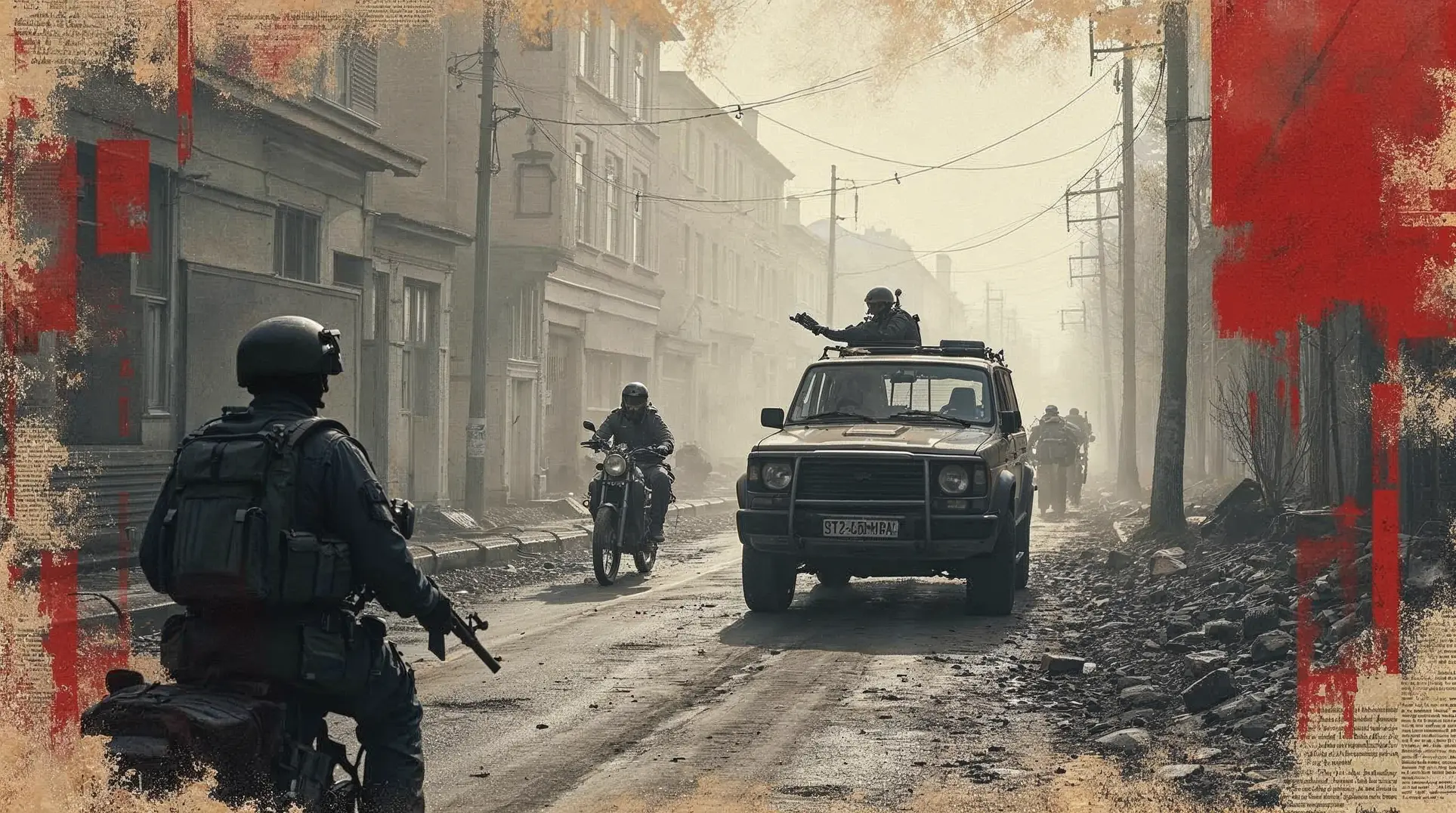
Russian tactical adaptation in the Pokrovsk sector demonstrates how attrition warfare evolves when neither side can achieve decisive maneuver. Moscow has employed systematic infiltration by small fireteams—up to 100 per day—using dense fog for concealment and overwhelming Ukrainian positions through sustained numerical pressure. These "Mad Max"-style tactics, utilizing motorbikes and battered vehicles to penetrate defensive lines, prioritize momentum over force protection.
The approach reflects Russia's willingness to accept massive casualties—Ukrainian forces report killing at least 162 Russian soldiers in the Pokrovsk area since early November—in exchange for territorial increments. This casualty-to-gain calculus would be strategically questionable if Pokrovsk retained its original logistical value. Yet Russian battlefield air interdiction efforts have systematically degraded the city's function as a rail hub and supply center, forcing Ukraine to establish alternative logistics routes that bypass the embattled city.
What Russia is fighting for now is not operational advantage but informational victory. The potential fall of Pokrovsk would represent Moscow's most significant territorial gain since Avdiivka in February 2024, offering propaganda value and domestic morale boost that justifies the human cost. For Ukraine, holding contested pockets maintains the narrative of resistance while complicating Russian consolidation efforts.
Members are reading: How Pokrovsk's diminished military value makes it strategically crucial, and what this reveals about NATO's eastern deterrence assumptions.
Implications for Ukraine's defensive calculus
Ukraine's decision to continue contesting Pokrovsk despite near-encirclement—no formal withdrawal orders have been issued—reflects similar informational imperatives. Abandoning the city would grant Russia a propaganda victory and potentially open routes towards Kramatorsk and Sloviansk, even if the operational significance remains debatable. Yet maintaining forces in contested pockets risks encirclement and capture, repeating patterns from Mariupol and Avdiivka where Ukrainian units held too long.
This defensive dilemma has no clean resolution. Withdrawal preserves forces but cedes momentum; continued resistance bleeds combat power while demonstrating will. Both choices serve primarily psychological and political purposes rather than operational ones, because Pokrovsk's fate was largely determined when Russian interdiction succeeded in isolating it from Ukrainian logistics networks months ago.
The battle's intensification through November demonstrates how the information war and kinetic operations feed each other. Zelenskyy's public assertions of Ukrainian control, while contradicted by ground evidence, serve to maintain domestic morale and Western support. Russian infiltration tactics and flag-raising ceremonies provide visual evidence for domestic consumption that Moscow is winning despite casualties. Both narratives can coexist because modern conflict allows parallel information spaces disconnected from singular battlefield truths.
What emerges from Pokrovsk is a model of 21st-century attrition warfare where symbolic objectives justify operations that appear irrational by conventional strategic measures. The city's eventual fate—whether captured completely, contested indefinitely, or abandoned—matters less than what the battle reveals about both sides' capacity to sustain grinding warfare where perception management supersedes operational logic. For European security observers, this offers a sobering preview of potential future conflicts where Russia's tolerance for punishment exceeds Western assumptions about rational cost-benefit calculations.
Subscribe to our free newsletter to unlock direct links to all sources used in this article.
We believe you deserve to verify everything we write. That's why we meticulously document every source.


