


Six days after glacial collapse, teams breach hydropower tunnels but find mud, silence, no survivors so far
Rescue teams gained physical access to tunnel interiors at multiple hydropower sites along the Bhotekoshi-Trishuli corridor for the first time Monday, six days after a glacial collapse triggered flooding across Nepal's border region. Three bodies have been recovered from two of the breached tunnels. No survivors have been found, and no response has come from calls into any tunnel where rescuers have entered.
Nepal's National Disaster Risk Reduction and Management Authority confirmed at 9:00 a.m. local time that 933 workers remain trapped or unaccounted for across 11 hydropower projects in Rasuwa and Nuwakot districts. That figure sits within a broader toll of 903 confirmed dead and 4,247 missing nationwide — up sharply from the 781 dead and 2,502 missing Crisis.Zone reported Sunday, when the tunnel crisis first emerged as the central open question in the disaster.
Access without contact
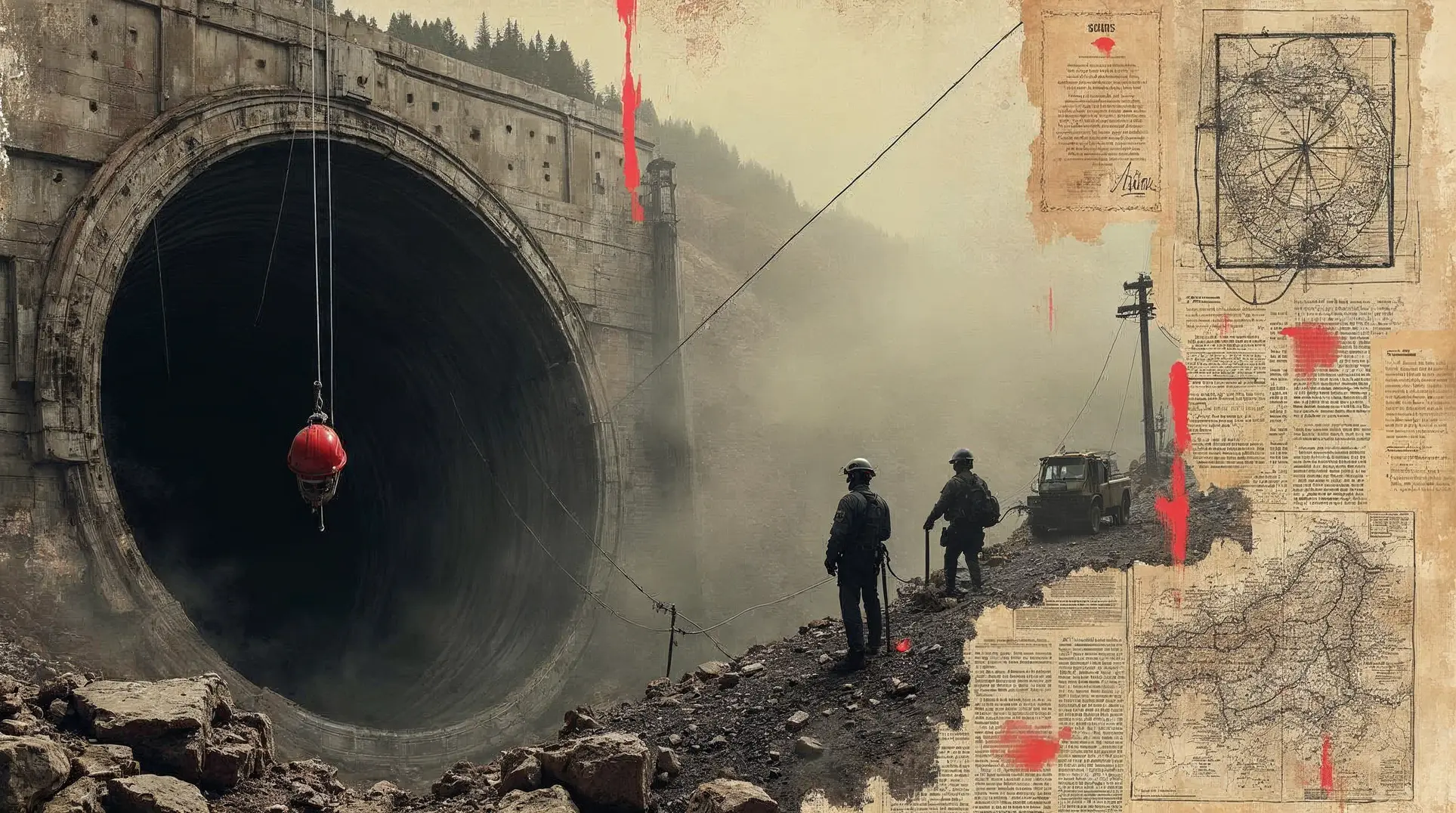
At Upper Trishuli-3A, where roughly 42 workers remain unaccounted for, rescuers located the tunnel crown Sunday, drilled a hole, pumped in air and lowered cameras before rappelling down ropes. Prime Minister Balendra Shah said Monday that "when members of the team descended using ropes and called out to those inside, there was no response." Geologist Arnold Dix, advising at the site, said crews "might only have to dig 10 meters, or we might have to dig 100 meters" through what he called "layer upon layer of technical difficulties."
At Chilime, where roughly eight workers are missing, an Indian rescue team advanced about 100 meters into the tunnel before hitting mud described as chest-deep. Two bodies were recovered there. Rescuer Ashish Gurung described the passage: "We got close to the first station, about 130 metres in. Inside that far, you could see further in; it looked like it was just bodies." He added, "They have a safe area inside. Some of them could potentially be alive. I am hoping they are alive."
Observers are reading: why the mud volume at Trishuli-1, not blasting capacity, now sets the timeline for the next 900 workers.
Become an Observer — it's free. Get full access to all Crisis.Zone analysis, briefings and breaking coverage.
An unresolved road, an unresolved question
A road between Nuwakot and Rasuwa reopened Sunday, providing the first ground access to the worst-hit areas since the flood. It arrived alongside fresh mobile alerts warning of renewed flash-flood risk after Chinese authorities reported rising water upstream on the Bhotekoshi — the same pattern that has forced repeated rescue suspensions since Friday, as documented in Crisis.Zone's Day 3 report on the initial USGS revision confirming glacial rather than seismic origins.
Energy Minister Biraj Bhakta Shrestha has called the tunnel operation the disaster response's "highest priority." What remains unknown — by officials' own admission — is what several hundred more meters of mud-choked tunnel will yield, and whether any of the 933 will answer when rescuers call again.
Become an Observer — it's free — to unlock direct links to all sources used in this article.
We believe you deserve to verify everything we write. That's why we meticulously document every source.


