


Nepal Police confirmed Thursday that the death toll from Wednesday's flash flood in the Bhote Koshi valley has reached at least 270, with three additional deaths confirmed in Tibet's Gyirong County by China's CCTV, bringing the combined two-country toll to 273. Nepal's National Disaster Risk Reduction and Management Authority separately reported 826 people missing in Nepal alone, while Reuters cited a broader figure of nearly 1,500 missing across both countries, including at least 800 foreigners.
The scale marks a sharp escalation from Crisis.Zone's first-day report, which cited 22 confirmed dead and 384 missing travelers less than 48 hours ago. The US Geological Survey has now revised its assessment of the trigger: the event was a "glacial collapse and debris flow," the agency said, and "no earthquake had occurred" — superseding Wednesday's initial classification of a magnitude 4.4 tremor.
Debris still blocks the river system
Nepal Police spokesperson Abi Narayan Kafle told Reuters "this will go up, as we have resumed the search and more bodies are expected to be recovered." More than 5,000 army and police personnel, backed by 15 helicopters, are conducting search operations; Nepal's army retrieved 125 people, including 20 foreigners, on Thursday alone. Rescuers face a five-foot layer of mud at Gyirong Port, destroyed roads and bridges, and monsoon rain forecast through Sunday that has already grounded helicopters intermittently.
Saswata Sanyal, a disaster-risk-reduction specialist at ICIMOD, said the flood originated when "an ice rock avalanche from a glacier on the Nepal side" blocked the Lhende Khola, a Bhote Koshi tributary, before releasing "a sudden surge downstream." He noted the same tributary "has flooded twice in 14 months." ICIMOD reported water levels on the Trishuli river rose as much as 9 meters in roughly 30 minutes during Wednesday's surge.
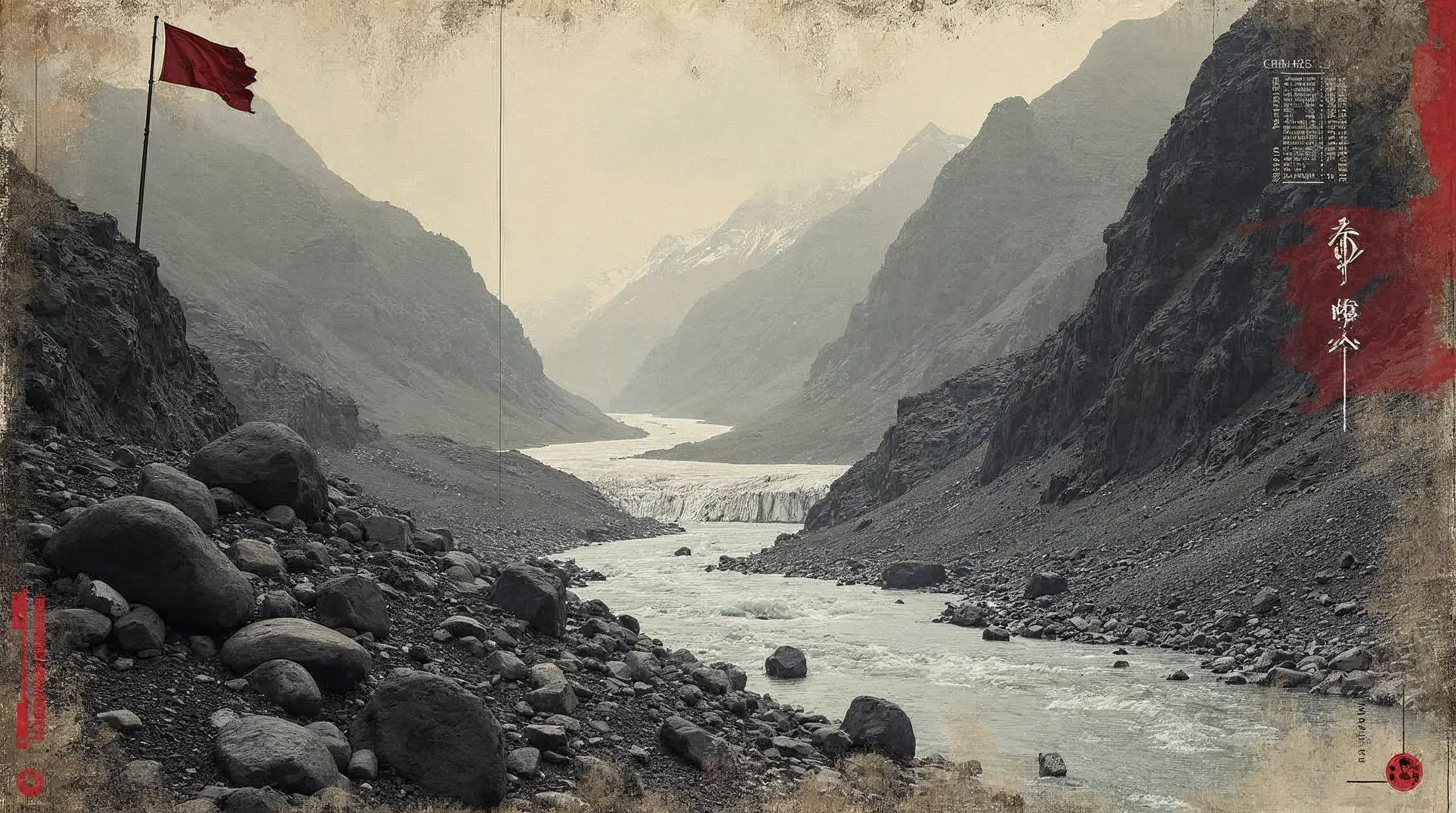
Observers are reading: how a debris-blocked river, not helicopter access, now controls whether the toll rises further.
Become an Observer — it's free. Get full access to all Crisis.Zone analysis, briefings and breaking coverage.
A live crisis, not a closed one
India has placed Bihar and Uttar Pradesh on high alert along the downstream Gandak river, dispatching NDRF teams as a precaution. The World Bank has pledged NRs 25 billion, and the IFRC has released roughly $1.4 million in emergency funds. With debris still lodged upstream and monsoon rain continuing through the weekend, Nepali and Tibetan authorities are treating this as an unresolved hazard rather than a completed disaster — one where the final toll remains, by officials' own admission, unknown.
Become an Observer — it's free — to unlock direct links to all sources used in this article.
We believe you deserve to verify everything we write. That's why we meticulously document every source.


