


Fresh flood warnings force rescue crews to higher ground as barrier lakes remain unstable
Nepal's National Disaster Risk Reduction and Management Authority updated the confirmed death toll to at least 903 on monday, with 2,502 people still missing, according to the BBC and Agence France-Presse. The update came hours after Nepal's disaster agency issued fresh flood warnings to mobile phones early Sunday morning, forcing rescue crews to abandon excavation sites for higher ground.
The Nepal Army confirmed water levels in the Trishuli River rose significantly after overnight rainfall beginning around 2:00 a.m. local time. Five days after a glacial collapse triggered the disaster, officials describe the situation not as stabilizing but as an active hazard still capable of reversing rescue progress — a shift from the search-and-recovery phase Crisis.Zone reported Thursday, when the toll passed 270 and scientists warned of a second surge.
Toll climbs as flood risk persists
Chinese state broadcaster CCTV, citing a regional government press conference, reported 16 confirmed dead and 546 missing on the Tibet side, including 261 foreign nationals from 23 countries. Reuters cited a combined cross-border missing figure of roughly 3,044. Nepal's disaster authority separately said more than 592 foreign nationals remain among its missing, a figure that has not been fully reconciled with China's count.
China's Ministry of Water Resources said Sunday that the barrier lake formed by the initial landslide near the border has fully drained through natural outflow, discharging roughly 2 million cubic metres of water. But CCTV reported a fresh landslide Saturday evening, 2.8 kilometres downstream, created a second dam and pool. Chinese officials called the situation "stable" but relocated rescue personnel near Gyirong border port as a precaution.
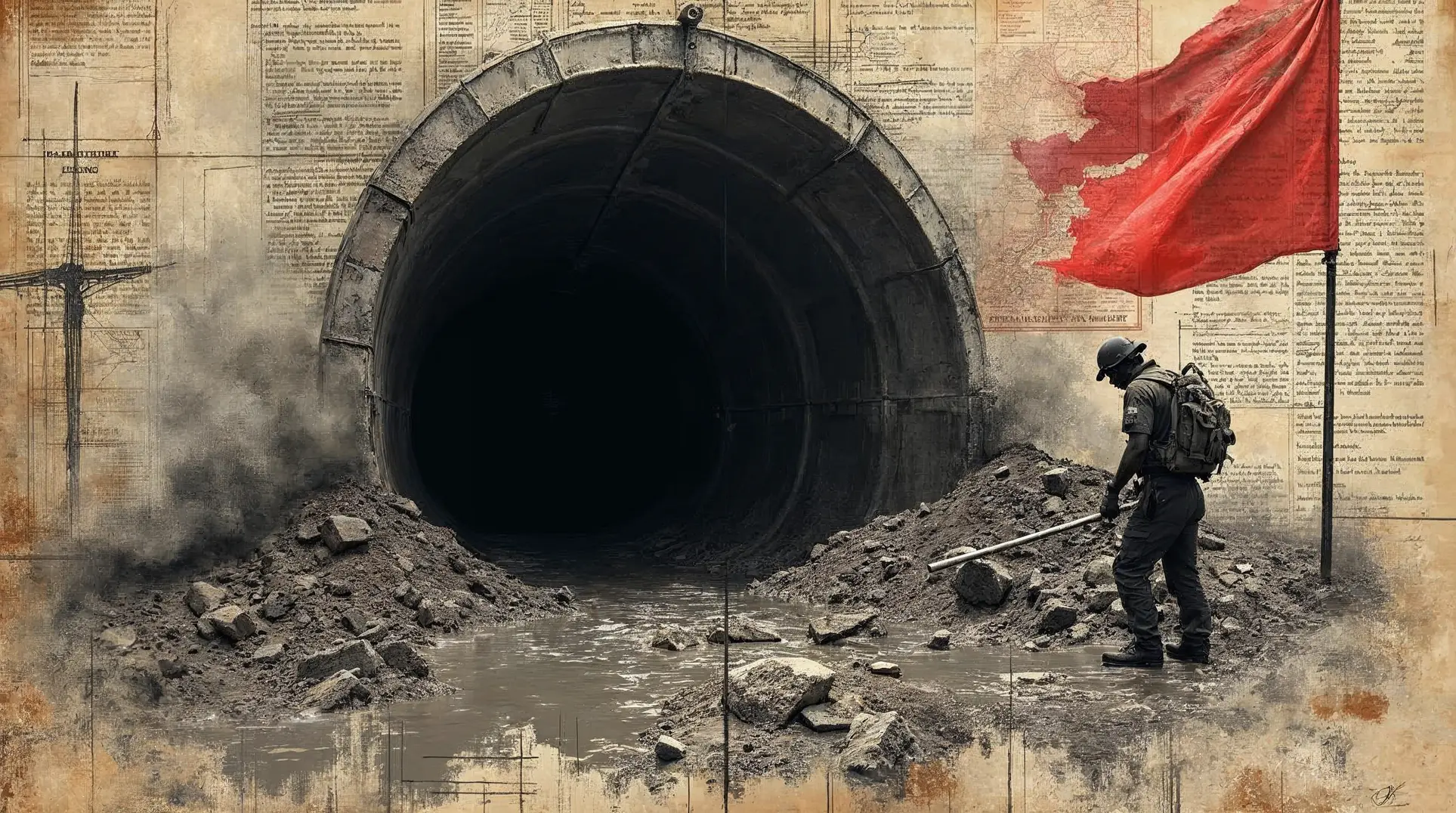
Observers are reading: why the tunnel sites, not the river, may drive the next major revision to the death toll.
Become an Observer — it's free. Get full access to all Crisis.Zone analysis, briefings and breaking coverage.
More than 20,000 rescue personnel are deployed in Nepal, with 7,514 people rescued so far, including over 227 foreign nationals. Helicopter operations have been repeatedly suspended since Friday due to weather. The Prithvi Highway remains partially blocked by landslide erosion at Krishnabhir, and a suspension bridge linking Gorkha and Dhading districts was swept away Sunday. Resident Govind Shreshta described the ongoing evacuations: "Sometimes they say a flood is coming, then we have to run again to higher ground, even at night... I have a 72-year-old father and 70-year-old mom. I must carry them and I am exhausted."
Five days after the initial flash flood was first reported, Nepali and Chinese officials are not describing this as a closed event. More than 100 glacial lakes in the surrounding region remain under monitoring. Rain is forecast to continue. Officials say the confirmed toll is expected to rise further as access to blocked sites improves.
Become an Observer — it's free — to unlock direct links to all sources used in this article.
We believe you deserve to verify everything we write. That's why we meticulously document every source.


