


Key takeaways
- Lithuania issued a red air alert on October 18, and an unidentified object crashed in a field near the Latvian border.
- Preliminary reports suggest NATO jets did not shoot the object down, and its type and origin were not established.
- Fog, small radar signatures, electronic warfare and legal seams between airspace and EEZs make attribution slow and consensus hard.
- Fighter scrambles against drones costing an estimated $20,000 to $50,000 are driving a shift toward layered counter-drone systems.
Lithuania's military and the National Crisis Management Centre (NKVC) issued a red air defence alert across central and northern counties, including Panevėžys and Šiauliai. It was issued on Sunday morning, October 18, and the Armed Forces said the object was in Lithuanian airspace between 06:00 and 08:00. Residents were told to go to shelters or another safe place, for about an hour, according to Reuters. Kaunas International Airport closed its airspace and grounded or held commercial flights. NATO Quick Reaction Alert (QRA) fighters scrambled to track an unidentified aerial track heading toward the Biržai and Pasvalys districts.
Early reports said the object may have flown in from Poland, which had not been confirmed by Sunday morning. It disappeared from radar before pilots could identify it visually through heavy cloud and fog. Wreckage was later reported in an unpopulated area in Pasvalys district, close to the Latvian border, according to lsm.lv. Latvian Armed Forces and preliminary Lithuanian reports suggest NATO fighters did not shoot the object down. They say it may have self-destructed, run out of fuel or lost control. Those preliminary reports did not establish its type or origin. Latvia's armed forces issued an air threat alert for the Bauska, Aizkraukle and Ogre municipalities at 07:40 and withdrew it at 08:12, after announcing that a suspected drone had possibly self-destructed in Lithuania.
One incident, three theatres
Taken alone, the Pasvalys crash is an unexplained wreck in a field. Set beside the past week it looks different. On October 17, Romanian Air Force F-16s from the 86th Air Base at Borcea intercepted two jet-powered attack drones of the Geran/Shahed family over the Black Sea, 20 to 25 kilometres off Sulina. The shootdown came within minutes of the drones entering sovereign airspace.
In the preceding days, drone attacks hit at least seven cargo vessels off Romania and Bulgaria this month, according to AP, and Reuters later reported at least five others hit over 10 days. They included the tankers Wine Trader and Yara J and the bulk carrier Chelsea 3. Two seafarers died and 18 were missing, according to AP. Romania's Nicușor Dan and Bulgaria's Rumen Radev held talks in Brussels with NATO Secretary-General Mark Rutte and asked for stronger maritime oversight. Radev said Russia was likely responsible for the October 13 attacks, while Dan did not say where the drones came from and promised "a reaction from the Romanian state".
The northern and western picture is similar. Fragments of an unidentified flying object were found on a beach at Karwia on October 13, and Polish military police opened an investigation, with sappers, the military, ABW and SKW notified. A later report said it was a Polish drone lost during a training exercise. Germany's federal criminal police (BKA) had recorded more than 1,000 suspicious drone flights over Germany by mid-December 2025, according to BKA president Holger Münch, who said military facilities, airports and other critical infrastructure were the most affected. They also cited 261 airport disruptions, an 80% year-on-year rise. On August 4, a custom explosive-laden drone was found beside a Ukrainian Antonov cargo aircraft at Leipzig/Halle Airport. German intelligence attributed it to Russia's military intelligence service, the GRU, as Crisis.Zone reported.

Observers are reading: how the four competing explanations for incursions interact with Article 4 and 5 thresholds, and why the EEZ gap shapes the Black Sea response.
Become an Observer, it's free. Get full access to all Crisis.Zone analysis, briefings and breaking coverage.
The price of answering
Each ambiguous incident carries a cost, and the cost falls unevenly. Airport closures are the most visible. Reports over recent months list temporary shutdowns at Brussels, Luxembourg, Berlin Brandenburg, Copenhagen and Munich, alongside Kaunas on Sunday, though the reporting reviewed here confirms only individual closures at some of these airports. The 2026 record on NATO's eastern edge shows the same pattern of disruption without a clear aggressor. A drone struck a Galați apartment building in Romania in late May, as Crisis.Zone reported. On September 13, Russia's Defence Ministry said it had struck "infrastructure facilitating military cargoes from Europe in Western Ukraine" near the Polish border, as covered here.
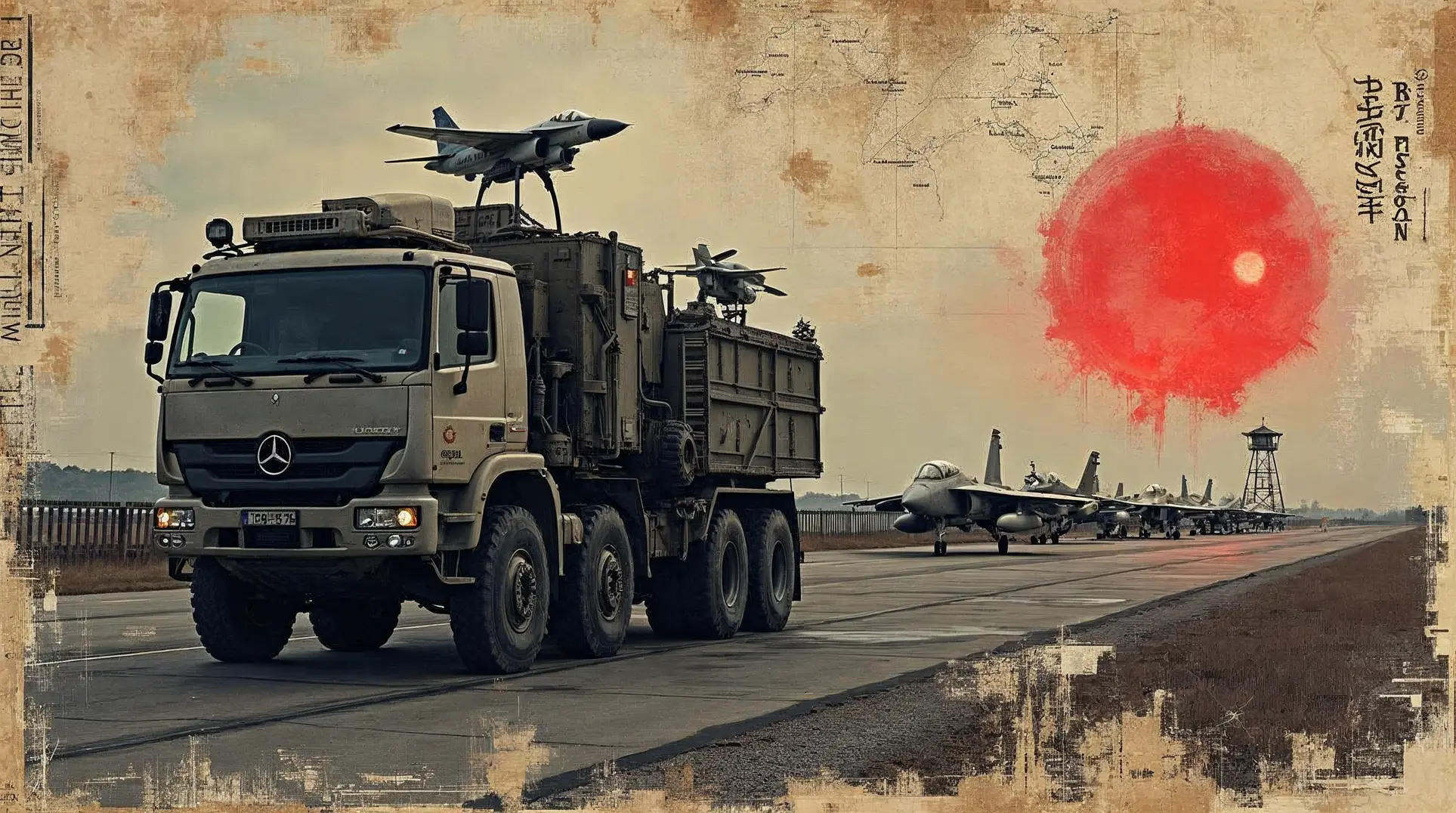
The economic side is the cost-exchange problem. NATO air forces are repeatedly launching fourth- and fifth-generation fighters (F-16s, Gripens, Eurofighters) that cost thousands of dollars per flight hour. They are chasing expendable drones estimated at $20,000 to $50,000. The defender pays in money, airframe hours and public confidence every time, whether or not the object proves hostile. A drone that crashes by itself in a field still produces a full alert cycle. Sunday's alert is therefore a measure of how expensive it is to treat every track as a potential attack.
Observers are reading: why counter-drone programmes may not yet close the cost gap, and the three indicators that will show whether NATO adjusts its thresholds.
Become an Observer, it's free. Get full access to all Crisis.Zone analysis, briefings and breaking coverage.
Conclusion
The Lithuanian alert ended within about an hour, and the object that triggered it may have fallen on its own. Its significance lies less in what it was than in what the response to it revealed. Sensing limits, overlapping explanations and unsettled legal boundaries combine to make every incursion slow to read and costly to answer.
The available reporting does not show that one actor coordinated Sunday's events with the Black Sea strikes or the German incursions. What it shows is a shared condition. Incidents across several theatres sit below the point at which NATO has agreed to act collectively. Whether that condition changes will depend on decisions in Vilnius, Brussels and other allied capitals. For now, the main burden falls on national air forces and the civilians under their alerts.
Become an Observer (it's free) to unlock direct links to all sources used in this article.
We believe you deserve to verify everything we write. That's why we meticulously document every source.


