


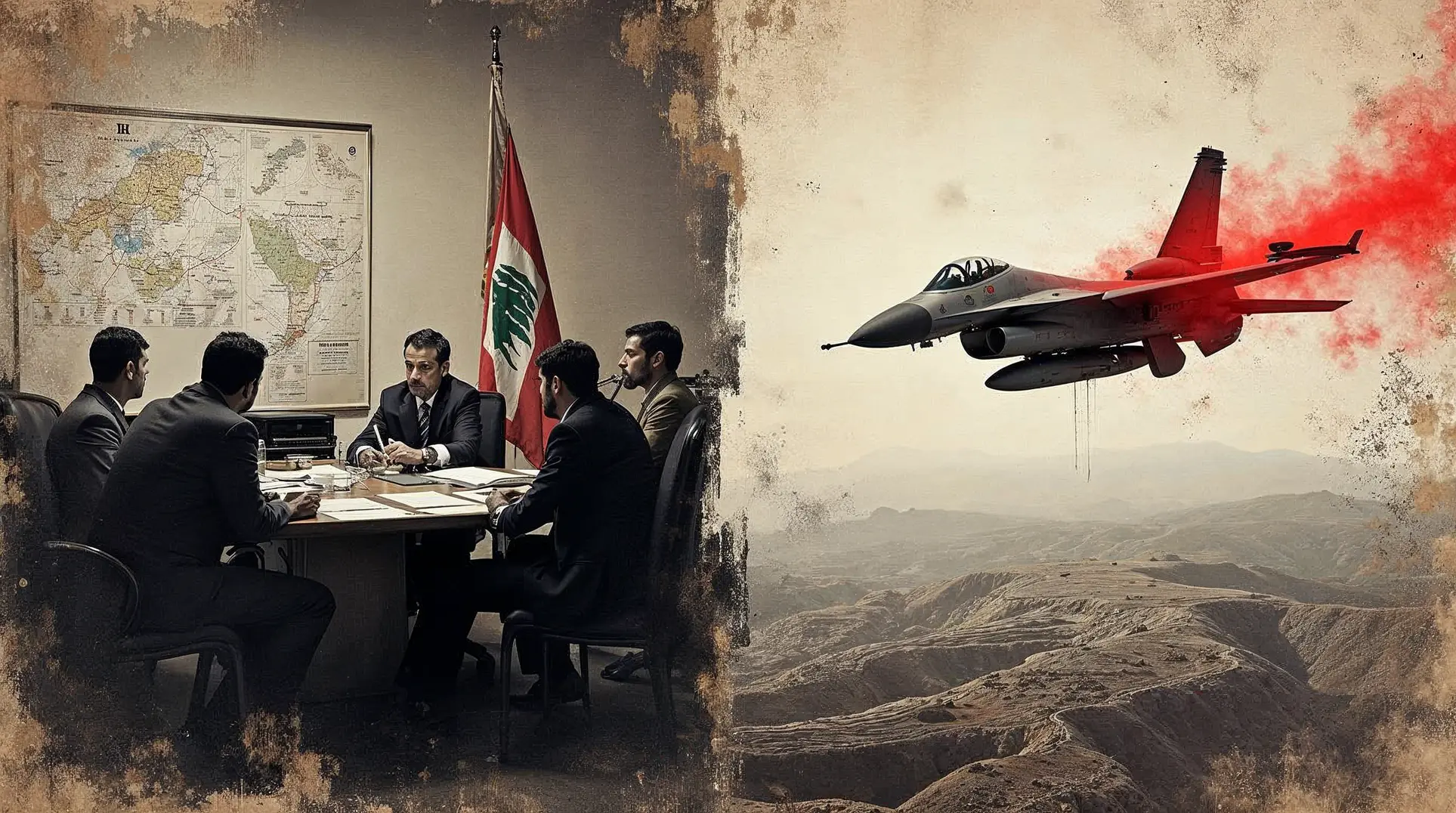
Lebanese Prime Minister Nawaf Salam's announcement that Lebanon is days away from completing Phase 1 disarmament south of the Litani River marks the most tangible progress in implementing the November 2024 ceasefire. Since the U.S.-brokered deal took effect, the Lebanese Armed Forces have conducted over 500 site missions, uncovered more than 100 arms caches, and dismantled most visible Hezbollah infrastructure in the southern buffer zone. Yet even as the government races to meet year-end benchmarks, Israeli aircraft continue near-daily strikes across Lebanese territory—from the south to the Bekaa Valley to Beirut's southern suburbs—claiming enforcement rights against alleged ceasefire violations.
This contradiction reveals the ceasefire's structural flaw: it operates less as a stable settlement than as a contested enforcement arena. Partial compliance south of the Litani creates new diplomatic space, but does not resolve the underlying power dynamics that have kept the border unstable since 2006. Whether the next 60 to 90 days produce reciprocal de-escalation or renewed conflict depends on three variables—state capacity, Israeli military restraint, and regional patron calculations—none of which are fully aligned.
What has actually been implemented
The Lebanese army's deployment is real and unprecedented. UNIFIL reports that LAF mobilized thousands of troops, established checkpoints throughout the southern zone mapped in the ceasefire text, and worked alongside UN observers to dismantle tunnels, weapons depots, and rocket positions. Monitoring committee meetings in Naqoura—chaired by the U.S.-led International Monitoring and Implementation Mechanism (IMIM) and including Lebanon, Israel, France, and the UN—now include civilian return and reconstruction on their agendas, signaling confidence that security conditions are stabilizing in the immediate border area.
Hezbollah has largely acquiesced to this first phase, withdrawing visible military infrastructure and personnel from the Litani sector. The group's cooperation reflects both battlefield losses—including leadership decapitation and depleted arsenals after the 2024 war—and tactical calculation. By accepting state control in the south, Hezbollah preserves its political leverage and parallel authority elsewhere in Lebanon, while deferring the existential question of nationwide disarmament to later rounds of negotiation.
Israel, however, has not reciprocated with a pause in military operations. Despite the truce framework mirroring UNSCR 1701's call for mutual cessation of hostilities, the Israel Defense Forces cite self-defense clauses to justify strikes on alleged Hezbollah positions across Lebanon. UN sources report more than 70 civilian deaths in the months since the ceasefire began. Israeli forces also maintain occupation of several strategic border points, pending LAF consolidation, creating friction over sequencing and sovereignty.
Members are reading: Why durable disarmament hinges on Iranian consent, U.S.-led sequencing, and whether Israel's enforcement-by-strike strategy undermines or accelerates compliance.
Reconstruction, legitimacy, and the next 90 days
The political stakes extend beyond security. Visible progress south of the Litani allows the Lebanese state to claim credibility with international donors and displaced populations. If LAF can sustain control, enable civilian returns, and channel reconstruction funds, it strengthens the argument for state primacy over militia authority. If disarmament stalls or Israeli strikes intensify, the government loses legitimacy and Hezbollah retains its justification for armed resistance.
Washington and Paris recognize this window. Conditioning assistance on benchmarks creates leverage, but overly rigid deadlines risk backlash and domestic fragmentation within Lebanon's delicate confessional balance. The optimal path—reciprocal de-escalation, phased LAF deployment beyond the Litani, and structured engagement with Tehran through regional intermediaries—requires discipline from all parties and sustained IMIM oversight.
The worst-case scenario remains accessible: a localized incident—an ambush on LAF, a cross-border rocket, an Israeli strike on a Hezbollah command node in Beirut—that reignites the cycle. The ceasefire has achieved partial disarmament and reduced immediate cross-border risk, but it has not resolved the fundamental mismatch between state capacity, militia power, and external patron interests. The next 90 days will test whether progress in the south can generate momentum for reciprocal steps—or whether enforcement-by-strike and Hezbollah conditionality keep the truce in a managed crisis that eventually breaks.
Subscribe to our free newsletter to unlock direct links to all sources used in this article.
We believe you deserve to verify everything we write. That's why we meticulously document every source.


