


The Israeli Air Force struck an apartment building in Beirut's southern suburbs on November 23, 2025, the first such attack on the Lebanese capital since early June. The target, according to the Israeli Prime Minister's office, was Hezbollah's Chief of Staff Haytham Ali Tabatabai, described by an Israeli source to CNN as effectively the organization's second-in-command. As of this writing, Israeli officials had not confirmed whether Tabatabai was killed in the strike on the Haret Hreik neighborhood, a Hezbollah stronghold in the Dahieh belt of southern Beirut. Lebanon's Health Ministry reported evolving casualty figures: initial tallies cited at least one killed and 21 wounded, later updated by CNN to five killed and 28 injured.
This is not merely another targeted killing in Israel's long campaign against Hezbollah leadership. The strike's location—"in the heart of Beirut," as Prime Minister Benjamin Netanyahu's office put it—signals a deliberate escalation in the deterrence contest playing out under the fragile U.S.-mediated ceasefire that took effect in November 2024. While Israel has conducted near-daily strikes in southern and eastern Lebanon since that truce, citing Hezbollah violations of its terms, penetrating the dense residential fabric of the capital crosses a threshold that both parties had largely observed for months. The question now is whether this calibrated provocation restores Israeli deterrence or triggers the miscalculation spiral both sides claim to want to avoid.
Israel's preemptive logic
Israeli officials framed the strike as enforcement of red lines regarding Hezbollah's military reconstitution. Defense Minister Israel Katz declared, "We will continue to act forcefully to prevent any threat to the residents of the north and to the State of Israel," adding a stark warning: "Anyone who raises a hand against Israel—his hand will be cut off." The target himself underscores this logic. The U.S. Treasury designated Tabatabai in 2016 as a senior Hezbollah military commander with operational responsibility for special forces in Syria and Yemen; Washington's Rewards for Justice program has offered up to $5 million for information on him. His elimination, if confirmed, would represent a significant degradation of Hezbollah's remaining command structure, already hollowed by Israel's September 2024 strike that killed longtime leader Hassan Nasrallah and subsequent operations that targeted communications networks and mid-tier commanders.
From Israel's perspective, the strike aims to demonstrate that the ceasefire does not grant Hezbollah sanctuary to rebuild the military infrastructure dismantled over the past year. Israeli officials have consistently accused Hezbollah of violating the truce by rearming and repositioning heavy weapons that, under the November 2024 terms, should have been withdrawn north of the Litani River. Each strike in southern Lebanon, and now in Beirut itself, is designed to communicate that Israel will unilaterally enforce its interpretation of the agreement's security provisions, regardless of Lebanese state sovereignty or international legal frameworks.
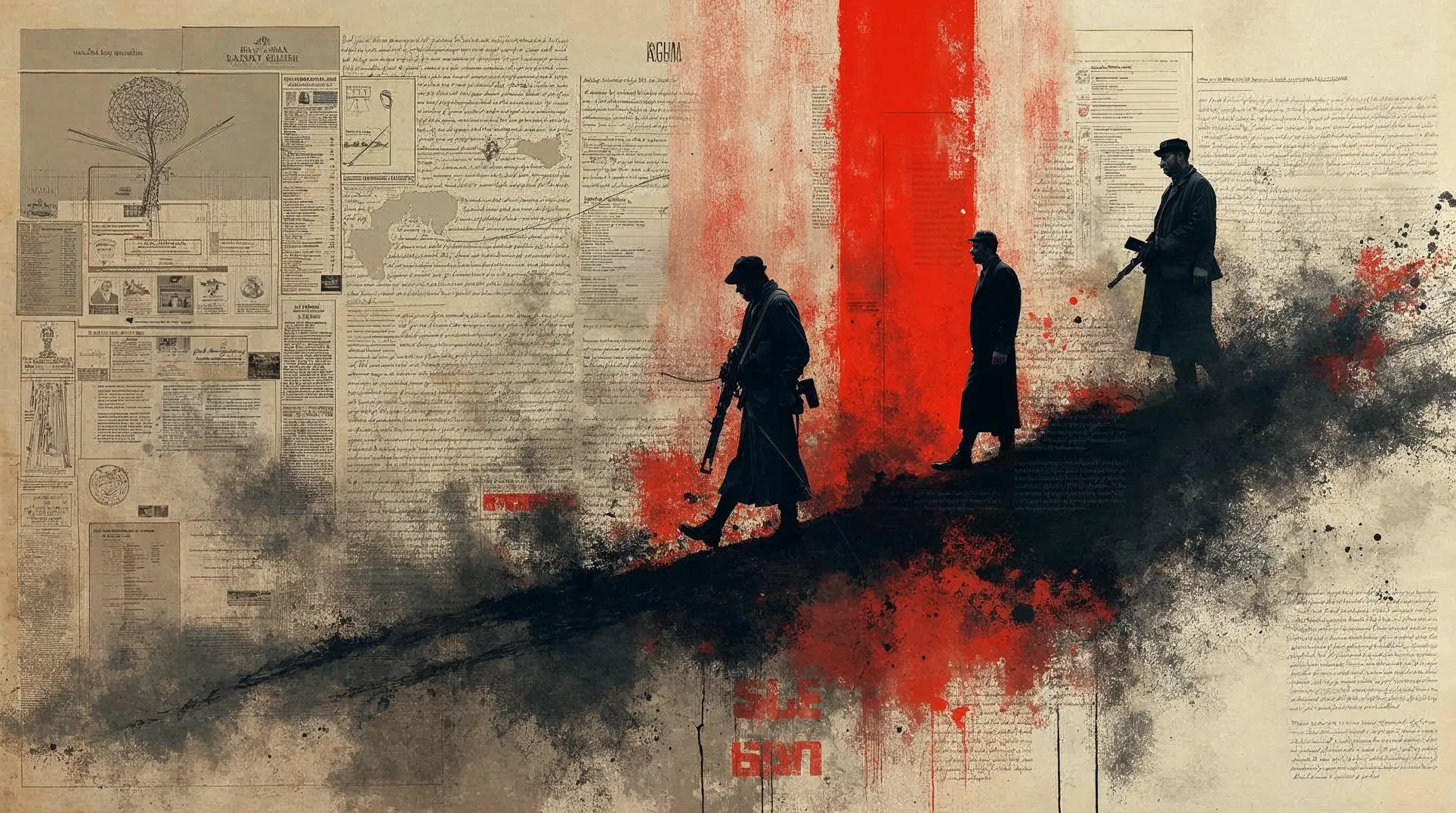
Members are reading: How the Beirut strike creates a deterrence paradox where each side's effort to restore credibility pushes the other toward miscalculation.
Outlook: Calibrated escalation or spiral?
The coming days will reveal whether Israel's gamble—that it can strike Hezbollah leadership in Beirut without triggering wider war—was well-calibrated or dangerously optimistic. Much hinges on confirmation of Tabatabai's fate. If he was killed, Hezbollah's deterrence credibility requires some form of response, yet its weakened military position limits options. If he survived, the strike still demonstrates Israel's intelligence reach and operational freedom, pressuring Hezbollah to either retaliate symbolically or accept a new baseline of vulnerability. Either way, the structural conditions that made the ceasefire fragile from the outset—unresolved questions of sovereignty, enforcement, and the balance of deterrence—remain unchanged, and arguably more exposed.
 Layla Hassan
What is clear is that the managed-escalation model both sides have pursued since November 2024 is fraying. Israel's willingness to strike in Beirut proper, not just the border zone, suggests confidence that Hezbollah cannot or will not respond in ways that trigger full war. That confidence may prove correct, or it may prove to be the miscalculation that collapses the fragile equilibrium. In the dense urban terrain of southern Beirut, where military targets and civilian infrastructure are inseparable and where every strike carries symbolic as well as operational weight, the margin for error is narrower than either side may acknowledge. The next move belongs to Hezbollah, but the space for calibrated choices is shrinking with each escalation.
 Layla Hassan
Subscribe to our free newsletter to unlock direct links to all sources used in this article.
We believe you deserve to verify everything we write. That's why we meticulously document every source.


