


Developing story
We are following this story for new developments and will update this article when significant news emerges.
Monitored since 7 November 2026 | no updates yet
Key takeaways
- Ukrainian officials say Russian ballistic missiles closed Kyiv's Northern Bridge in both directions, injured five and disrupted heating and water.
- Russia's Defense Ministry says it hit military-industrial, energy and transport targets; none of its target descriptions is independently established.
- Zelensky warned of an attack on energy and Dnipro bridges two hours earlier and asked for Patriot interceptor deliveries.
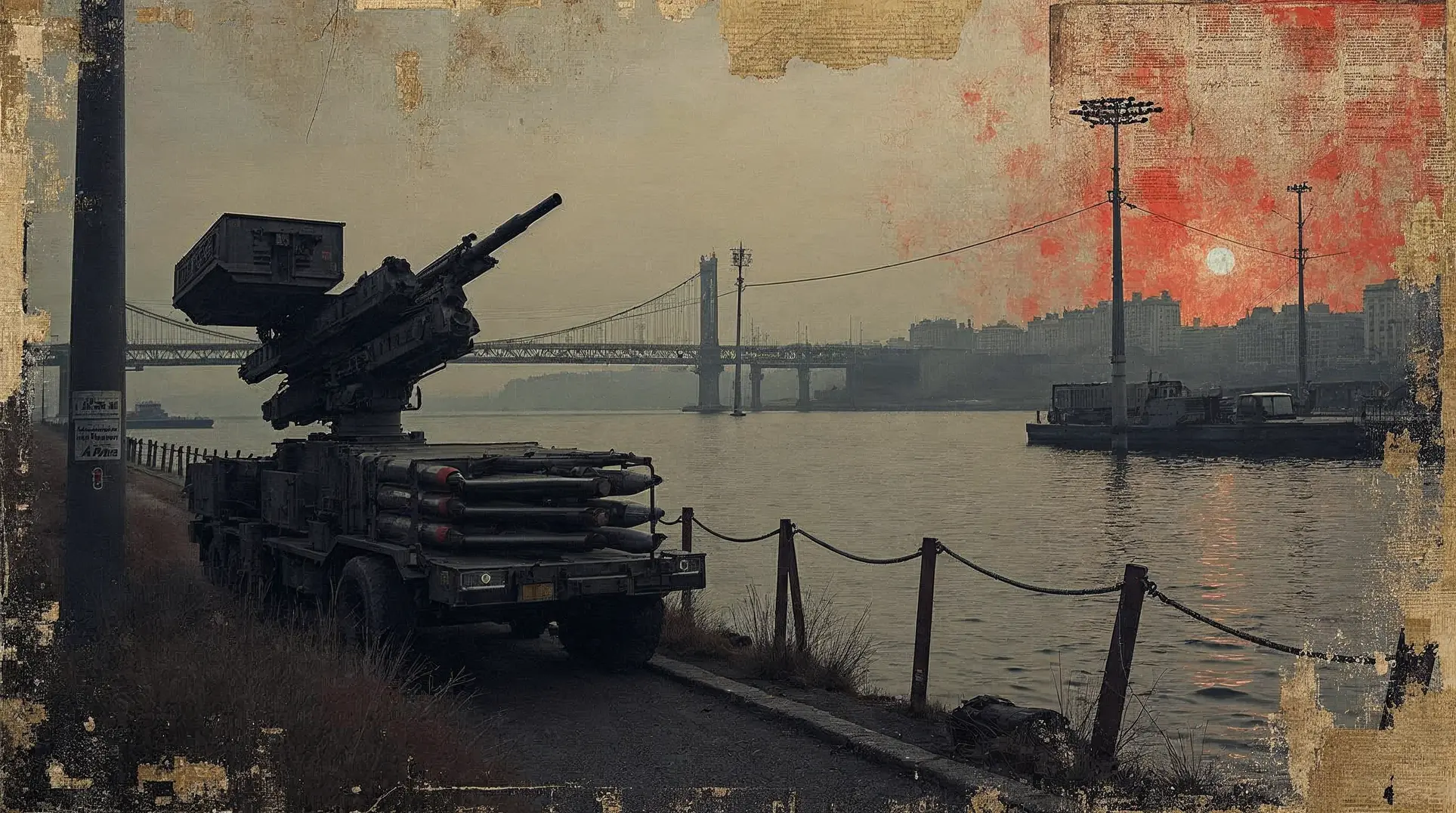
Russian ballistic missiles hit Kyiv and the surrounding region overnight into Saturday, 7 November. Mayor Vitali Klitschko said the Northern Bridge over the Dnipro River was damaged and closed in both directions. He said five people were injured in the capital, including a 14-year-old child, and medics hospitalised two of them. Early reports had given lower counts. Klitschko also said energy infrastructure in the Kyiv and Zhytomyr regions was damaged, and that there were "disruptions" to the city's heating and water supply, according to Euronews.
Russia's Defense Ministry said it carried out a "massive" strike on military-industrial, energy and transport targets. The first missiles hit shortly before 11 p.m. on 6 November. That was about two hours after President Volodymyr Zelensky said in his nightly address that Ukraine had intelligence of a new attack being prepared on its energy infrastructure, its Dnipro bridges and civilian infrastructure. The Air Force said at least six missiles were launched at the city within a few minutes, the Kyiv Independent reported. It reported several waves through the night, according to Liga.net.
Damage across the capital, and Moscow's account
Klitschko said on the morning of 7 November that the capital's energy supply situation was "extremely difficult." Specialists were assessing the Northern Bridge, he said. The road surface, a trolleybus overhead line and a power transmission line were damaged, and the blast wave damaged five trucks in the parking lot nearby. No reopening time had been announced, UkrMedia reported.
The State Emergency Service (SES) said fires broke out in Solomianskyi district and that residential buildings and a kindergarten were damaged, according to Ukrainska Pravda. At one site the ground-floor facade of a five-storey block was partly destroyed, with no casualties. At another, a parked truck and a non-residential building burned.
Services stayed unstable. The Kyiv City State Administration said metro trains were running again on all lines but warned of suspensions because of voltage fluctuations. UkrMedia reported that metro, tram and trolleybus services had been suspended over the power shortage. After an earlier attack the capital had been left without water for nearly a day, Liga.net noted, and the Cabinet is sending 10 more generators to the water utility.
Russia's Defense Ministry gave a different account. It claimed hits on the Northern Bridge, which it called a route for military transport, and on the "Meridian" plant, which it said makes Flamingo cruise missiles. It also claimed a Zhytomyr substation and a Black Sea cargo vessel it said carried military and dual-use goods. None of these descriptions is independently established. By Saturday, no Ukrainian confirmation or denial of the Meridian or vessel claims had surfaced, and no damage reports for either.
Observers are reading: a look at how the bridge label compares with the damage reported to the bridge, the 27 October strike on the South Bridge, and delays in Patriot deliveries.
Become an Observer, it's free. Get full access to all Crisis.Zone analysis, briefings and breaking coverage.
Winter, talks and what stays open
The strike followed a week of heavy pressure on the grid. DTEK, Ukraine's largest private energy company, said on 5 November that Russia had carried out 78 strikes on Ukraine's energy infrastructure in three days, hitting both power plants and transmission facilities, compared with 11 massive attacks on the energy system in all of 2022. Mykhailo Yatsuk, director of the Institute of Water Problems and Land Reclamation, told the Kyiv Independent that the 3 November strikes caused "the most serious water outage in Kyiv since the war began". Crisis.Zone covered the 2 to 3 November attack.
US-brokered Ukraine-Russia talks are scheduled for 10 and 11 November in Abu Dhabi, three days after this strike, the Independent reported. Fakti said there was no information yet on whether the attack would change the schedule. The timing is context, not evidence of intent.
On 7 November, two points remained open. One is whether allied interceptor deliveries, or any pause on energy strikes, arrive before the cold sets in. The other is what Kyiv's grid and bridges can bear until then.
Become an Observer (it's free) to unlock direct links to all sources used in this article.
We believe you deserve to verify everything we write. That's why we meticulously document every source.


