


The 13 December drone strike that killed six Bangladeshi peacekeepers at the UNISFA logistics base in Kadugli, South Kordofan, marks a new threshold in Sudan's civil war. The UN Security Council condemned the "heinous and deliberate" attack, which may constitute a war crime, but condemnations cannot alter the tactical reality: drone warfare has outpaced humanitarian protection doctrines across Sudan's strategic central corridor. UNISFA has since wound down its Kadugli presence, joining the growing roster of international actors unable to operate in Kordofan's contested airspace. The strike was one of at least three major drone and artillery assaults in Kordofan in December alone, including a 14 December attack on a Dilling hospital that killed six and a barrage that claimed sixteen civilian lives in the same town days later.
This escalation arrives as US Secretary of State Marco Rubio issued a 20 December call for an immediate humanitarian truce, describing the violence as "horrifying" and noting that neither the Sudanese Armed Forces (SAF) nor the Rapid Support Forces (RSF) can operate without external support. Yet Washington's appeal sidesteps the architecture sustaining the slaughter: verifiable shutdowns of the arms, finance, and logistics pipelines flowing to both belligerents. Without enforceable leverage on external sponsors, ceasefire diplomacy becomes performance while Kordofan replicates Darfur's atrocity playbook—urban sieges, precision strikes on civilian infrastructure, and mass starvation as a weapon of war.
Kordofan becomes the war's accelerant
Kordofan is Sudan's geographic spine, linking SAF-held northern and eastern territories to the RSF-dominated west and contested south. The region's collapse would sever the nation's arterial trade routes and fragment what remains of centralized governance. December's violence has accelerated that trajectory. RSF forces seized Babanusa in West Kordofan on 1 December, triggering fresh displacement and cutting rail links that once connected Darfur to Khartoum. Meanwhile, South Kordofan's Kadugli and Dilling endure rolling sieges that have severed market access, displaced tens of thousands, and pushed the region into famine—Kadugli is now the second Sudanese locality where the Integrated Food Security Phase Classification (IPC) has confirmed famine conditions, after El Fasher.
More than 100 civilians have been killed in Kordofan since early December, according to Al Jazeera tallies, while hospitals and schools absorb direct strikes. The World Health Organization reports that over 80 percent of global deaths from attacks on medical facilities this year occurred in Sudan, with 201 verified attacks since April 2023 claiming 1,858 lives. These are not collateral events; they follow the logic of siege warfare designed to empty cities and erase civilian resilience. Trade routes are blocked, water systems fail, and families flee along roads exposed to drone surveillance. The International Organization for Migration warns that El-Obeid, North Kordofan's transport hub serving over 500,000 people, could be the next flashpoint. If El-Obeid falls or endures prolonged siege, the logistics artery linking eastern Sudan, Darfur, and South Sudan collapses, accelerating national fragmentation and regional spillover.
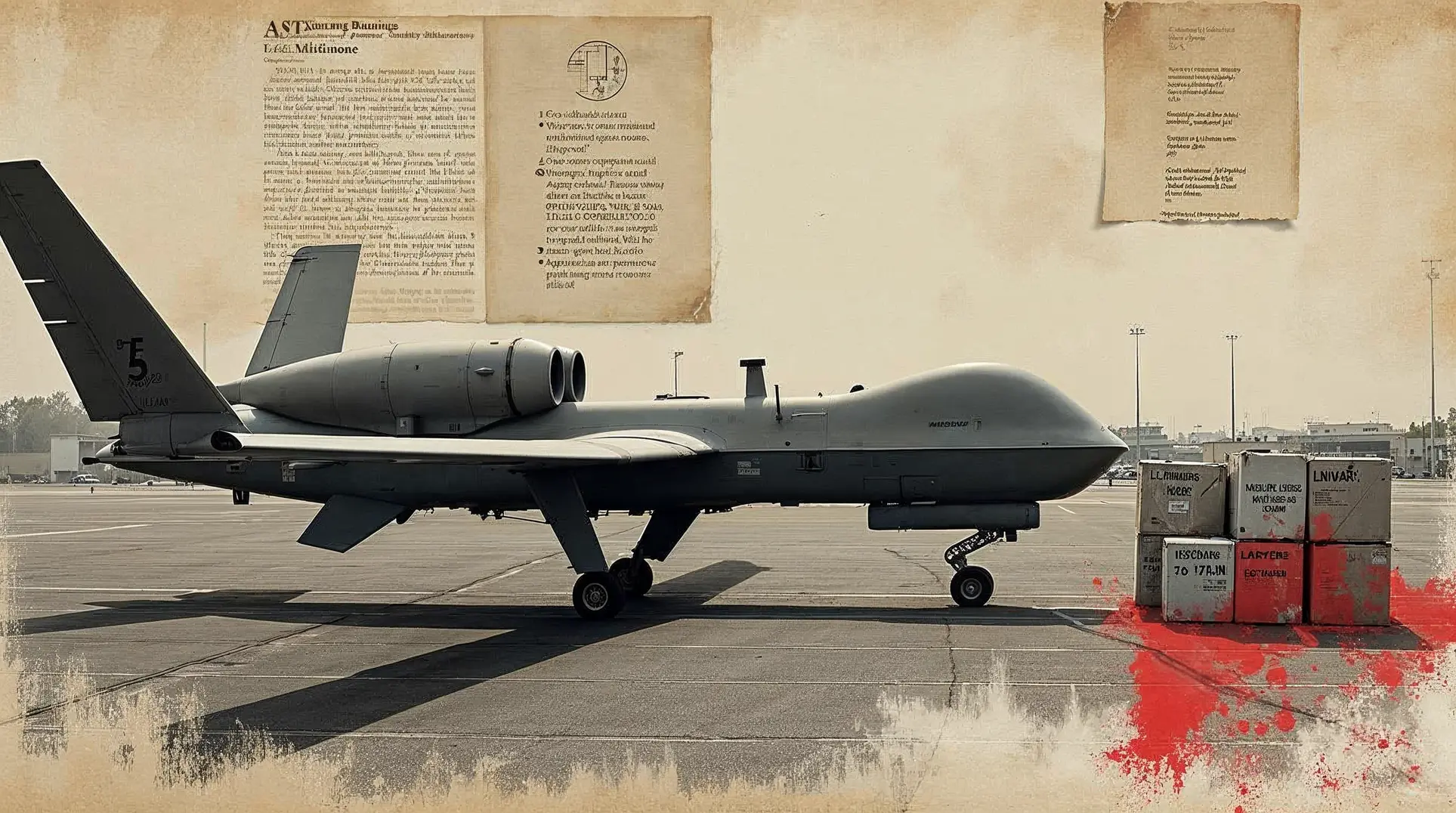
Members are reading: Why US ceasefire calls fail without enforceable arms shutdowns, and the three mechanisms needed to make truces credible.
Regional spillover and the collapse of humanitarian space
Sudan is now the world's largest displacement crisis, with over 9.3 million internally displaced and more than 3 million refugees in neighboring states—14 million people forced from their homes since April 2023. Aid agencies have labeled it 2025's most neglected emergency, with funding gaps forcing the World Food Programme to warn that rations will drop to survival minimums in 2026. Across Kordofan, famine risk surges as 21.2 million Sudanese face acute food insecurity. Yet humanitarian access is collapsing precisely as needs peak. The UNISFA withdrawal from Kadugli after the drone strike illustrates the bind: operations require airspace guarantees and counter-drone infrastructure that current ceasefire frameworks do not provide. Verbal assurances mean nothing when drones can strike hospitals, bases, and convoys with impunity.
The stakes extend beyond Sudan's borders. Kordofan's trade corridors link landlocked South Sudan and eastern Chad to regional markets; their closure amplifies economic fragility and refugee flows into states already hosting hundreds of thousands. If El-Obeid falls, the central nervous system connecting Sudan's regions fails, fragmenting governance and accelerating the conditions for long-term statelessness. Washington's truce rhetoric, absent enforceable leverage on external sponsors, cannot prevent that outcome. Sustainable de-escalation demands that mediators name and sanction the arms suppliers sustaining both sides—and commit to verification regimes that make paper commitments operationally meaningful. Anything less leaves Kordofan's civilians under siege, truces unenforceable, and Sudan's descent into total collapse all but guaranteed.
Subscribe to our free newsletter to unlock direct links to all sources used in this article.
We believe you deserve to verify everything we write. That's why we meticulously document every source.


