


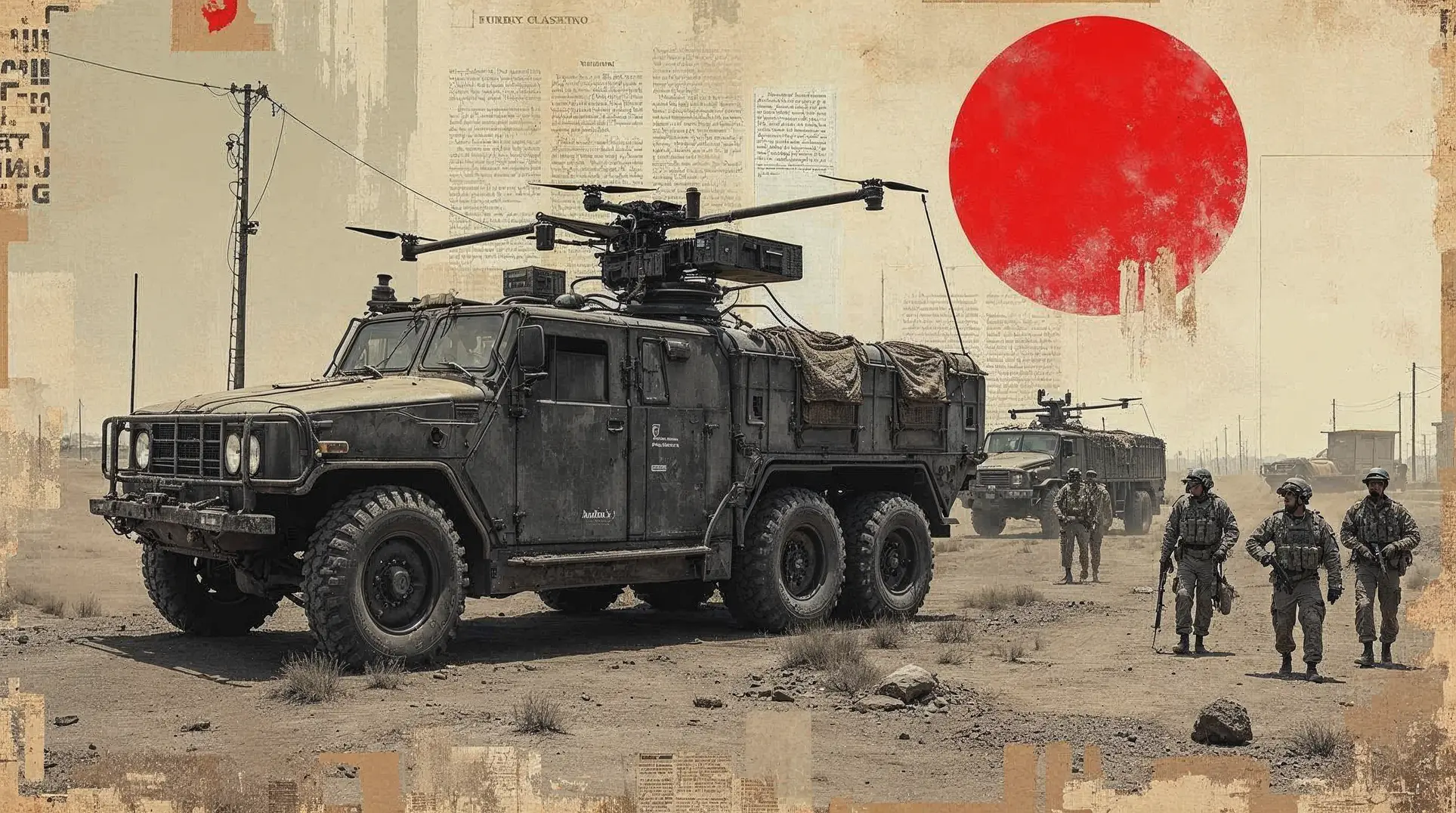
A drone strike hit the United Nations peacekeeping logistics base in Kadugli, South Kordofan, on 13 December, killing six Bangladeshi peacekeepers and wounding eight others. The attack on the UN Interim Security Force for Abyei (UNISFA) prompted UN Secretary-General António Guterres to condemn the incident as "horrific" and warn that attacks targeting UN peacekeepers may constitute war crimes under international law. He called for accountability, signaling a likely formal investigation into an incident that exposes the escalating risks facing UN missions operating within Sudan's increasingly drone-contested airspace.
Bangladesh's interim leader Muhammad Yunus confirmed the toll, expressed deep sorrow, and requested urgent UN support for the injured. Sudan's Sovereignty Council, aligned with the Sudanese Armed Forces (SAF), blamed the Rapid Support Forces (RSF) for the aerial attack. The RSF denied responsibility. Attribution remains disputed pending investigation, but the strike marks a dangerous new threshold for peacekeeping operations in a theater where siege conditions, famine, and fragmented command-and-control have already hollowed out civilian protection.
Kadugli under siege: UNISFA in the crosshairs
Kadugli, the capital of South Kordofan, has been under siege for over a year. In November, famine conditions were formally declared there as humanitarian access collapsed and atrocity patterns migrated from Darfur. UNISFA, mandated by the Security Council to support security arrangements in the disputed Abyei area between Sudan and South Sudan, maintains critical logistics infrastructure in the city. Bangladesh is among the largest troop-contributing countries to UN peacekeeping globally and has long staffed the Abyei mission. All six killed and eight wounded were Bangladeshi personnel.
The drone strike did not target a forward observation post or a mobile patrol; it hit a static logistics base inside a city already cut off from reliable humanitarian corridors. That choice of target—whether deliberate or the result of poor targeting discipline—underscores how thoroughly Kadugli's civilian and international presence has been absorbed into the battlespace. The Secretary-General's language was unusually direct: "There will need to be accountability." That phrasing, paired with the explicit war-crimes framing, suggests the UN Department of Peace Operations and the Office of the High Commissioner for Human Rights will open a formal inquiry.
Members are reading: The technical and legal complexities of attributing drone strikes in contested airspace, and what this means for UN force protection.
A famine zone becomes a battlefield for accountability
The Kadugli strike occurred against a backdrop of rapidly deteriorating conditions across Kordofan and Darfur. Since April 2023, fighting between SAF and RSF has killed tens of thousands and displaced millions. Front lines have shifted after RSF advances, including the fall of El-Fasher in Darfur, and the conflict has metastasized into Kordofan, where siege tactics and atrocity patterns have intensified. The UN has already ordered investigations into atrocities in El-Fasher, but progress on accountability has been slow, hindered by access constraints and the sheer volume of documented violations.
The attack on UNISFA adds another layer to that accountability deficit. It is not merely a violation against peacekeepers; it is an attack on the infrastructure that underpins civilian protection and humanitarian access in one of Sudan's most vulnerable regions. Kadugli's famine conditions mean that every constraint on UNISFA's operations has direct humanitarian costs. If the mission is forced to curtail movements, harden facilities, or withdraw personnel, the population loses what little protection and access the UN presence affords.
What happens next will depend on the UN's willingness to commit resources to a credible investigation, Bangladesh's diplomatic leverage within the peacekeeping architecture, and whether the Security Council can muster consensus to act on findings. The Secretary-General's language suggests he understands the stakes. Whether the broader UN system can deliver accountability in a war where both sides deny, deflect, and contest every fact remains an open question. For the six Bangladeshi peacekeepers killed in Kadugli, and the populations they were deployed to protect, that question is not academic.
Subscribe to our free newsletter to unlock direct links to all sources used in this article.
We believe you deserve to verify everything we write. That's why we meticulously document every source.


