


Twenty-five girls abducted in pre-dawn raid as armed groups exploit security gaps despite years of government pledges
Armed men stormed a government boarding school in northwestern Nigeria before dawn on Monday, abducting 25 female students and killing the vice principal in an attack that exposes the persistent failure to protect educational institutions despite years of official pledges. Gunmen on motorcycles breached the perimeter of Government Girls Comprehensive Secondary School in Maga, Danko-Wasagu local government area of Kebbi State, around 4 a.m. local time, exchanging fire with guards before seizing students from their dormitory. Vice Principal Hassan Yakubu Makuku died in the assault; at least one other staff member was injured.
The Maga abduction shatters recent government claims of progress on school security and underscores a brutal pattern: despite Safe Schools initiatives launched after the 2014 Chibok crisis and reinforced following subsequent mass kidnappings, rural boarding schools in Nigeria's northwest remain vulnerable targets for armed bandit networks operating from forest enclaves along porous state borders. One of the abducted girls escaped and returned home late Monday, but as of Wednesday morning 24 remained missing, their families gathered at the damaged school awaiting news while security forces comb suspected escape routes toward neighboring Zamfara and Sokoto states.
The mechanics of failure
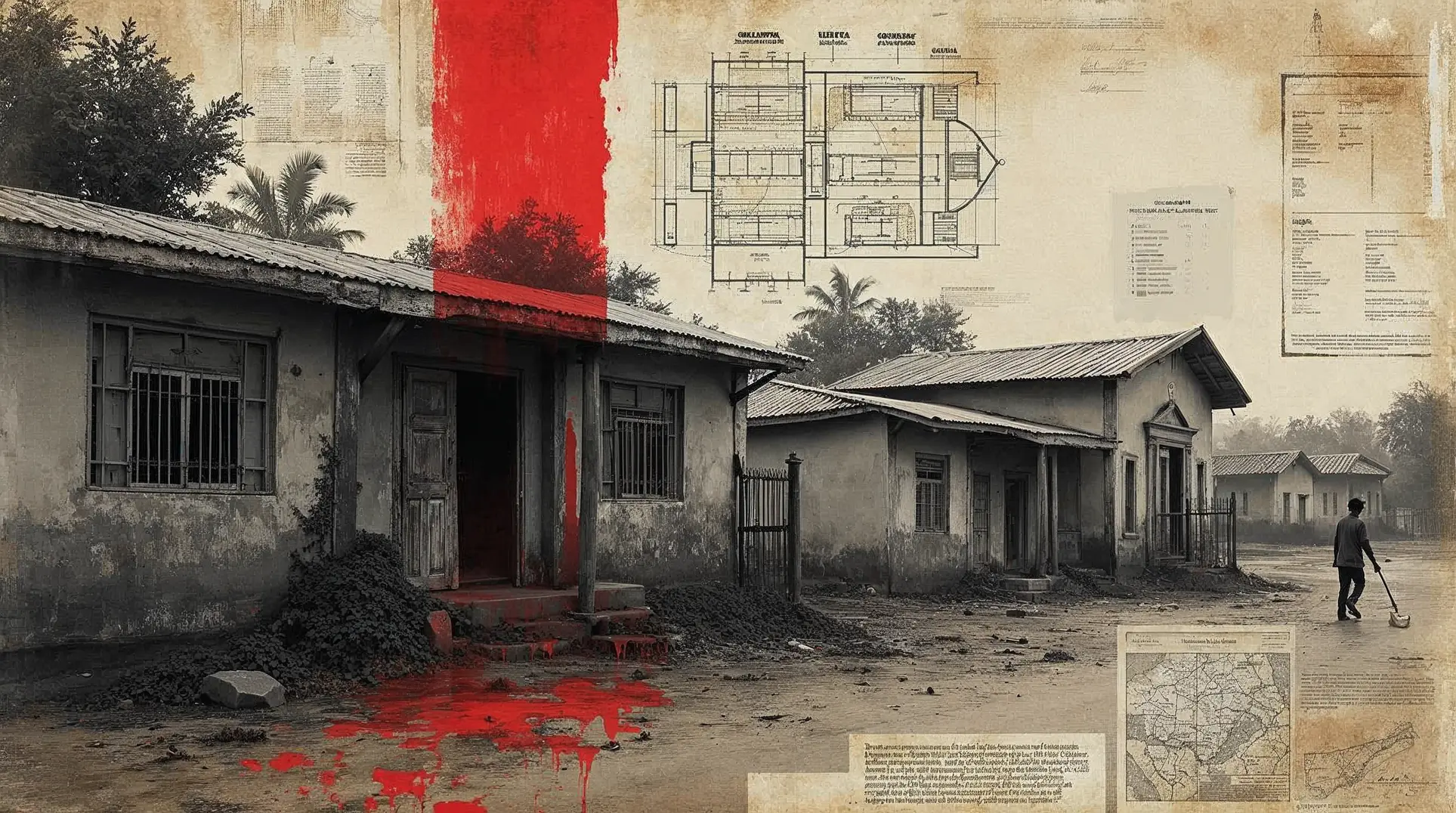
According to Kebbi police spokesperson Nafi'u Abubakar Kotarkoshi, the attackers arrived armed with rifles and sophisticated weapons, scaling the school's perimeter fence after the initial firefight. The breach points and response timeline reveal familiar weaknesses: inadequate lighting, insufficient guard staffing for overnight shifts, and delayed reinforcement from district police posts in rural high-risk corridors. School principal Musa Rabi Magaji confirmed that one student managed to evade capture during the raid, but the attackers successfully evacuated two dozen girls on motorcycles—a hallmark of northwest bandit operations—before army units could block egress routes.
Nigeria's Chief of Army Staff Lt. Gen. Waidi Shaibu visited Kebbi in the attack's aftermath, telling troops deployed to the search operation: "We must find these children. Act decisively and professionally on all intelligence. Success is not optional." Kebbi Governor Nasir Idris toured the school and pledged full rescue efforts, mobilizing military units, police tactical teams, and local vigilante hunters to sweep forests near the Zamfara border where bandit camps are known to operate. No group has claimed responsibility, but the modus operandi—pre-dawn motorcycle assault, mass abduction of schoolgirls for ransom or leverage—matches the pattern of armed bandit groups that have plagued the northwest for years, driven by kidnap-for-ransom economies rather than ideological agendas.
The same week saw reports of a separate mass abduction in neighboring Zamfara, where 64 people were seized, underlining the breadth of insecurity across the region. Danko-Wasagu sits at a strategic vulnerability: forested terrain, weak rural security presence, and proximity to Zamfara and Sokoto, states where bandit networks maintain hideouts and exploit inter-state coordination gaps. The terrain favors motorcycle-mounted attackers and complicates pursuit operations that risk harming hostages during hot-contact scenarios.
Members are reading: Why Safe Schools policies have failed to translate into perimeter security, and what the Maga attack reveals about governance gaps.
Families in waiting
Parents gathered at the damaged school on Tuesday, many having traveled from surrounding villages, their sleepless vigils a tableau of dread familiar to communities scarred by previous mass abductions across Nigeria's conflict zones. The empty dormitory beds and scattered personal belongings shown in handout videos echo scenes from Chibok, Dapchi, and Birnin Yauri—each abduction reigniting collective trauma and undermining trust in state protection. Survivors of past kidnappings, some still struggling with reintegration, know that rescue alone does not restore normalcy; prevention is the only humane benchmark. The one student who escaped has provided investigators with details of the attackers' movements, but her testimony also underscores how close coordination and local intelligence might have intercepted the raid before it succeeded.
What comes next
Authorities face a narrow operational window. Proof-of-life demands may emerge within days, forcing agonizing calculations about ransom payments that fuel the kidnap economy versus the immediate imperative to secure the girls' release. Aerial surveillance assets—limited in Nigeria's overstretched military—are being redeployed to track motorcycle trails toward suspected forest camps, while ground units coordinate with local hunters who know the terrain. The risk of armed contact during rescue attempts complicates rapid intervention, favoring negotiation pathways that have historically resulted in payments to bandit commanders.
Broader regional dynamics also matter. The collapse of education and health infrastructure across the Sahel feeds insecurity loops where ungoverned spaces enable armed groups, while international attention—including recent U.S. political commentary on Nigeria—risks misframing northwest banditry through ideological lenses that obscure the kidnap-for-profit drivers. Kebbi State is predominantly Muslim, with approximately 84% of the population identifying as Muslim, and reports indicate that the abducted schoolchildren were mostly Muslim. This undercuts simplistic sectarian narratives; the security crisis in northern Nigeria is multifaceted, involving not only religious extremism but also banditry, clashes over resources, and kidnap-for-ransom economics driven more by criminal incentive than ideological agenda.
The girls waiting in the forest
Twenty-four girls remain unaccounted for as Wednesday dawns. Their families demand answers, their classmates demand safety, and Nigeria's leadership faces a choice: continue the cycle of reactive scrambles and hollow pledges, or finally invest in the unglamorous infrastructure—fencing, lighting, staffing, drills—that makes Safe Schools real. The metric of success is not how quickly officials mobilize after an attack, but whether the attack happens at all. Until that benchmark is met, every boarding school in Nigeria's northwest remains a potential Maga.
Sources
This analysis draws on the following materials:
- Reuters, Associated Press, ABC News/CBC reporting on the Kebbi school attack
- Statements by Kebbi State Police Command spokesperson Nafi'u Abubakar Kotarkoshi
- Nigerian Army Chief of Staff Lt. Gen. Waidi Shaibu address to troops
- School officials including Principal Musa Rabi Magaji
- Regional security monitoring and Safe Schools policy assessments
Subscribe to our free newsletter to unlock direct links to all sources used in this article.
We believe you deserve to verify everything we write. That's why we meticulously document every source.


