


- Nearly 4 million displaced across Burkina Faso, Mali, Niger—80% women and children facing trafficking, violence, recruitment risks
- Over 14,800 schools and 900 health facilities closed, creating a 'lost generation' without education or healthcare access
- Extremist groups ISSP and JNIM deploying drones and IEDs, exploiting governance vacuums to establish proto-state control structures
The Sahel region is witnessing an unprecedented humanitarian catastrophe. As of October 2025, nearly four million people have been forcibly displaced across Burkina Faso, Mali, and Niger—a staggering escalation driven by relentless militant violence, devastating climate impacts, and the wholesale collapse of essential services. Women and children, who represent approximately 80 percent of the displaced population, face acute protection risks including trafficking, gender-based violence, and forced recruitment into armed groups.
This crisis, unfolding largely beyond the world's gaze, has reached a scale that demands urgent international attention. Over 14,800 schools and more than 900 health facilities have shuttered across the region by mid-2025, severing millions from education and healthcare. Meanwhile, violent extremist groups—including the Islamic State-Sahel Province (ISSP) and Jama'at Nasr al-Islam wal Muslimin (JNIM)—continue deadly attacks with increasingly sophisticated weaponry, including improvised explosive devices and drones.
The question now confronting the international community is stark: How much suffering will it take before the world responds with the resources and resolve this crisis demands?
Militant violence reaches new operational heights
The security situation across the Sahel has deteriorated markedly in recent weeks. Between October 14 and 15, 2025, reports emerged of increased militant activity, with ISSP demonstrating alarming advances in operational capabilities through the deployment of IEDs and drones. These attacks have concentrated particularly in western Niger and central Mali, signaling a worrying expansion of extremist territorial control.
The violence exploits security vacuums near porous border zones, especially along the Mali-Burkina Faso and Niger-Burkina Faso frontiers. Here, state authority has eroded to the point where militant groups operate with near impunity, conducting deadly assaults on both military forces and civilian populations.
Mohamed Fathi Ahmed Edrees, Permanent Observer of the African Union to the United Nations, captured the urgency of the situation in recent testimony before the UN Security Council: "Africa is confronting an unprecedented web of security threats. We must work together to address these challenges, from Libya to the Sahel, to cut any connection of threats to the Lake Chad Basin region and West Africa."
The persistence of these attacks underscores a fundamental reality: military coups since 2020 in Mali, Burkina Faso, and Niger have fundamentally altered governance landscapes, yet the military juntas now in power struggle to contain militant expansion. In some cases, they have turned to controversial solutions—most notably the deployment of the Russian Wagner Group in Mali—with contested and often opaque outcomes.
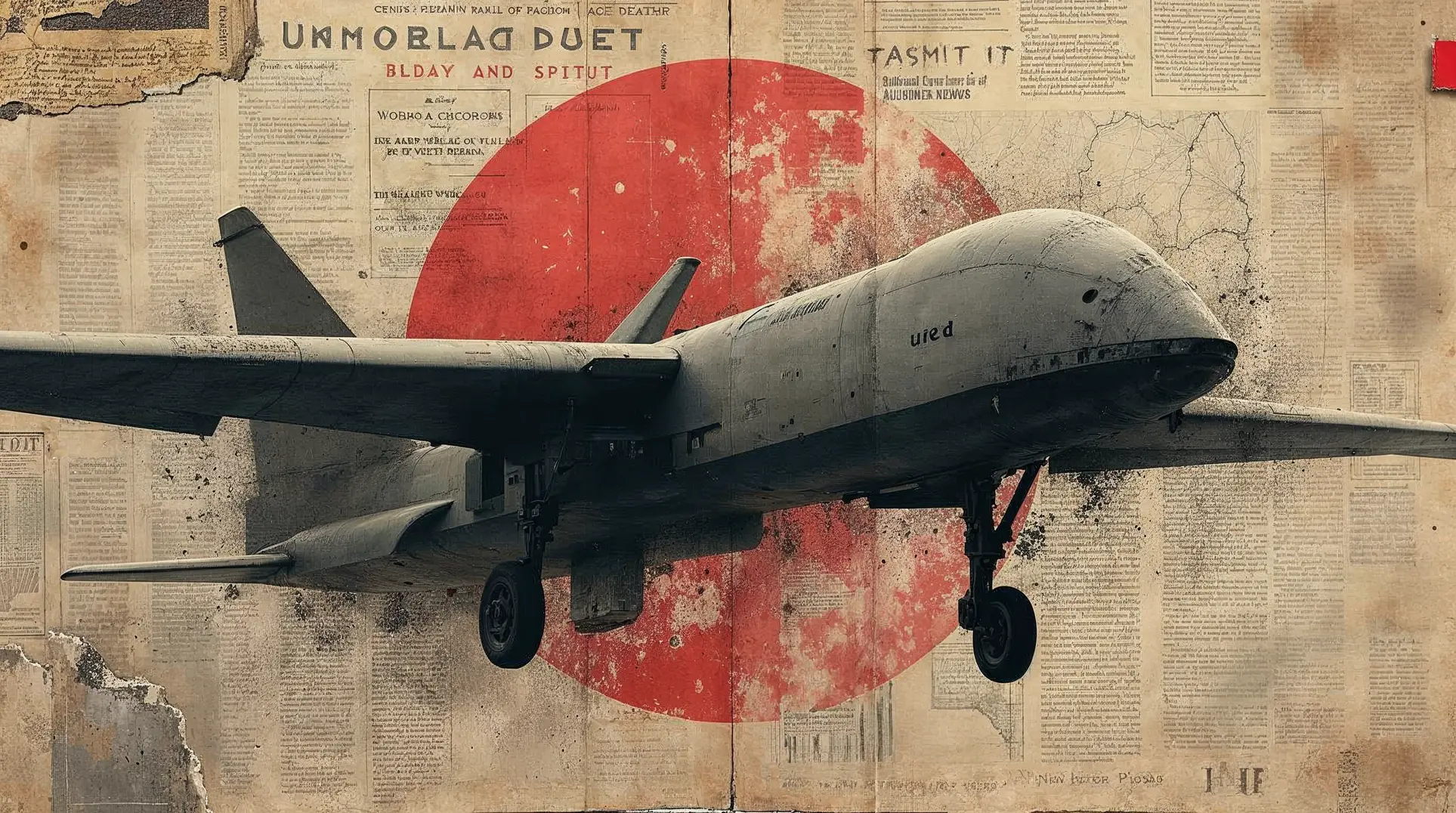
EXPOSED: Secret intelligence reveals how jihadist drones from Libya are changing Sahel warfare forever—and why rival extremist groups are now joining forces in ways that could destabilize the entire region
A displacement crisis of historic proportions
The human toll of this violence is staggering. Nearly four million people are now displaced across the Sahel region, with the conflict serving as the primary driver alongside severe climate impacts and worsening food insecurity. This represents one of the fastest-growing displacement crises globally, yet it receives a fraction of the international attention devoted to conflicts elsewhere.
Women and children bear the heaviest burden. Representing roughly 80 percent of displaced populations, they face escalating protection risks that include trafficking, gender-based violence, and forced recruitment into armed groups. Displacement camps, overcrowded and under-resourced, have become sites of acute vulnerability rather than refuge.
The scale of need vastly outstrips available resources. International funding for the Sahel crisis remains critically inadequate, forcing humanitarian organizations to make impossible choices about who receives assistance and who does not. This funding gap is not merely a logistical challenge—it is a moral failure with deadly consequences.
Education and healthcare systems in collapse
The destruction of social infrastructure across the Sahel has reached catastrophic levels. By mid-2025, over 14,800 schools have been forced to close due to insecurity, severing millions of children from education. More than 900 health facilities have similarly shuttered, leaving vast populations without access to basic medical care.
These closures represent more than statistics—they signify the systematic dismantling of the foundations upon which functioning societies are built. Children denied education face bleak futures with limited economic prospects, making them vulnerable to recruitment by the very extremist groups that destroyed their schools. Communities without healthcare face preventable deaths from treatable conditions, deepening the humanitarian catastrophe.
The targeting of schools and health facilities is not incidental collateral damage. In many cases, militants deliberately attack these institutions to undermine state legitimacy and assert their own authority. Teachers and healthcare workers have been threatened, abducted, and killed, creating a climate of fear that extends far beyond the immediate victims.
Why millions of Sahel children will NEVER return to school—and the terrifying health crisis about to explode that no one is talking about. What experts discovered will haunt you
Climate change compounds the crisis
The Sahel's humanitarian emergency unfolds against a backdrop of severe environmental stress. Drought and erratic rainfall patterns—both linked to climate change—have devastated agricultural production, the economic backbone for most Sahelian communities. Food insecurity has reached crisis levels, with millions facing acute hunger.
Climate impacts and conflict create a vicious cycle. Environmental degradation drives competition for scarce resources—arable land, water, grazing areas—which in turn fuels intercommunal violence. Extremist groups exploit these tensions, positioning themselves as arbiters in resource disputes and thereby expanding their influence.
Displaced populations, forced from their homes by violence, often flee to areas already stressed by environmental challenges. This secondary displacement strains host communities, creating tensions between displaced persons and local residents competing for the same limited resources.
Regional cooperation struggles amid political fragmentation
Efforts to coordinate regional responses have faced significant obstacles. The G5 Sahel Joint Force—a multinational military initiative bringing together Burkina Faso, Chad, Mali, Mauritania, and Niger—has ramped up security operations against Islamist militants. However, political tensions among member states, resource constraints, and questions about operational effectiveness have limited its impact.
Diplomatic engagement between the UN Security Council and the African Union Peace and Security Council continues, aimed at coordinating anti-terrorism strategies and peace support operations. Parfait Onanga-Anyanga, Head of the UN Office to the African Union, emphasized the importance of this partnership: "The strong and enduring partnership between the United Nations and the African Union, as well as with other regional organizations, forms the foundation of an effective, networked multilateralism—essential to confronting the complex, evolving, and interconnected threats that today weigh on peace, security, development, and human rights, particularly in Africa."
Yet these diplomatic efforts have yet to translate into meaningful improvements on the ground. The political landscape remains fractured, with military regimes in Mali, Burkina Faso, and Niger pursuing divergent strategies and, in some cases, actively undermining regional cooperation frameworks.
The protection crisis facing women and children
Among the nearly four million displaced, women and children face heightened and specific threats. Protection risks have escalated sharply, with documented increases in trafficking, gender-based violence, and forced recruitment into armed groups.
Displacement camps, theoretically safe havens, have become sites of acute vulnerability. Overcrowding, inadequate security, and limited humanitarian presence create conditions where exploitation thrives. Women and girls face sexual violence both during flight and within camps. Children, separated from families or orphaned by violence, become targets for trafficking networks and militant recruiters.
The international community's response to these protection challenges has been woefully inadequate. Specialized services for survivors of gender-based violence are scarce to non-existent in most displacement settings. Child protection programs operate on shoestring budgets, unable to meet even a fraction of the need.
International funding falls critically short
Perhaps the most damning indictment of the global response to the Sahel crisis is the persistent and widening funding gap. Despite the scale of need—nearly four million displaced, millions more facing food insecurity, essential services collapsed—international donors have failed to provide adequate resources.
Humanitarian appeals for the Sahel consistently receive only a fraction of requested funding, forcing aid organizations to scale back operations, close programs, and turn away people in desperate need. This chronic underfunding is not a technical problem—it is a political choice reflecting the low priority the international community assigns to Sahelian suffering.
The consequences are measured in lives. Without adequate funding, food assistance programs cannot reach the hungry. Health clinics cannot obtain medicine. Schools cannot reopen. Protection services for vulnerable women and children cannot operate. The funding gap is quite literally a death sentence for thousands.
Conclusion: A crisis demanding urgent action
The Sahel stands at a precipice. Nearly four million people displaced, essential services collapsed, extremist violence escalating, and climate shocks intensifying—all while international attention and resources remain focused elsewhere. This is not merely a humanitarian crisis; it is a comprehensive failure of governance, security, and international solidarity.
The trajectory is clear and deeply troubling. Without substantial increases in international funding, without coordinated regional security efforts, without addressing the governance vacuums that extremists exploit, the crisis will continue to deepen. More people will be displaced. More children will be denied education. More communities will be cut off from healthcare. More women will suffer violence.
Yet the Sahel crisis is not inevitable or unsolvable. With adequate resources, political will, and sustained engagement, conditions could improve. Displaced populations could return home. Schools and clinics could reopen. Security could be restored, not through military force alone, but through inclusive governance that addresses legitimate grievances and provides economic opportunity.
The question facing the international community is whether it will muster the resolve to act before the crisis spirals further beyond control—or whether the Sahel will become another forgotten emergency, its people abandoned to suffer in silence.


