


No verified Israeli airstrikes targeted Iranian-linked militias or Syrian army positions near Damascus or Homs during the past week, marking a notable tactical shift in Israel's year-long military campaign inside Syria. Instead, the period of 9–16 December saw intensified ground operations in Syria's southern Quneitra province, where Israeli forces conducted near-daily incursions, established temporary checkpoints, and detained civilians—actions that extend a pattern of territorial enforcement rather than the high-visibility strikes that have characterized much of 2025.
The contrast with late November is instructive. On 28 November, an Israeli raid on the southwestern town of Beit Jinn killed at least 13 people, including children, and wounded 25, according to Al Jazeera. That lethal flashpoint underscored Israel's willingness to strike Syrian state forces and civilian areas when deemed necessary. Yet the subsequent two weeks have seen no similar bombardment around the capital or central Syria, signaling a recalibration in operational priorities that nonetheless maintains pressure on Damascus and Tehran.
Southern Syria becomes laboratory for buffer enforcement
On 9 December, Israeli forces abducted three civilians collecting firewood near al-Hamidiyah in Quneitra countryside, releasing them the same day, Syrian state media and Daily Sabah reported. Syrian state television framed the incident within a broader pattern of almost-daily Israeli incursions into the province. These operations—characterized by temporary checkpoints, short-term detentions, and physical occupation of terrain—have become the dominant Israeli activity in southern Syria over the past fortnight.
Israeli forces now reportedly maintain eight positions inside Syrian territory, stretching from Mount Hermon to the Yarmouk Basin. This presence contravenes the 1974 UN Disengagement Agreement, which established a demilitarized buffer zone monitored by the United Nations Disengagement Observer Force (UNDOF). UNDOF has documented repeated violations, yet enforcement mechanisms remain absent. Israel frames these operations as necessary to protect its security interests and the Druze community in Sweida, but the effect is a steady erosion of Syrian sovereign control in areas adjacent to the Golan Heights.
Syrian government data indicates more than 1,000 Israeli airstrikes across Syria and over 400 cross-border raids into southern provinces since December 2024. That tempo establishes a baseline against which this week's lull in capital-area strikes becomes analytically significant. Damascus has consistently denounced Israeli actions as violations of sovereignty and international law, but responses from major powers remain muted. UN mechanisms note violations; consequences do not follow.
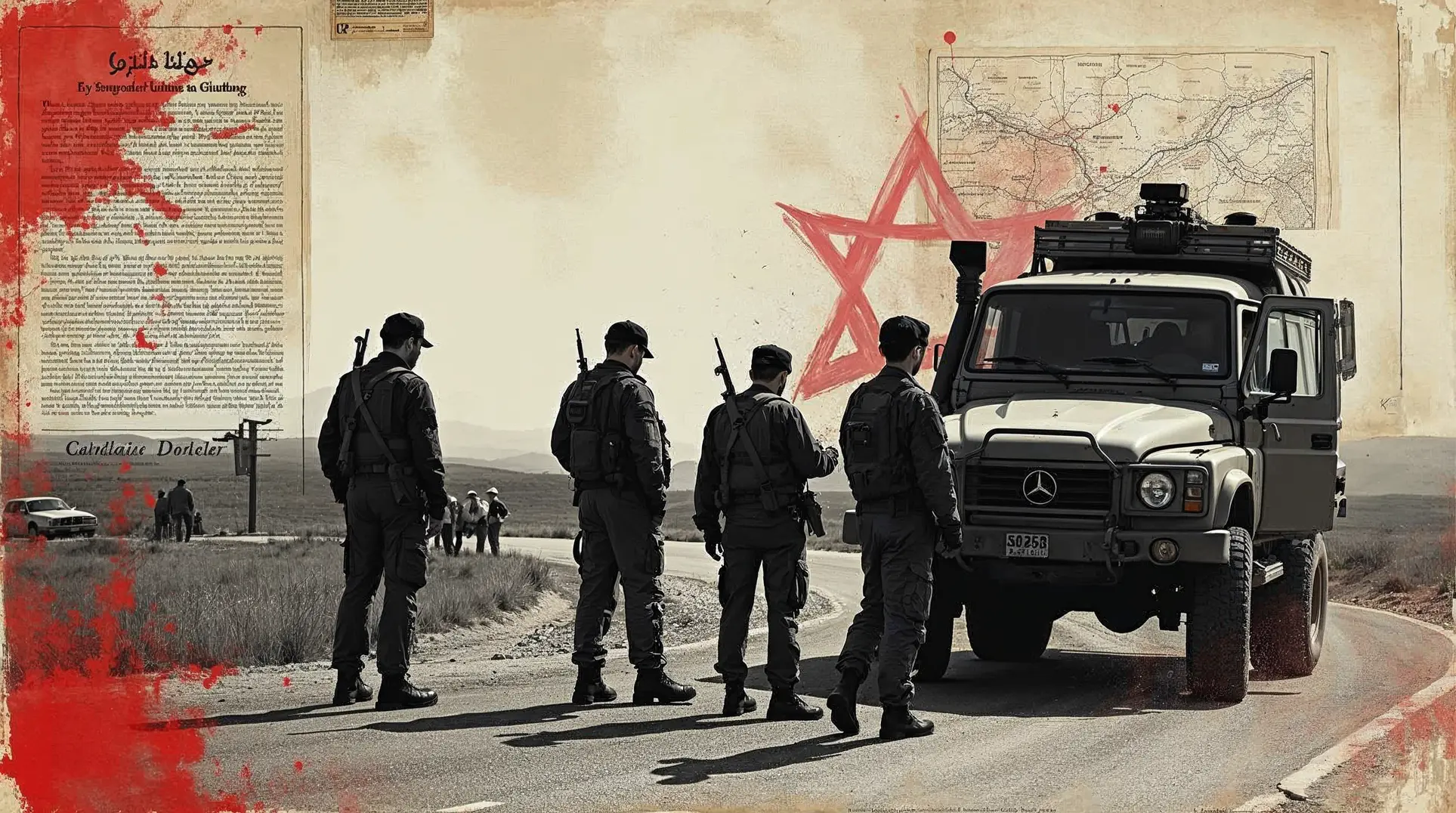
Members are reading: How Israel's shift from airstrikes to ground enforcement reshapes the shadow conflict with Iran across Syria's fragmented landscape.
Sustained pressure by other means
The pattern documented over the past week—ground incursions, detentions, checkpoint operations—represents continuity, not departure, in Israel's campaign to limit Iranian entrenchment and Syrian state recovery. The fact that no Damascus or Homs airstrikes were verified during 9–16 December should not be read as restraint, but as tactical adaptation. Israel is testing a model of sustained, lower-visibility pressure that achieves strategic objectives while minimizing international friction.
For Syria, the result is a sovereignty paradox: Damascus retains formal territorial claims but cannot exercise authority in its own south. For Iran, the model complicates efforts to resupply allies or rebuild influence networks under constant surveillance and interdiction. And for the international community, the absence of spectacular strikes this week perpetuates the fiction that the Israel–Iran shadow conflict is episodic rather than structural. The shift from airstrikes to ground enforcement reveals the opposite: a long-term project of managed destabilization that continues by other means.
Subscribe to our free newsletter to unlock direct links to all sources used in this article.
We believe you deserve to verify everything we write. That's why we meticulously document every source.


