


On December 8, 2025, tens of thousands filled Damascus's Umayyad Square under a new tricolor flag—green, white, and black with three red stars—to mark the first anniversary of Bashar al-Assad's fall. The air carried competing currents: jubilation at the end of a half-century police state, grief for the missing, and anxiety about the contours of what comes next. Street vendors sold commemorative scarves; families photographed children beside murals of martyrs; former prisoners embraced in recognition. Yet 350 kilometers northeast in Qamishli, Kurdish administrators banned public gatherings, citing infiltrated terror cells—a reminder that Syria's new authorities command neither universal consent nor complete territory. In Homs, where March's sectarian massacres left hundreds dead, residents interviewed by international media described their emotions as "a wedding inside a funeral": profound relief shadowed by unresolved trauma and mistrust. A Damascus restaurateur who returned from exile told the BBC he could finally speak without whispering, yet his neighbor's son remains among the estimated 130,000 disappeared. This duality—liberation from industrial-scale repression coupled with persistent insecurity, executive concentration, and uneven justice—defines Syria's first post-Assad year.
The collapse itself unfolded with startling speed. Between November 27 and December 8, 2024, a coalition led by Hay'at Tahrir al-Sham and the Southern Operations Room, with logistical support from Turkey-backed Syrian National Army factions, advanced from Idlib and Daraa. Homs fell; the Syrian Arab Army's command structure disintegrated; Damascus was taken with minimal resistance as Russian facilitation whisked Assad to Moscow asylum. What analysts had deemed unthinkable—regime change without protracted urban siege—became fact, driven by a demoralized military abandoned by exhausted patrons and a population weary of half-measures. Russia, bogged down in Ukraine, and Iran, reeling from Israeli escalation and Hezbollah's degradation, proved unwilling or unable to reinforce their client. The edifice crumbled not under external invasion but internal hollow.
Twelve months on, the central question is whether Syria can escape the historical pattern of revolutionary coalitions fragmenting into warlordism or authoritarian retrenchment. Early governance steps—a constitutional declaration, transitional justice commissions, partial sanctions relief, and diplomatic reintegration including the UN Security Council's first-ever Syria visit—signal intent. Yet Human Rights Watch's comprehensive December 2025 assessment documents troubling trajectories: outsized executive power, restricted political competition, sectarian retaliatory violence claiming over 1,300 lives, and a transitional justice mandate confined to Assad-era crimes, risking one-sided impunity. Meanwhile, Israel has expanded its footprint in the south, Russia negotiates basing rights from a weakened position, Turkey leverages influence through proxies, and the Kurdish-led administration in the northeast navigates integration demands that threaten its autonomy. The economy, despite sanctions relief, remains shattered—infrastructure destruction exceeds 50 percent, poverty hovers near 90 percent of the pre-transition baseline, and reconstruction needs dwarf available resources by orders of magnitude.
Can a leadership rooted in an organization once affiliated with al-Qaeda—however rebranded and localized—build inclusive institutions that protect minorities, accommodate pluralism, and resist the authoritarian temptations inherent in post-conflict transitions? Does the end of Assad's dynastic rule represent a genuine opening toward accountable governance, or merely a transfer of monopoly from one elite to another? The answer will hinge on decisions made in the coming year: whether security sector integration proceeds with genuine vetting or becomes theatrical; whether transitional justice expands to cover all perpetrators or entrenches victor's justice; whether economic reconstruction empowers local civil society or funnels through politicized channels; and whether regional powers stabilize or spoil the fragile equilibrium.
The eleven days that ended an era
The operational chronology of the regime's fall has been documented extensively, yet its implications for state authority and societal memory remain contested. On November 27, 2024, HTS-led forces launched an offensive from Idlib governorate, breaking years of frozen frontlines. Within forty-eight hours, Aleppo—Syria's second city and symbolic prize of the war's bloodiest chapter—was under opposition control. The Syrian Arab Army, which had held the city since 2016 through Russian air power and Iranian-backed militias, offered minimal resistance. Defections accelerated; officers instructed subordinates to abandon posts; ammunition depots were left unsecured.
Brookings Institution analysts cataloging the collapse identify three interrelated factors. First, years of economic hemorrhage and cyclical mobilization had hollowed out military cohesion. Soldiers had not been paid reliably; officers siphoned resources; conscripts saw no future worth defending. Second, Russia's focus on Ukraine reduced its appetite for another costly intervention, particularly after the reputational costs of propping up a regime widely associated with atrocity. Moscow maintained a deconfliction presence and air assets at Hmeimim and naval facilities at Tartus, but declined to commit ground forces or intensive air campaigns. Third, Iran and Hezbollah, battered by sustained Israeli strikes and domestic political crises, could not reinforce their axis. The land corridor that once funneled weapons and personnel from Tehran through Baghdad and Damascus to Beirut had already been degraded; the regime's fall severed it entirely.
By December 7, Homs had fallen, cutting the regime's north-south axis. Southern Operations Room forces, emerging from Daraa and Sweida, advanced toward Damascus with local ceasefire agreements promising autonomy and amnesty for Alawite-majority areas. On December 8, opposition fighters entered the capital. State television broadcast the announcement; SAA command issued orders releasing personnel from service; Bashar al-Assad, facilitated by Russian military transport, fled to Moscow where he was granted asylum. The transfer of control was, by Syrian war standards, bloodless in the capital itself—a function of prior negotiation, exhaustion, and the regime's internal disintegration rather than magnanimous restraint.
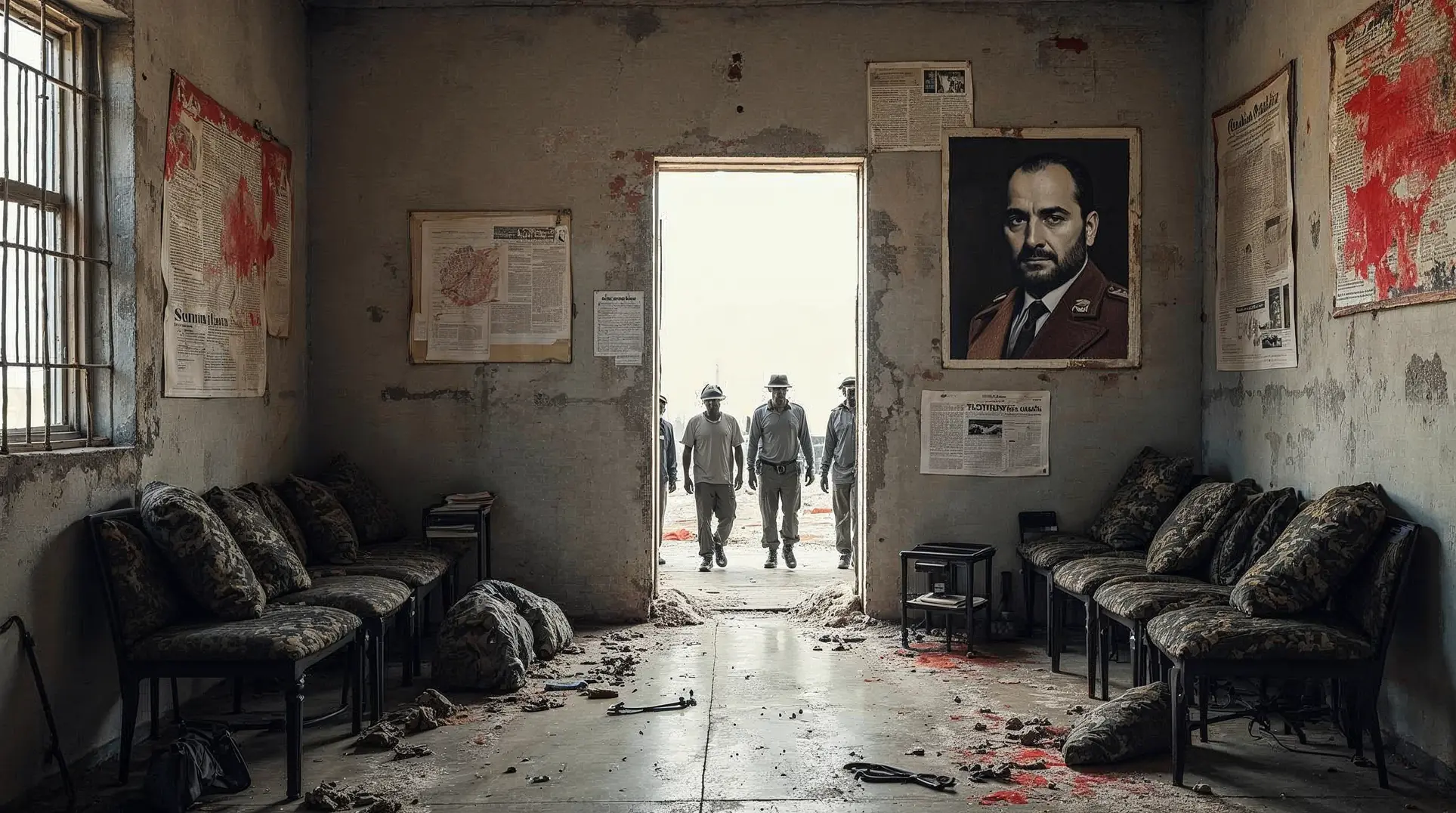
Members are reading: How the Syrian Arab Army's internal rot and HTS's contested evolution from jihadist insurgency to state-builder shaped the regime's collapse and the fragile authority that followed.
From firestorms to fault lines: The new geography of violence
The end of conventional war between regime and opposition has not delivered uniform peace. Instead, Syria's security landscape has fragmented into localized competitions over authority, resources, and identity. Violence has declined in aggregate—OCHA and monitoring groups document far fewer deaths than the peak years of 2012–2018—but patterns have shifted toward targeted killings, sectarian reprisals, and low-intensity clashes that reflect unresolved power balances and mistrust.
The coastal governorates of Latakia and Tartus, heartlands of Alawite demographic concentration and regime loyalty, became flashpoints in March 2025. According to multiple sources including Hoover Institution analysis and Journal of Democracy reporting, an ambush of transitional government forces triggered retaliatory massacres in which hundreds of Alawite civilians were killed. Syrian Observatory for Human Rights, cited by Al Jazeera, counted over 1,300 deaths in retaliatory violence across the country by November 2025, with the March coastal events representing the single deadliest episode. HTS-led authorities pledged investigations and arrested some perpetrators, but survivors and human rights monitors question whether these steps reflect genuine accountability or performative gestures. The events exposed both the fragility of local ceasefires brokered in the transition's opening weeks and the risk that hardliners within the new security apparatus—or external spoilers—could ignite cycles of revenge that fracture nascent state authority.
Homs, Syria's third-largest city and a microcosm of sectarian and political diversity, has seen episodic targeted killings—former officers, suspected informants, minority community leaders—that suggest parallel security structures operating outside formal command chains. Residents describe a climate of uncertainty: better than the siege and bombardment of 2011–2014, yet far from the rule of law. The transitional government's ability to impose discipline on affiliated militias and prevent vigilantism will be a key metric in the coming year.
In the northeast, the Kurdish-led Autonomous Administration of North and East Syria (AANES) and its military wing, the Syrian Democratic Forces, face an existential negotiation. The March 2025 Sharaa–Mazloum Abdi agreement outlined a framework for integration: SDF personnel would join a unified national army on an individual basis; civilian administration would transfer to Damascus; oil and water resources in SDF-controlled areas would revert to central government management. In return, cultural rights and local governance arrangements would be formalized, and Turkish concerns about cross-border PKK links addressed through joint security mechanisms.
Implementation has stalled. Kurdish communities fear that "integration" is a euphemism for dissolution, particularly given Turkey's long-standing opposition to Kurdish autonomy and Ankara's influence over Damascus's transition. Reports of sporadic clashes between SDF and Turkish-backed SNA factions, ceasefires brokered and broken, and bureaucratic obstruction of resource transfers underscore the fragility. The Kurdish administration's decision to ban anniversary gatherings in Qamishli, citing terror-cell infiltration, reflects both genuine security concerns and political messaging: the new Damascus does not yet command legitimacy or trust in the northeast. Crisis.Zone's coverage of the SDF integration test highlights how these dynamics could determine whether Syria moves toward federalism or renewed conflict.
The southern governorate of Sweida, predominantly Druze and historically skeptical of both regime and Islamist opposition, presents another axis of tension. Local militias that resisted both Assad and ISIS now demand either autonomy within a federalized Syria or, in some factions, outright independence. Clashes between these forces and transitional government troops attempting to assert authority have led to ceasefire negotiations that repeatedly collapse. The Druze case illustrates the limits of central authority: Damascus can neither militarily subdue every restive region nor offer the political concessions—decentralization, guaranteed representation, veto rights on security appointments—that might secure consent.
Counter-ISIS operations continue, with partial U.S. cooperation. Hoover Institution reporting notes intelligence-sharing and occasional joint strikes; U.S. forces remain present in small numbers at al-Tanf and in northeastern Syria, maintaining a counter-terrorism posture. HTS publicized raids against ISIS cells in Homs and Hama governorates, framing itself as a bulwark against transnational extremism. Yet CSIS cautions that ISIS retains clandestine networks and the capacity to exploit governance vacuums, particularly if the transition fractures.
Rights and memory: Sednaya's gates and the missing
The most powerful images of the transition's opening days came from Sednaya Prison, the industrial-scale detention and torture facility north of Damascus where tens of thousands were disappeared. Video footage showed families streaming through cell blocks, calling names into darkness, pulling open rusted doors, weeping at the absence of the missing. Some prisoners emerged—emaciated, blinking in daylight, clutching relatives who had not known if they were alive. But far more remain unaccounted for. Estimates suggest 130,000 disappeared under Assad; the National Commission for the Missing and Forcibly Disappeared, established in early 2025, has received thousands of inquiries but lacks resources, access to archives, and—crucially—testimony from perpetrators shielded by de facto amnesty.
Human Rights Watch's December 2025 assessment credits the transitional government with significant initial steps: creating the Missing Persons Commission, establishing the National Commission for Transitional Justice, allowing families to publicly memorialize victims, and facilitating access to some detention sites. These represent a categorical departure from Assad's denial of disappearances and suppression of grief. Yet HRW also documents critical gaps. The transitional justice mandate explicitly excludes crimes committed by non-regime actors, including the opposition factions now in power. This asymmetry risks entrenching victor's justice and foreclosing accountability for abuses committed during the war's chaotic middle years—summary executions, hostage-taking, indiscriminate shelling—by groups that opposed Assad but also violated international humanitarian law.
Families of the disappeared express frustration at the pace and opacity of investigations. The commission operates with limited budget, staff, and forensic capacity. Mass graves have been discovered in Tadamon, Najha, and near former intelligence branches, but exhumations and DNA matching require expertise and funding that exceed current allocations. International mechanisms—the International, Impartial and Independent Mechanism (IIIM) and the Independent International Commission of Inquiry—possess evidence and witness testimony but have not been granted formal access or partnership agreements with Damascus. HRW urges the transitional government to expand cooperation with these bodies, allow independent monitoring, and broaden the justice mandate to cover all perpetrators regardless of affiliation.
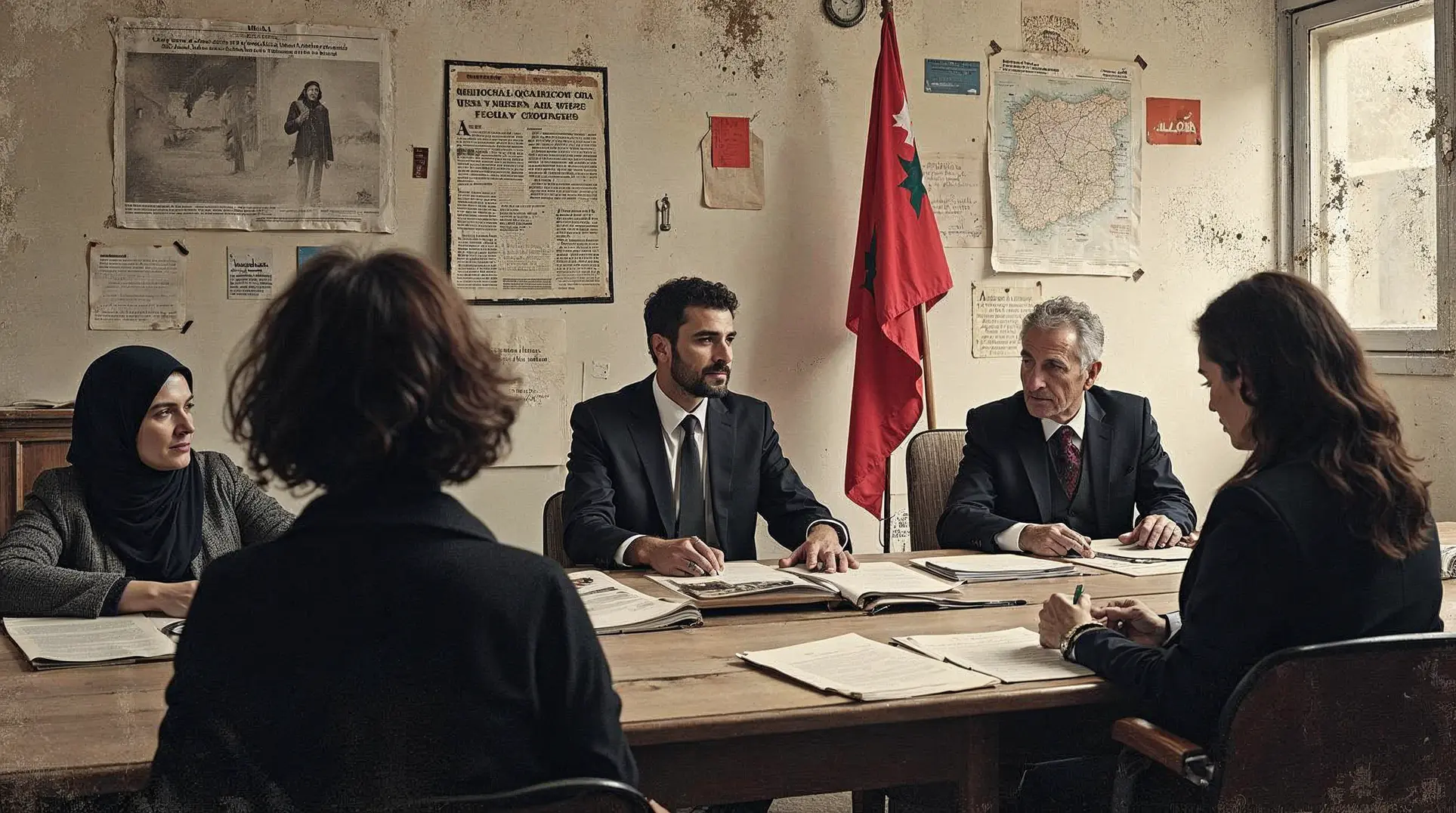
Members are reading: How the transitional justice mandate's exclusion of non-regime crimes risks entrenching victor's impunity and delegitimizing the entire accountability process.
Economy and the everyday: Sanctions relief meets structural collapse
Sanctions relief arrived faster than many observers anticipated. The United States, United Kingdom, and European Union lifted or eased sectoral sanctions within months of Assad's fall, citing the changed political reality and humanitarian imperatives. The World Bank reopened limited financing windows; international financial institutions began technical assessments; Gulf states pledged initial reconstruction investments. These shifts unlocked frozen assets, allowed resumption of some banking services, and removed legal barriers to trade and investment that had throttled Syria's economy for over a decade.
Yet the relief's impact on daily life has been uneven and slow. Syria's economy did not merely contract during the war—it disintegrated. Infrastructure destruction exceeds 50 percent by most estimates; the electrical grid operates sporadically; water systems are degraded; roads, bridges, and telecommunications networks require wholesale rebuilding. Poverty, which affected over 90 percent of the population in the final years of Assad's rule, has not meaningfully declined. The Syrian pound remains volatile; inflation erodes purchasing power; unemployment is endemic. Reconstruction needs, variously estimated between $250 billion and $400 billion, dwarf available resources by orders of magnitude, even if all sanctions were lifted and foreign investment flowed freely.
The political economy of reconstruction will shape Syria's trajectory as much as constitutional design. International donors, wary of fueling corruption or empowering authoritarianism, are debating conditionality frameworks: tying funding to measurable governance benchmarks, human rights protections, and inclusive processes. The Atlantic Council has emphasized the centrality of Syrian civil society organizations in reconstruction, arguing that local ownership and community-driven projects deliver better outcomes and build democratic capacity. Yet Human Rights Watch documents that the transitional government continues to route much international aid through the Syrian Arab Red Crescent and other entities inherited from the Assad era, creating bureaucratic bottlenecks and limiting the space for independent civil society to operate.
Energy provides a case study. Mercy Corps analysis using nighttime-light satellite imagery shows modest improvements in electricity availability in Damascus, Aleppo, and Hama—evidence of generator fuel deliveries and partial grid repairs. But rural areas, particularly in the northeast and south, remain dark. Oil fields in SDF-controlled Deir ez-Zor are contested: the March 2025 integration agreement stipulated transfer to central government management, but implementation has stalled amid distrust and Turkish pressure. Without consistent energy, factories cannot restart, hospitals cannot function reliably, and households cannot stabilize.
Refugee and internally displaced person returns, often cited as a metric of transition success, are contested in both scale and sustainability. Reuters reported claims by Syria's central bank that approximately 1.5 million returns had occurred by mid-2025, supporting modest economic growth. Al Jazeera cited figures of around 1.8 million refugees and 1.9 million internally displaced persons returning. These numbers, while significant, remain difficult to verify and are time-bound—returns may reverse if security deteriorates or economic conditions fail to improve. Diaspora voices captured by BBC reporters describe complex motivations: longing to reconnect with homeland, hope that change is real, but also pragmatic hedging—keeping residency abroad, sending one family member to test conditions, maintaining dual strategies.
Property restitution looms as a legal and political minefield. Millions fled; homes were destroyed, occupied, or sold under duress; documentation was lost; ownership records were manipulated by regime officials and militias. Without transparent, enforceable adjudication mechanisms, returning families face eviction, extortion, or bureaucratic limbo. The transitional government has established courts and commissions to adjudicate property disputes, but details of implementation remain contested and progress has been slow. International precedent—Bosnia's property law implementation, for instance—shows that credible restitution requires independent judiciary, accessible appeals, and political will to override spoilers who profit from occupation.
The region rewrites its lines: Powers recalibrate in the post-Assad landscape
Syria's transition unfolds within a regional system in flux, where external actors wield influence disproportionate to Damascus's weak sovereignty. Russia, Turkey, Iran, Israel, the United States, and Gulf monarchies each see Syria through the prism of their own strategic imperatives, creating overlapping and contradictory pressures that the transitional government must navigate.
Russia's position is defined by loss mitigation. The fall of its client was a strategic embarrassment and a blow to Moscow's narrative as a reliable patron. Yet Russia retained its military installations—Hmeimim air base and Tartus naval facility—through rapid negotiation with the new authorities. SWP Berlin analysis notes that Moscow now bargains from weakness: the transitional government tolerates the bases as leverage (offering Russia a foothold while extracting rent or concessions) and because forcing eviction might provoke spoiler actions. But the terms are under renegotiation, and Russia's relevance has diminished. Its deconfliction role with Israel, once critical, has eroded as Israeli operations intensified and Damascus lacks the air defenses Russia previously managed. Moscow's future in Syria likely involves a reduced footprint, transactional relationships, and efforts to preserve face while accepting diminished influence—a far cry from the 2015–2020 patron-client dynamic.
Iran and Hezbollah suffered the transition's harshest strategic blow. The land corridor linking Tehran to Beirut is severed; weapons shipment routes are interdicted; proxy networks have fragmented or gone underground. Israel intensified strikes throughout 2025—targeting weapons depots, command nodes, and transit routes—without the Russian deconfliction that previously imposed some restraint. Brookings analysts assess that Iran is recalibrating toward a longer game: maintaining clandestine networks, cultivating relationships within Syria's Shia communities, and seeking to exploit sectarian tensions if the transition falters. Hezbollah, battered by conflict with Israel and leadership decapitation, has limited capacity to project into Syria. The "Axis of Resistance," once a defining regional structure, is operationally weakened and ideologically on the defensive.
Turkey emerges as the primary external beneficiary and power broker. Ankara provided crucial support—political, logistical, and through Syrian National Army proxies—that enabled the final offensive. Turkish President Recep Tayyip Erdoğan frames the transition as vindication of his long-standing opposition to Assad and a pathway to address two core interests: repatriating Syrian refugees (over three million reside in Turkey, a domestic political liability) and curbing Kurdish autonomy along the border. Turkey's relationship with the HTS-origin leadership is complex—Ankara maintains leverage but must balance its NATO membership, relations with Washington and Brussels, and competition with Russia and Iran. SWP analysis highlights Turkey's objectives: ensuring Damascus remains pliant on Kurdish issues, facilitating refugee returns, and positioning Turkish firms for reconstruction contracts. The risk is overreach—Turkish-backed SNA factions have clashed with SDF forces and committed abuses against Kurdish civilians, actions that complicate U.S. relations and risk destabilizing the northeast.
Israel's posture has been the most overtly expansionist. Declaring the 1974 disengagement agreement void following Assad's fall, Israeli Defense Forces launched "Operation Arrow of Bashan," occupying buffer zones, seizing control of Mount Hermon strategic positions, and conducting over 130 airstrikes to degrade Syrian air defenses and prevent weapons transfers. In recent months, Israel announced plans to expand settlements in the occupied Golan Heights. These actions, condemned by UN officials and documented by SWP, erode Syrian sovereignty and inflame nationalist sentiment. They also complicate the transitional government's legitimacy: Damascus is too weak to resist militarily and too dependent on Western engagement to escalate rhetorically, creating a perception of impotence that internal rivals can exploit.
The United States is recalibrating toward pragmatic counter-terrorism partnership. Hoover Institution reporting and Crisis.Zone coverage of a Trump-era gambit suggest Washington is exploring delisting HTS from terrorist designations and normalizing relations, conditioned on continued counter-ISIS cooperation, minority protections, and distance from Iranian influence. U.S. forces remain in the northeast and at al-Tanf, maintaining pressure on ISIS remnants and providing a security umbrella for SDF-controlled areas. This creates a triangular tension: Washington values the SDF as a counter-terrorism partner; Ankara views the SDF as a PKK extension and a security threat; Damascus seeks to integrate the SDF to assert sovereignty. Managing this triangle will be critical—failure risks Turkish military incursions, SDF fragmentation, and ISIS resurgence in the resulting chaos.
Gulf states, particularly the United Arab Emirates and Saudi Arabia, are re-engaging after years of either supporting the opposition or, more recently, attempting normalization with Assad for counter-Iran purposes. The new calculus emphasizes economic opportunity, geopolitical rebalancing away from Iranian influence, and shaping Syria's governance to align with Gulf preferences for stability and counter-Islamism. Early investments target ports, agriculture, and energy, with conditionality centered on economic reform and minority protections rather than democratic governance per se.
The UN Security Council's first-ever visit to Syria, covered by Crisis.Zone, symbolized international re-engagement but also exposed divisions. Russia and China emphasize sovereignty and sanctions relief; Western members stress human rights benchmarks and accountability. UNSCR 2254, the 2015 resolution outlining a political transition, remains the nominal framework, but its provisions—constitutional process, elections, governance transition—are being reinterpreted by actors on the ground with varying fidelity to the text.
Members are reading: Three detailed scenarios for Syria's coming year—from cautious consolidation to fragmentation relapse—and the high-leverage policy interventions that can shift probabilities toward pluralism.
Conclusion: Wedding inside a funeral, institutions as the vessel for hope
The image coined by a Homs resident—"a wedding inside a funeral"—captures Syria's condition one year after Assad's fall. The joy is real: families speak without fear of mukhabarat; children wave new flags; the skies over Damascus are silent of barrel bombs. Yet the grief is equally real: the disappeared remain missing; mass graves yield anonymous bones; sectarian wounds fester; poverty grinds on. These are not sequential emotions—first mourning, then celebration—but simultaneous, interwoven, a duality that will define Syria for years.
The transition's paradox is that it was led by an organization whose lineage would have made it a pariah in most post-conflict frameworks, yet HTS possessed the military capacity and local legitimacy to fill the vacuum Assad's collapse created. This creates both opportunity and risk. Opportunity, because HTS's evolution from transnational jihadism to pragmatic governance suggests ideology is not immutable and that behavior can change under structural incentives. Risk, because authoritarian habits—hierarchical command, intolerance of dissent, securitized governance—persist beneath rebranding and could harden into new monopolies.
Syria's future will be determined less by the identities of those currently holding power than by the institutions they build or fail to build. Institutions—independent courts, accountable security forces, transparent property commissions, pluralistic legislatures, civil society protected by law—are the vessel in which hope can mature into stability. Without them, Syria will cycle through variants of the same pathology: concentration of power, exclusion breeding resistance, violence as the arbiter, and external actors manipulating internal fractures.
The coming year will test whether the transitional government understands this logic or whether it sees institutions as obstacles to control rather than foundations for legitimacy. The decisions on SDF integration, transitional justice scope, electoral design, economic reconstruction channels, and regional de-escalation will reveal which path Damascus chooses. International actors—donors, neighbors, powers with leverage—share responsibility. Engagement must be clear-eyed, conditioned on measurable governance improvements, and willing to redirect support to civil society when states obstruct. Disengagement, conversely, cedes the field to spoilers and authoritarians.
For Syrians, the anniversary is both marker and question. One year without Assad is an achievement unthinkable in 2023. Yet one year is not enough to undo a half-century of dictatorship, thirteen years of war, and the deep distrust those decades engraved. The work ahead—building accountability, sharing power, reconstructing shattered cities and broken trust—will take a generation. The question is whether Syria's new authorities, its resilient civil society, and the international community can muster the sustained commitment that transition demands, or whether the initial opening will narrow into another chapter of repression and fragmentation, the wedding consumed by the funeral.
Subscribe to our free newsletter to unlock direct links to all sources used in this article.
We believe you deserve to verify everything we write. That's why we meticulously document every source.


