


Tehran and Abu Dhabi hold highest-level talks of the six-month war as New Delhi brokers consensus naming no aggressor
Iran and the United Arab Emirates jointly endorsed the BRICS New Delhi Declaration on Saturday, ending months of deadlock that had paralyzed the bloc's ability to address the war between the two Gulf rivals. The 11-nation grouping adopted the 140-point text after overnight negotiations running until 4 a.m., resolving a rift that in May had left BRICS foreign ministers unable to issue any joint statement at all.
The breakthrough came with a bilateral meeting on the summit sidelines between Iranian President Masoud Pezeshkian and Abu Dhabi Crown Prince Khaled bin Mohamed bin Zayed Al Nahyan — the highest-level contact between the two governments since the war began February 28. It follows six months in which an Iranian drone and missile attack sparked a fire at Fujairah's energy facility, the UAE closed its airspace under attack, and Abu Dhabi suspended all trade with Tehran in August.
What the declaration says — and omits
The compromise text names no country. Iran had sought language condemning the US and Israel for strikes that killed Supreme Leader Khamenei; the UAE wanted equal condemnation of Iran's retaliatory strikes on Gulf neighbors. Instead, the declaration calls for "maximum restraint" and warns against "actions that could further aggravate the situation."
The concession that brought Tehran on board was narrower: language expressing "serious concern over deliberate attacks on civilian infrastructure and peaceful nuclear facilities under full safeguards of the IAEA" — understood as implicit criticism of the US-Israeli strikes without naming either state. The declaration also avoided any mention of Russia's war in Ukraine, and devoted eight paragraphs to Israeli actions in Gaza, naming Israel directly only in that context.
Neither the Abu Dhabi media office nor Iran's embassy in India disclosed substantive content from the Pezeshkian-Khaled meeting beyond references to "de-escalation" and "regional peace and development." The venue mattered as much as the words: a multilateral summit gave both sides a setting where contact was diplomatically permissible, at a moment when direct bilateral outreach might carry domestic political cost.
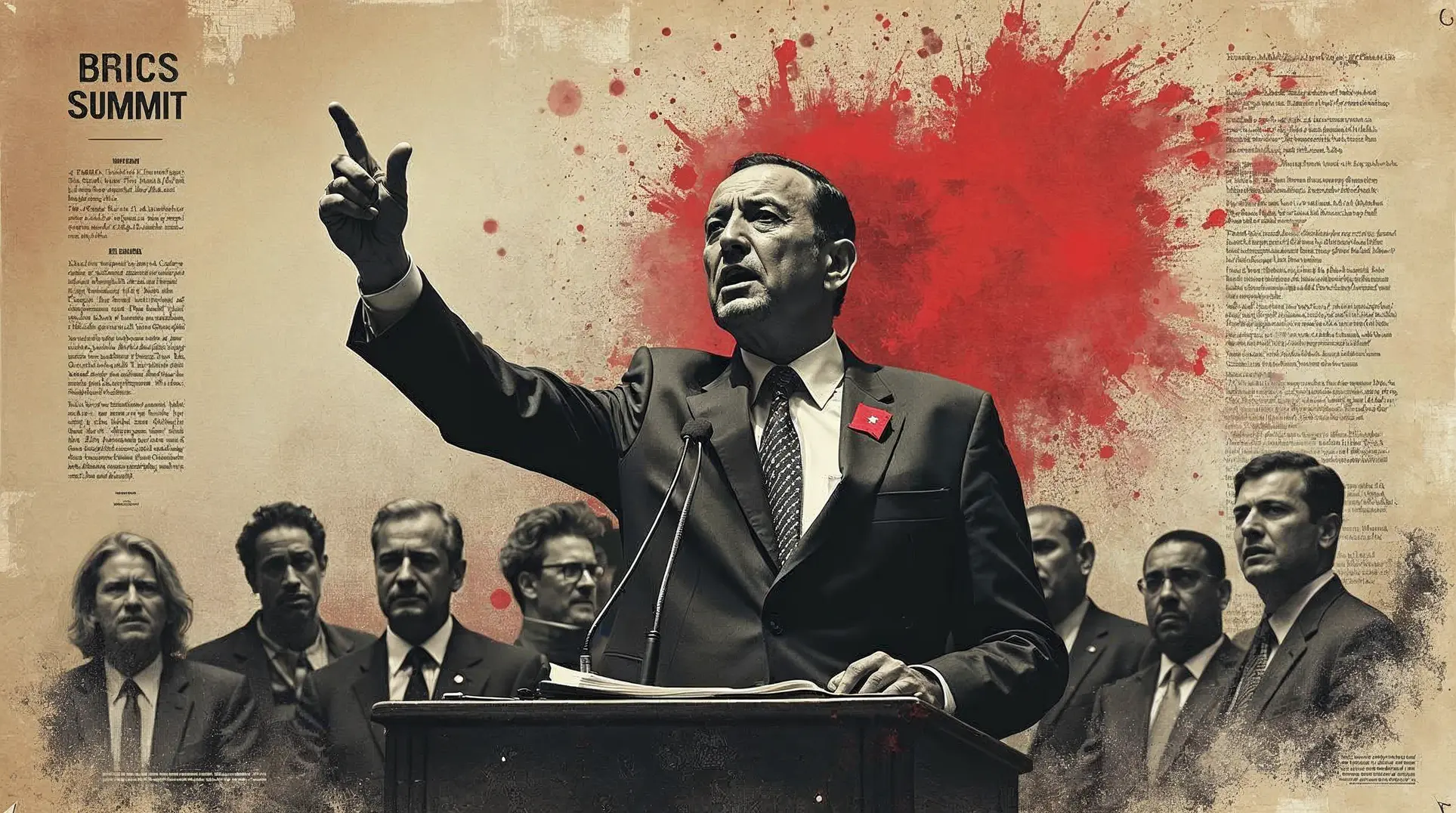
Observers are reading: why the Pezeshkian-Khaled channel may not survive the return trip to Tehran and Abu Dhabi.
Become an Observer — it's free. Get full access to all Crisis.Zone analysis, briefings and breaking coverage.
Indian Prime Minister Narendra Modi was credited with brokering the consensus, with diplomats shuttling between the Iranian and Emirati delegations through the night. Sherpa Sudhakar Dalela cited "months of threadbare discussions," while analyst Praveen Donthi noted New Delhi "found great utility in BRICS to project its strategic autonomy" by producing a joint statement "when there was little hope."
The New Delhi Declaration is a diplomatic signal, not a ceasefire. It demonstrates that Tehran and Abu Dhabi can share a text and a room after six months of war — a tangible reversal from May's collapse. Whether that translates into anything beyond a communiqué will be tested far from the summit floor.
Become an Observer — it's free — to unlock direct links to all sources used in this article.
We believe you deserve to verify everything we write. That's why we meticulously document every source.


