


Developing story
We are following this story for new developments and will update this article when significant news emerges.
Monitored since 27 October 2026 | no updates yet
Key takeaways
- Houthis claim a missile hit the Ras Tanura refinery; the Saudi-led coalition reports intercepting three missiles aimed at the Eastern Province.
- Bloomberg cites a source on a contained fire near Aramco facilities; cause, damage and tanker loading impact remain unconfirmed.
- Ras Tanura and Yanbu handle nearly all Saudi crude exports, and Houthi attacks in September disrupted the pipeline to Yanbu.
Yemen's Houthi movement said on Tuesday, October 27, that it hit the Ras Tanura refinery in Saudi Arabia's Eastern Province with a ballistic missile, causing "massive fires." Houthi military spokesman Brig. Gen. Yahya Saree made the claim on X. Saudi Arabia has not confirmed a hit. The Saudi-led coalition said its air defenses intercepted and destroyed three ballistic missiles aimed at the Eastern Province and four drones aimed at the south. Coalition spokesman Turki al-Maliki gave no further details.
Bloomberg, citing a person familiar with the matter, reported that a fire broke out in the early hours near Saudi Aramco facilities at the Ras Tanura terminal and was contained. Aramco is the Saudi state oil company. It and the Saudi Energy Ministry did not respond to requests for comment. The Houthis are an Iran-aligned movement that controls Sanaa and much of northern Yemen. Ras Tanura holds the kingdom's largest refinery, at about 550,000 barrels per day, and is one of two main ports, with Yanbu on the Red Sea, through which nearly all Saudi oil exports flow, Reuters has reported.
What each side has said
Saree's statements on Tuesday covered more than Ras Tanura. He also claimed a ballistic missile hit on the Saudi Ministry of Defence in Riyadh, a drone strike on Abha International Airport, and ballistic missile strikes on military transport aircraft at Najran Airport and King Khalid Air Base in Khamis Mushait. Saudi Arabia and the coalition confirmed none of these.
Coalition spokesman Maj. Gen. Turki al-Maliki announced the interceptions on X early Tuesday. Saudi Civil Defense sent alerts to the Eastern Province and Al Kharj governorate. It then said the danger had passed. The coalition did not name Ras Tanura as a target, confirm a hit or link any interception to a fire.
An Al Khobar resident told AFP that phone alerts sounded around dawn, followed by a very loud explosion.
Four points are not established: whether a missile got through or interception debris started the fire, which part of the complex was affected, how much damage occurred, and whether tanker loadings were disrupted. As of 20:15 GMT, Aramco and Saudi authorities had issued no public statement or force majeure notice on Ras Tanura.
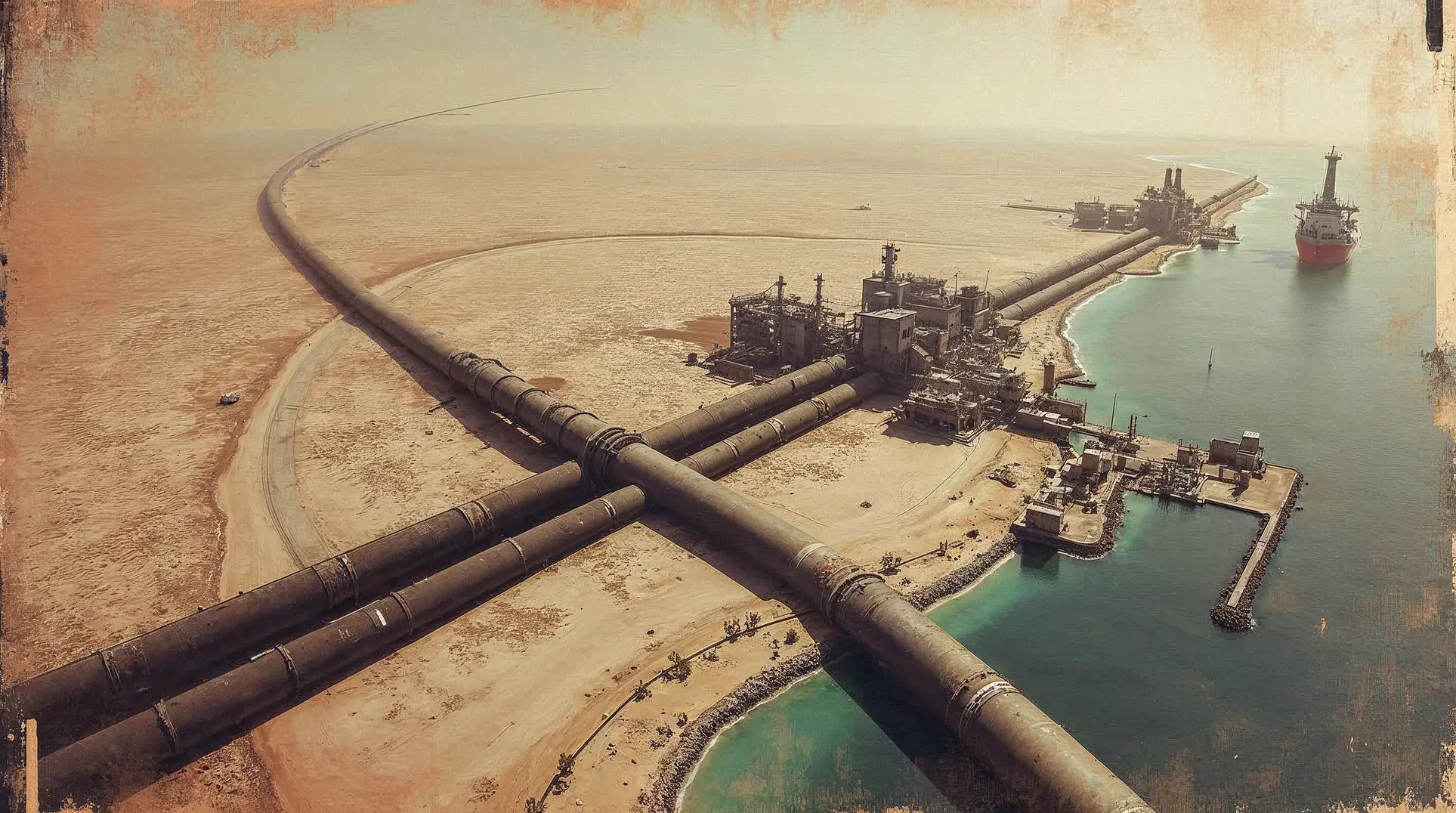
Observers are reading: how the September pipeline damage, the Tehran talks and Egypt's troop mandate bear on Saudi Arabia's Gulf export terminal.
Become an Observer, it's free. Get full access to all Crisis.Zone analysis, briefings and breaking coverage.
Oil markets wait for confirmation
Oil prices moved with the first reports, then eased. Brent crude was up 0.6% at $116.50 a barrel at 08:25 GMT, Anadolu reported, as news of the blaze circulated. By 13:11 GMT, Reuters reported Brent down 0.9% at $114.81. Attention had turned to the Tehran talks, and there were no reported signs of export disruption. That afternoon the coalition said it destroyed two ballistic missiles launched toward Riyadh. Saudi Civil Defense said debris from the two missiles damaged a building, a construction project and a vehicle in the capital.
The Ras Tanura account still rests on a Houthi claim, a coalition tally of interceptions and anonymous reports of a contained fire. Riyadh has not tied them together. The structural point is clearer. In this analysis, nearly all Saudi export capacity lies within ballistic range of Yemen. Interception alone, or foreign defence pledges, cannot settle the kingdom's security. Air defenses may keep holding, but the exposure of the terminals stays the same.
Become an Observer (it's free) to unlock direct links to all sources used in this article.
We believe you deserve to verify everything we write. That's why we meticulously document every source.


