


Yemen's Houthi movement fired ballistic missiles and drones at Abha International Airport and two military bases in Saudi Arabia's Asir region on Monday, the first Houthi-claimed strike on Saudi territory since March 2022. The Saudi-led coalition confirmed its air defenses "dealt with" the threat, reporting no casualties or damage. Houthi military spokesman Brig. Gen. Yahya Saree declared the attack marks "an end to the de-escalation phase."
The strike came hours after the runway at Houthi-controlled Sanaa International Airport was bombed, halting a return flight for a Houthi delegation from Tehran. The four-year informal truce — which survived the Gaza war, Red Sea shipping attacks, and the opening rounds of the US-Iran war — has now given way to direct cross-border fire, activating one of the last frozen fronts in a widening regional conflict.
What happened at Sanaa
The Yemeni government, internationally recognized but based in Riyadh, claimed responsibility for striking the Sanaa runway, saying it acted to prevent an Iranian Mahan Air aircraft from landing with a Houthi delegation returning from Ayatollah Khamenei's funeral. Defense Minister Gen. Taher al-Aqili said "our patience has run out" and held Iran responsible. The Houthis, by contrast, blame Saudi Arabia directly, calling it "a major breach of the 2022 truce," according to spokesman Mohammed Abdulsalam. The plane diverted to Hodeidah.
Axios reported that President Trump personally approved the Saudi plan to strike Sanaa airport — a "highly unusual" sign-off, according to two US officials, who said the targeted flight carried weapons, missile parts and military experts for the Houthis. Saudi Arabia itself has issued no public confirmation or denial. That silence is doing analytical work: the Yemeni government, which operates no independent air force from its Riyadh exile, provides Riyadh a layer of deniability while Washington's reported approval indicates where the operational decision actually originated. The Houthis have made clear they are not interested in that distinction — they hold Riyadh responsible regardless of whose ordnance struck the runway, a posture consistent with the group's earlier declaration that any strike on Israel or Gulf partner constitutes a single front in Iran's broader resistance network.
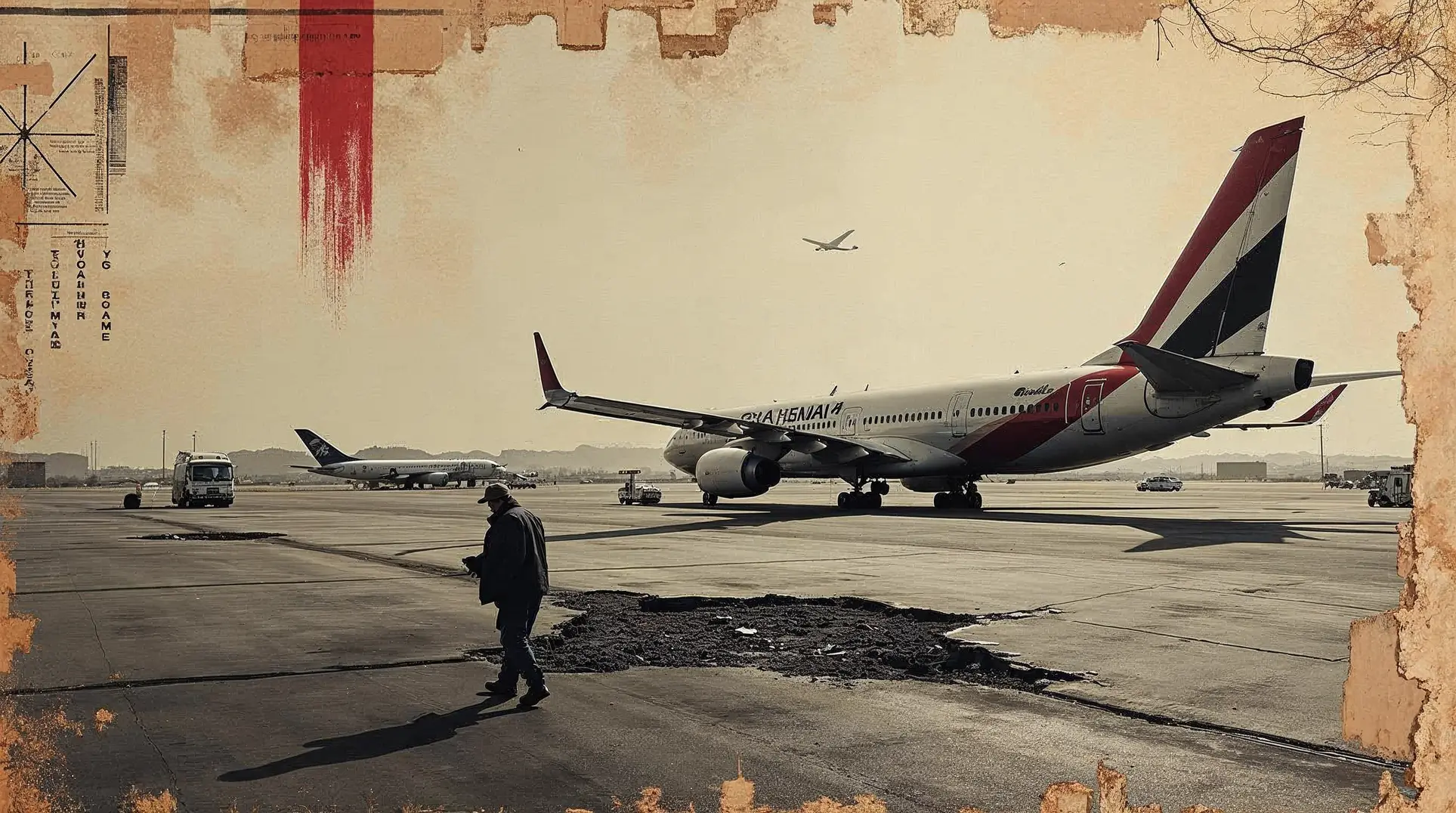
Observers are reading: How Saudi Arabia's Red Sea oil route became the next pressure point in the widening Iran-linked conflict.
Become an Observer — it's free. Get full access to all Crisis.Zone analysis, briefings and breaking coverage.
A fifth front opens
Monday's exchange does not stand alone. It follows the collapse of the US-Iran ceasefire memorandum five days earlier and Iran's strikes on five Gulf states a day before that. Ground clashes between Yemeni government forces and Houthis had already resumed in Hodeidah province. An ICRC aircraft was briefly detained at Sanaa airport before the organization confirmed its crew "safe and accounted for." Neither Riyadh nor Washington has signaled how — or whether — this latest front will be contained.
Become an Observer — it's free — to unlock direct links to all sources used in this article.
We believe you deserve to verify everything we write. That's why we meticulously document every source.


