


The Islamabad Memorandum of Understanding that ended three months of US-Iran war is dead. Speaking in Ankara at the NATO summit, President Trump said flatly: "I think it's over. I don't want to deal with them anymore. They're scum." Hours earlier, Iran's Foreign Ministry had declared the same agreement "ineffective," citing repeated US violations.
The announcements came after the fastest and largest exchange since the June 17-18 signing — a cascade of my earlier reporting on the MOU's text flagged as structurally likely from the outset. What collapsed in these 24 hours was not a functioning peace, but a 14-point document whose ambiguities were always going to be tested against exactly this scenario.
The 24-hour cascade
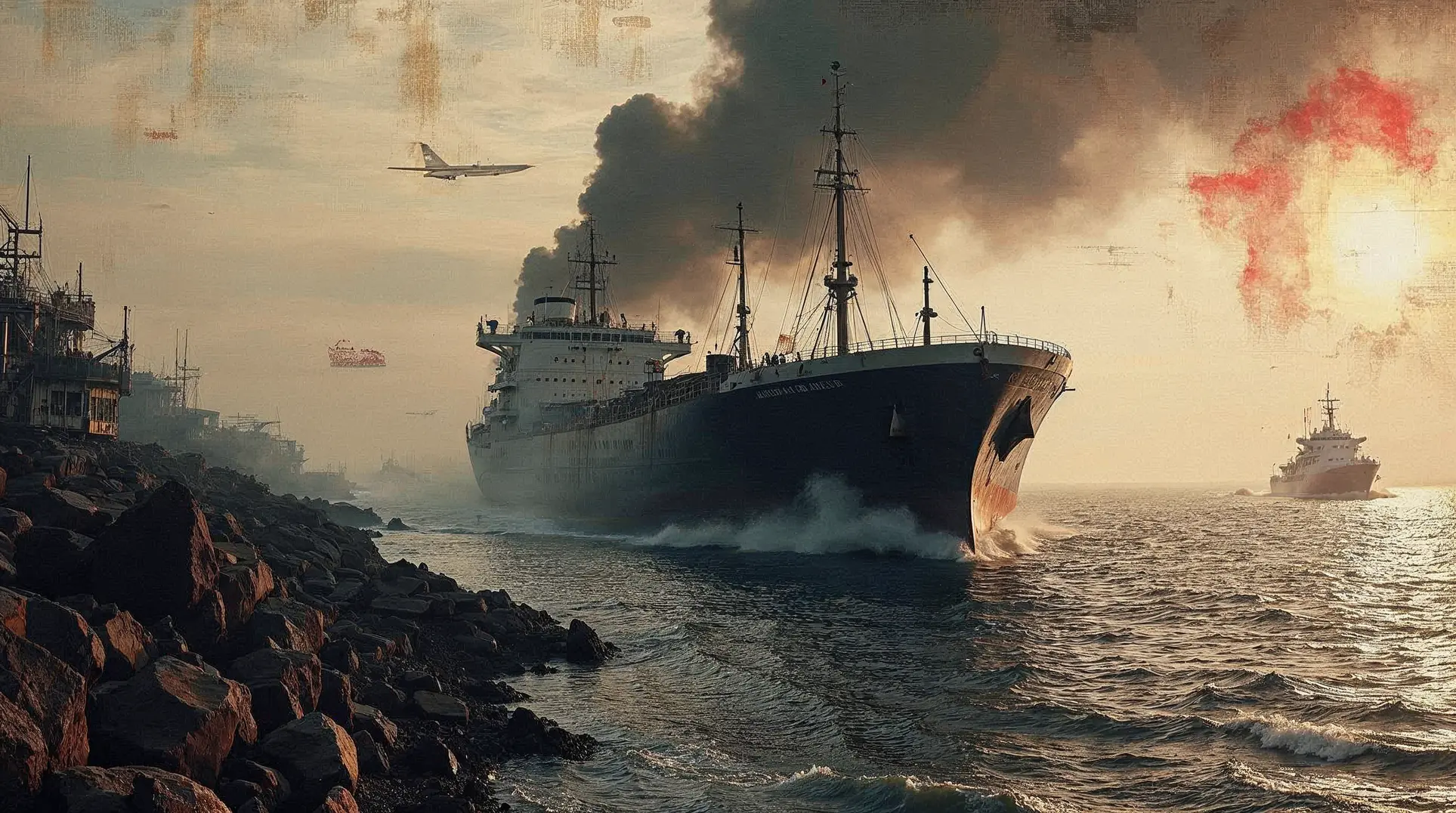
Two commercial vessels — Qatari LNG carrier Al Rekayyat and Saudi crude carrier Wedyan — were struck July 7-8 near Oman's coastline, a route Muscat had proposed as an alternative to Iran-controlled shipping lanes. Qatar and Saudi Arabia both blamed Iran directly; Tehran did not claim responsibility but warned against "unapproved routes."
CENTCOM responded overnight with strikes on more than 80 targets across southern Iran, including over 60 IRGC fast-attack boats; separate reports of explosions on Kharg Island were not confirmed by CENTCOM as part of the strike list. A US official called it "punishment," adding: "It won't be over for a bit." Hours later, the IRGC claimed strikes on 85 US-linked sites in Bahrain and Kuwait; Kuwait confirmed intercepting two ballistic missiles and 13 drones. Full details are in Crisis.Zone's parallel coverage of the strike exchange.
Observers are reading: why the symmetry between 80 US targets and 85 IRGC-claimed strikes is not coincidental escalation.
Become an Observer — it's free. Get full access to all Crisis.Zone analysis, briefings and breaking coverage.
What comes next
Iran's Khamenei funeral processions continued through Thursday, with burial held in Mashhad on July 9 — a domestic constraint on Tehran's bandwidth for further escalation, even as Ghalibaf posted that "we don't fold." Brent crude has surged past $78 a barrel, and Bahrain and Kuwait remain exposed after Iran warned regional states against hosting US operations. NATO's Rutte called the US strikes "absolutely necessary"; the EU's Kallas called Iran's Gulf strikes "unacceptable." The 60-day negotiation window the MOU created no longer has anything to negotiate toward — what replaces it, if anything, is now the only open question.
Become an Observer — it's free — to unlock direct links to all sources used in this article.
We believe you deserve to verify everything we write. That's why we meticulously document every source.


