


Yemeni coastal collapse and Saudi pipeline shutdown converge within 48 hours, testing Washington's limits
Iran-aligned forces now hold ground overlooking both of the Middle East's critical oil chokepoints simultaneously, after Houthi fighters completed a 48-hour sweep of Yemen's entire Red Sea coastline and a separate drone strike shut down Saudi Arabia's last pipeline bypassing the Strait of Hormuz. The convergence, confirmed by Yemeni military sources, Reuters and the Saudi Energy Ministry, marks the first time in the seven-month US-Iran war that both waterways have fallen under simultaneous pressure from the same axis.
The scale is not in dispute: roughly 130 kilometers of coastline changed hands in days, from Mocha's fall on September 10 to the capture of Perim Island the following day. What remains contested is what Tehran and its allies intend to do with the position they now hold — and how much latitude Washington will give Riyadh to respond.
The 48-hour collapse
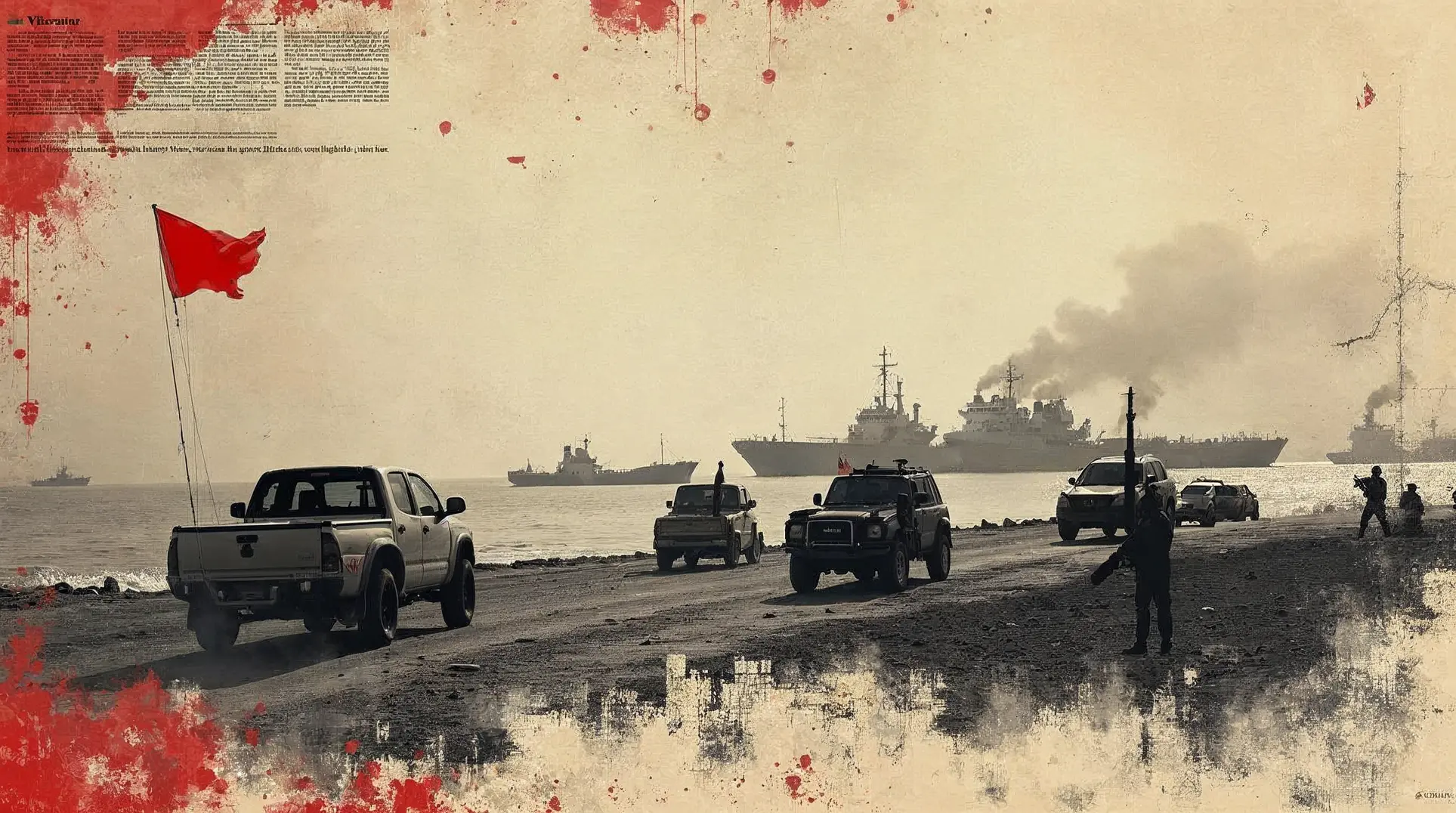
Houthi units stormed Mocha at dawn September 10, overwhelming Saudi-backed government forces who had held the port since 2017. Within a day they took Dhubab, the government's last Red Sea holding, and ferried fighters onto Perim Island — the volcanic outcrop that splits Bab al-Mandeb into two narrow channels. Government forces withdrew from the island without a fight, according to four Yemeni sources cited by Reuters. By September 12, Houthi units had pushed into Lahj province, and Yemen's entire Red Sea coast was under their control.
The timing was not incidental to the pipeline strike. Drones launched from Iraq's Maysan province hit Saudi Arabia's East-West Pipeline the same window, forcing Riyadh to shut the line moving 4-5 million barrels a day — its sole secure export route after Hormuz became unreliable. Brent crude has since traded above $100 a barrel for the first time since July.
Observers are reading: why MBS's direct appeals to Trump reveal how far Saudi Arabia's own defenses have eroded.
Become an Observer — it's free. Get full access to all Crisis.Zone analysis, briefings and breaking coverage.
The narrowing of Riyadh's options
Bab al-Mandeb's narrowest point, at roughly 29 kilometers, is tighter than Hormuz and offers no equivalent to the alternative transit lane the US established off Oman's coast. Andreas Krieg of King's College London cautions that Houthi control of Mocha, Dhubab and Perim does not yet amount to sovereignty over the entire strait — the western littoral lies outside Yemen — but it gives the group, in his words, a "dramatically stronger ability to contest, threaten and potentially deny" the waterway. That is capability, not closure. Whether it becomes the latter now depends on choices in Washington and Tehran that neither has yet made public.
Become an Observer — it's free — to unlock direct links to all sources used in this article.
We believe you deserve to verify everything we write. That's why we meticulously document every source.


