


Key takeaways
- Masked settlers attacked Palestinian villages across the occupied West Bank on October 16, injuring residents and Washington Post photographer Heidi Levine in Abu Falah.
- As of October 17, no arrests had been reported, despite Israeli pledges to investigate and a U.S. call for an inquiry.
- Yesh Din has documented that most police investigations into settler violence end without an indictment.
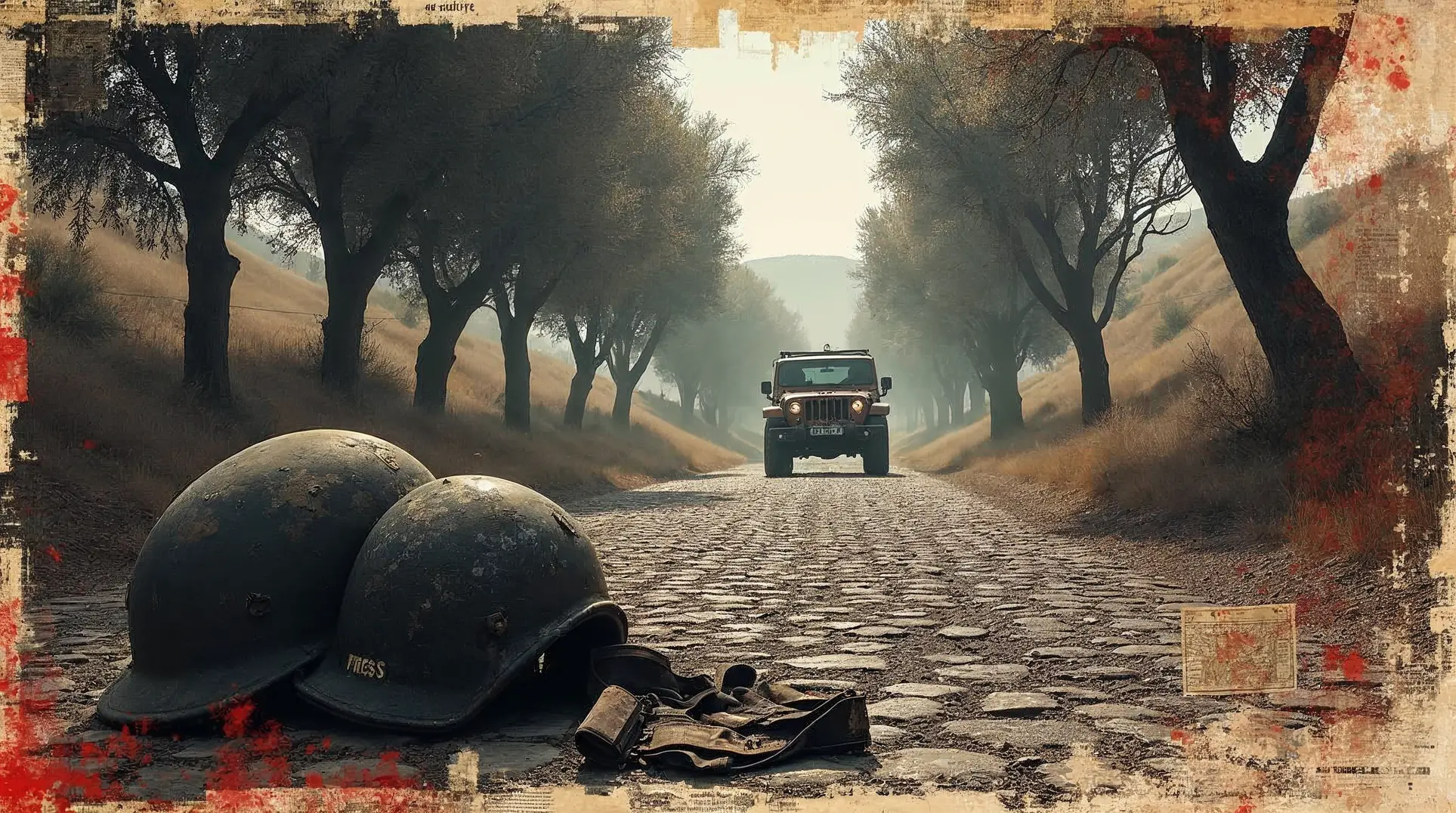
Masked Israeli settlers attacked Palestinian olive harvesters in villages across the occupied West Bank on Friday, October 16, 2026. The villages included Abu Falah, Turmus Ayya and Burqa, according to witnesses, local officials and news reports. In Abu Falah, northeast of Ramallah, Heidi Levine, an American photojournalist on assignment for The Washington Post, was knocked to the ground and kicked repeatedly. She was wearing a flak jacket and helmet marked "PRESS". She suffered a broken rib and a serious hand injury that required surgery, according to The Washington Post. She said the attackers took her equipment.
As of Saturday, October 17, no arrests had been reported. Israeli police have opened an investigation.
What happened in Abu Falah, and who responded
Reuters witnesses said some 80 settlers, many masked and clad in black, came down from a hill above a terraced olive grove near the village of Abu Falah, while video obtained by CBS News showed a group of around 20 masked men in black or gray clothes descending from the area of a settlement outpost. Jasper Nathaniel, an independent journalist who was there, said Levine was caught during a retreat as the Palestinians and journalists with her pulled back from the approaching settlers. Video filmed by the journalist and activist known as Andrey X shows her already on the ground, and him and Nathaniel running to her. At least five people then surrounded her, and the beating lasted nearly ten minutes.
A local official told the BBC that attacks near Abu Falah left 12 Palestinians wounded, including four dual U.S.-Palestinian citizens. The Palestine Red Crescent said its medics had tended to 14 wounded people in six locations across the West Bank, according to AP, while NPR reported the Red Crescent put the number of injured at 20.
Israeli military vehicles arrived afterwards. Witnesses said troops fired tear gas toward Palestinians and did nothing to stop the settlers. Live gunfire could be heard in the area, and a Reuters photographer saw at least one armed settler fire a gun. Soldiers shot Abdel Jaber Hassan, a Palestinian village council member, in the leg. The Israeli military (IDF) alleged that Hassan approached troops holding a "sharp object". Council member Nazem Saleh Shoman denied that account and said Hassan was shot at close range while carrying olive-harvesting tools. Residents said he was unarmed and far from the trees.
Observers are reading: how the investigation record, Area C restrictions and field enforcement combine to shape the odds of prosecution in the Levine case.
Become an Observer, it's free. Get full access to all Crisis.Zone analysis, briefings and breaking coverage.
What to watch next
Harvesters were returning to the trees after the raids. Imm Khaldoun, 73, said: "This is my land. It's my right."
On the evidence available as of October 17, accountability for the Levine assault looks unlikely in the near term. That assessment rests on three things: no arrests were reported, the official response was uncertain in tone, and most earlier settler-violence cases ended without indictments. It is a judgment about probability, not a settled outcome.
Until then, the harvest continues under the conditions described above.
Become an Observer (it's free) to unlock direct links to all sources used in this article.
We believe you deserve to verify everything we write. That's why we meticulously document every source.


