


The Democratic Republic of Congo's Ebola outbreak has killed 1,033 people from 2,536 confirmed cases as of July 23, 2026, according to the DRC Ministry of Health and Africa CDC. The country crossed the 1,000-death threshold just over two months after the World Health Organization declared a Public Health Emergency of International Concern on May 17 — making this the fastest Ebola outbreak to reach that toll in recorded history.
The virus responsible, Bundibugyo ebolavirus, has no approved vaccine and no approved treatment. Its case fatality rate, roughly 40 percent, is lower than the more familiar Zaire strain's. Yet it is producing higher absolute mortality, because nothing available is slowing its spread. Roughly two-thirds of deaths are occurring in communities rather than treatment centers, according to WHO Director-General Tedros Adhanom Ghebreyesus and IOM Regional Director Frantz Celestin — a detail that says as much about the state of the response as about the pathogen itself.
The speed is not only virological
The 2014–2016 West Africa epidemic took eight months to reach 1,000 deaths. The 2018–2019 DRC outbreak needed ten months to reach 2,000 cases. This outbreak reached 2,000 cases in two months, and mortality and infection rates have both risen nearly 67 percent in the past two weeks alone, per Reuters. The jump from 473 deaths on July 4 to 1,033 by July 23 illustrates a trajectory still accelerating, not plateauing. Adelard Lufongola, the national Ebola response operations manager, put it plainly: "It is still too early to say that we have reached the peak of the outbreak."
Many new cases are appearing outside known transmission chains, a sign that contact tracing has failed to keep pace with spread and fallen far below any functional containment threshold. WHO modeling suggests the true case count could be two to four times official figures. Patient zero has never been confirmed. "That is an alarm bell for me," said Nahid Bhadelia, an infectious disease physician at Boston University. "It means that a lot more people have this disease than we think, and contact tracing is not keeping up."
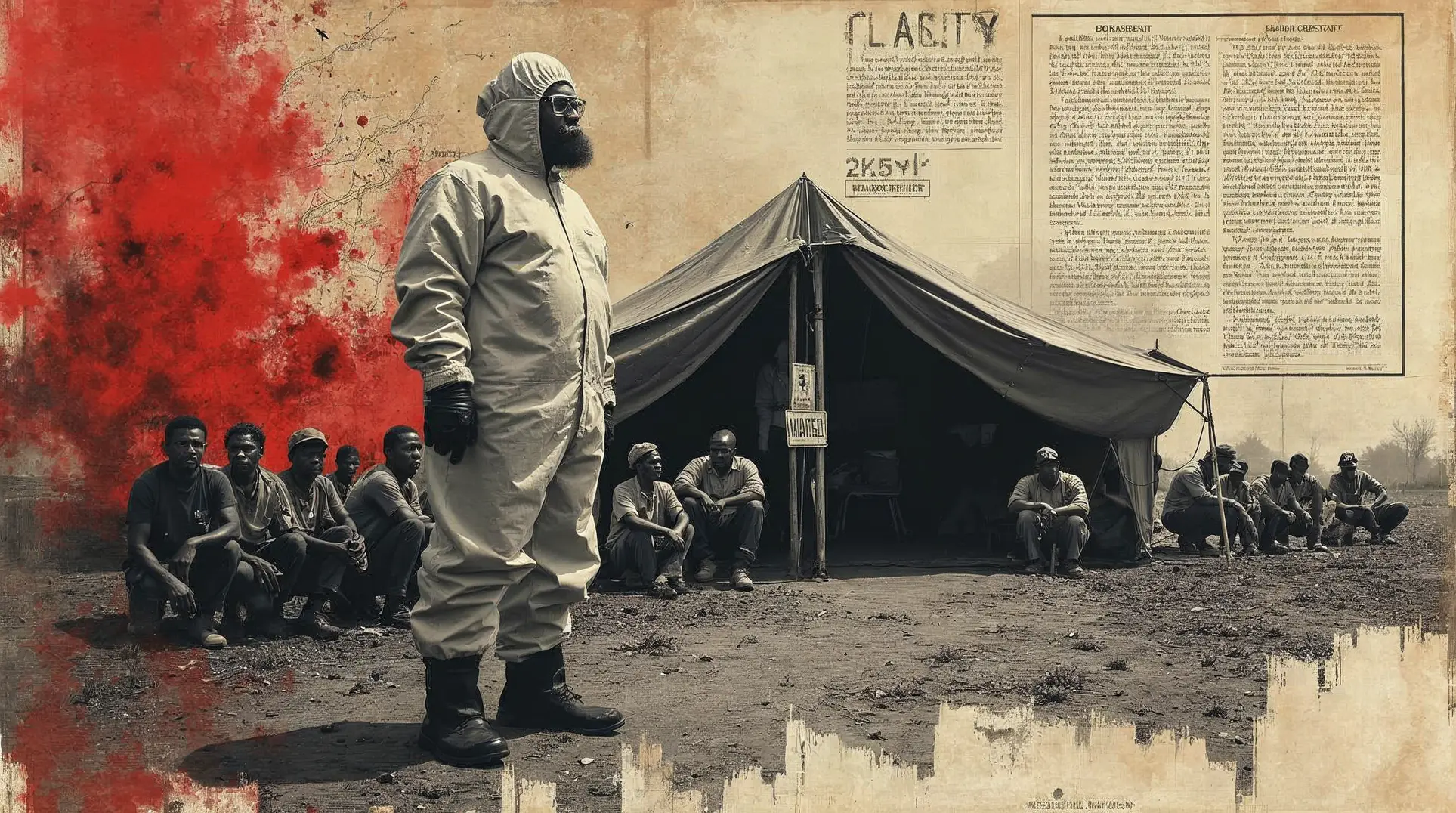
Observers are reading: How the funding shortfall and displaced camps are shaping where this outbreak spreads next.
Become an Observer — it's free. Get full access to all Crisis.Zone analysis, briefings and breaking coverage.
A political indictment, not a natural threshold
The human toll includes 476 infected children and 189 deaths among them, and the opening of what ABC News Australia called the region's "first Ebola nursery." In Rwampara, epidemiologist Ghislain Maneba buried a colleague who died of the disease this month: "My heart breaks. But it also motivates me to honour him by working tirelessly." The DRC has weathered 17 Ebola outbreaks and holds real technical expertise. That expertise has not been the limiting factor here. The WHO-Africa CDC joint response plan, worth $518 million, has drawn pledges of around $498 million — but less than $2 million of that has actually reached affected countries. The 1,000-death milestone marks less a virus outrunning science than a response outrun by conditions science alone cannot fix.
Become an Observer — it's free — to unlock direct links to all sources used in this article.
We believe you deserve to verify everything we write. That's why we meticulously document every source.


