


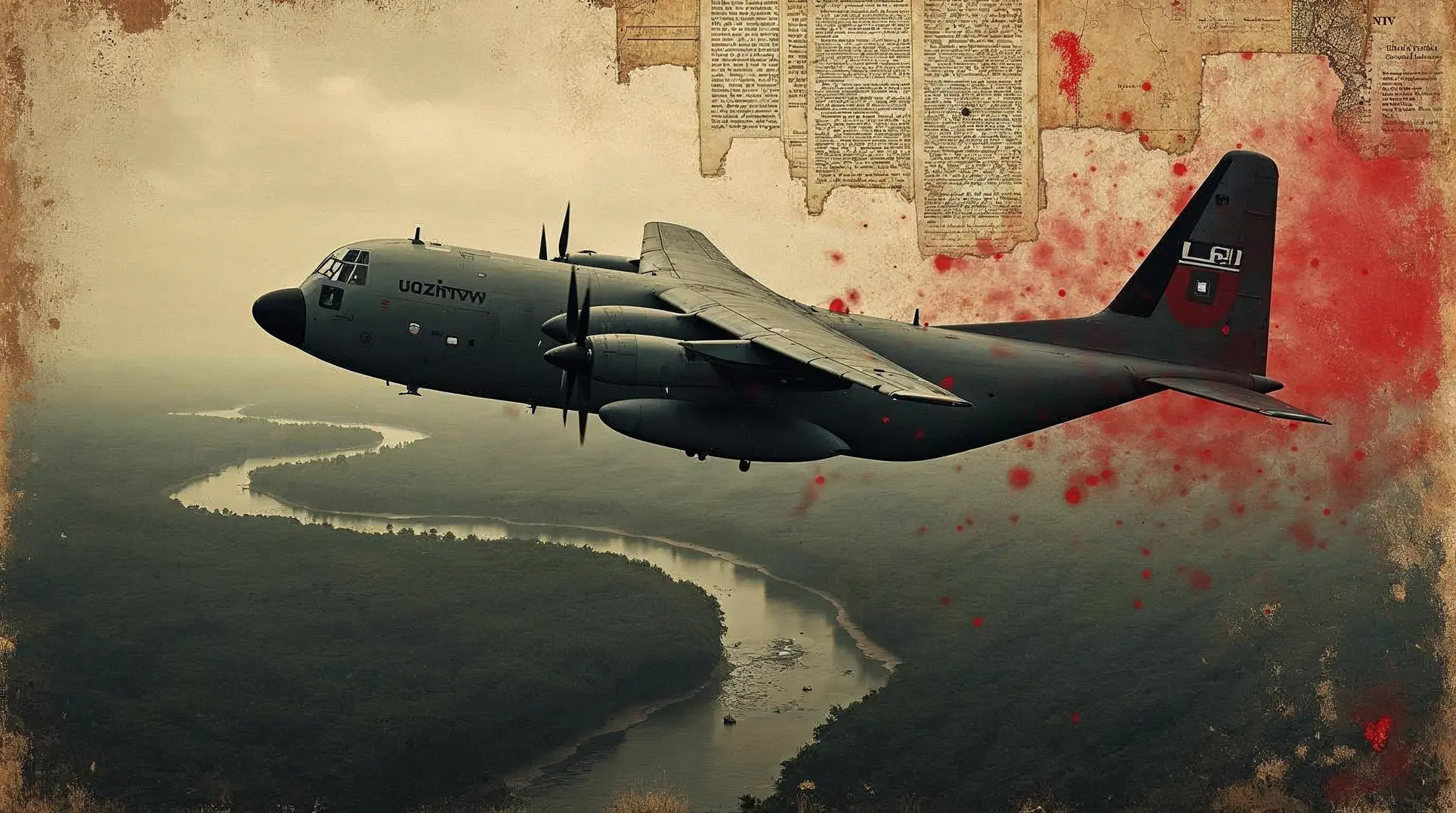
A Colombian Air Force C-130 Hercules transport plane crashed shortly after takeoff near Puerto Leguízamo in the Putumayo department on Monday, March 23, 2026, carrying approximately 110 military personnel. Defense Minister Pedro Sánchez confirmed the accident, describing it as a "deeply sad event for the country," though the exact number of casualties remains unconfirmed.
The crash occurred in one of Colombia's most remote regions, near the borders with Peru and Ecuador. Witness footage circulating on social media shows a significant fire at the crash site, with the fuselage largely destroyed. Military search and rescue units reached the location within hours of the incident, but officials have not yet released casualty figures as recovery operations continue.
Latest situation update
The C-130 Hercules went down moments after departing from a local airfield in Puerto Leguízamo, a municipality in southern Putumayo characterized by dense jungle terrain. Local media outlet BluRadio initially reported that approximately 110 soldiers were aboard the military transport flight, a figure Defense Minister Sánchez has not disputed in his public statements.
The cause of the crash remains under investigation. Colombian defense officials have urged the public to await official findings before drawing conclusions, though early speculation from aviation analysts points to potential mechanical failure or weight-related issues during the critical takeoff phase. The Ministry of Defense has not commented on these preliminary theories.
The Putumayo region's challenging geography—remote outposts accessible primarily by air through jungle-covered terrain—makes military transport aircraft like the C-130 essential for Colombian armed forces logistics. The loss of such an aircraft, particularly one carrying more than 100 personnel, represents a significant operational and human cost.
Members are reading: How the crash impacts Colombia's remote operations capacity and what the investigation timeline reveals about military aviation safety.
Regional context and response
Colombia's C-130 fleet serves as the backbone for military logistics in regions like Putumayo, where road infrastructure is minimal and river transport is often controlled by non-state armed groups. These aircraft transport troops, supplies, and equipment to forward operating bases that would otherwise be unreachable, making each airframe critical to operational capability.
President Gustavo Petro has not yet issued a public statement on the crash, though Defense Minister Sánchez's confirmation indicates the highest levels of government are monitoring the situation. The Ministry of Defense has committed to providing updates as casualty figures are confirmed and recovery operations proceed.
The incident underscores the operational risks Colombian military personnel face even before engaging in direct security operations, with the challenging terrain and weather conditions in southern Colombia contributing to aviation hazards that complement the security threats these forces are deployed to address.
Subscribe to our free newsletter to unlock direct links to all sources used in this article.
We believe you deserve to verify everything we write. That's why we meticulously document every source.


