


The United Nations World Food Programme confirmed this week that it cannot mount a significant winter assistance operation in Afghanistan for the first time in decades, a rupture in humanitarian architecture that will leave millions without seasonal aid and increase the likelihood of rising child deaths during the harsh winter months. The agency's Afghanistan Country Director, John Aylieff, was blunt: "And at the moment, we have no funding and there will be no response."
The announcement marks an institutionally different crisis—not simply another bad winter, but a fundamental break in the seasonal safety net that has underpinned Afghan survival for generations. Roughly 17 million people face acute food insecurity this winter, 3 million more than last year, while 3.7 million children suffer acute malnutrition, including nearly 1 million in severe condition. WFP officials warned that child deaths are likely to rise this winter when food is scarcest and treatment access has collapsed.
A convergence of shocks at the worst possible moment
The surge in need reflects multiple compounding crises. Drought has affected half the country, destroying crops and livelihoods. The August 31, 2025 magnitude-6.0 earthquake in Nangarhar province displaced families and wrecked infrastructure. Job and income losses have accelerated amid a weakened economy. And mass forced returns from Pakistan and Iran—between 1.5 and 2.5 million people in 2025 alone—have brought waves of already-malnourished families back into a country with vanishing services.
WFP suspended its emergency food assistance program in May 2025 due to funding shortfalls. The agency can now support roughly 1 million people per month—less than 10 percent of the target population and down from around 5 million a year ago. Dozens of nutrition clinics have closed for lack of funds. Specialized food distributions designed to prevent malnutrition were halted in May. Jean-Martin Bauer and other WFP officials say the agency is now "turning hundreds of thousands of people away" from nutrition centers, including malnourished mothers and children who would have received treatment in previous years.
The funding collapse is severe. WFP Afghanistan faces an urgent requirement of over $460 million to deliver life-saving assistance through early 2026. This reflects a broader global retrenchment: WFP's overall budget is projected at roughly $6.4 billion for 2025, down about 40 percent from $10 billion in 2024. Since the Taliban's return to power in 2021, international funding streams have withered amid sanctions, governance concerns, and shifting geopolitical priorities that have eroded donor support for Afghanistan even as needs have surged.
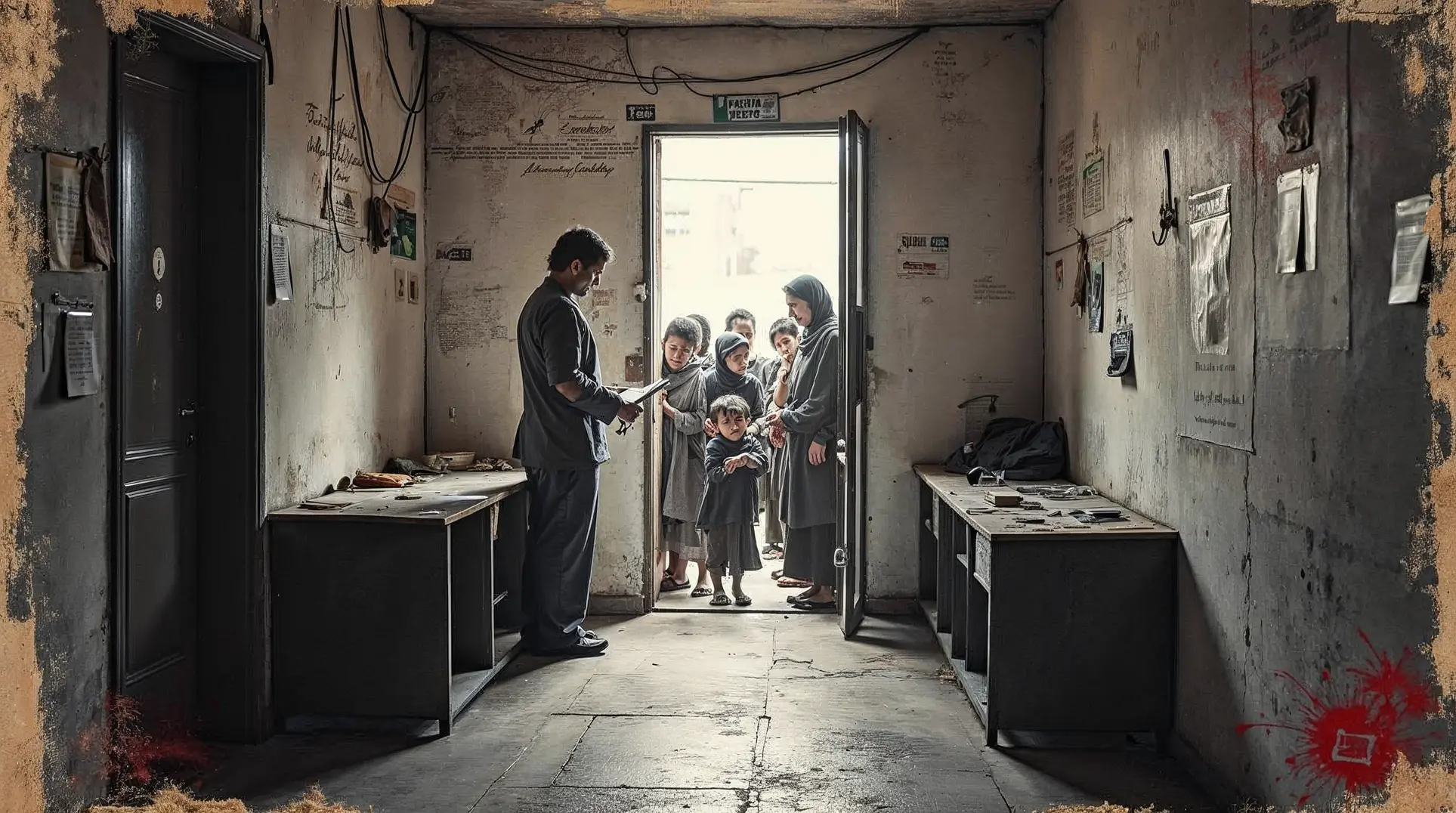
Members are reading: How the collapse in funding has shifted Afghanistan's humanitarian model from seasonal surge capacity to mass-scale triage and systematic exclusion.
A winter of preventable deaths
On the ground, the consequences are immediate. Kabul residents interviewed by Radio Free Europe/Radio Liberty described begging for rice and being "ready to accept death." Families will walk hours to nutrition clinics only to find them shuttered. Children in severe acute malnutrition will go untreated, their conditions deteriorating into medical emergencies that overwhelmed health facilities cannot manage. The lack of pre-positioned food stocks means no buffer when snow closes roads or when seasonal hunger peaks in the coldest months.
Afghanistan is experiencing a preventable spike in child mortality and long-term stunting, driven not by the absence of solutions but by the absence of funding for solutions that are well understood and operationally proven. The structural deadlock that has defined Afghanistan-Pakistan relations and the broader failures of international engagement with Afghanistan's political economy now manifest in the bodies of malnourished children turned away from closed clinics. WFP's warning is unambiguous: without urgent funding, this winter will be measured in lives that could have been saved and were not.
Subscribe to our free newsletter to unlock direct links to all sources used in this article.
We believe you deserve to verify everything we write. That's why we meticulously document every source.


