


Venezuela's ruling-party controlled National Assembly unanimously approved legislation Tuesday imposing prison sentences of up to 20 years for anyone who promotes or finances what the government defines as piracy or blockades against the nation's commerce. The extraordinary legislative session, convened just days after U.S. forces seized at least two Venezuelan oil tankers in the Caribbean, marks Caracas's most aggressive domestic legal response yet to Washington's escalating enforcement campaign against its petroleum exports.
The speed and unanimity of the measure—introduced, debated, and passed within 48 hours—signals the Maduro government's assessment that U.S. maritime interdiction represents an existential threat requiring immediate legislative armor. By criminalizing support for what it characterizes as illegal acts against Venezuelan sovereignty, the government has weaponized its domestic legal system to fight an asymmetric geopolitical battle, transforming compliance with U.S. sanctions into a prosecutable offense under Venezuelan law.
Lawfare as statecraft in a sanctions war
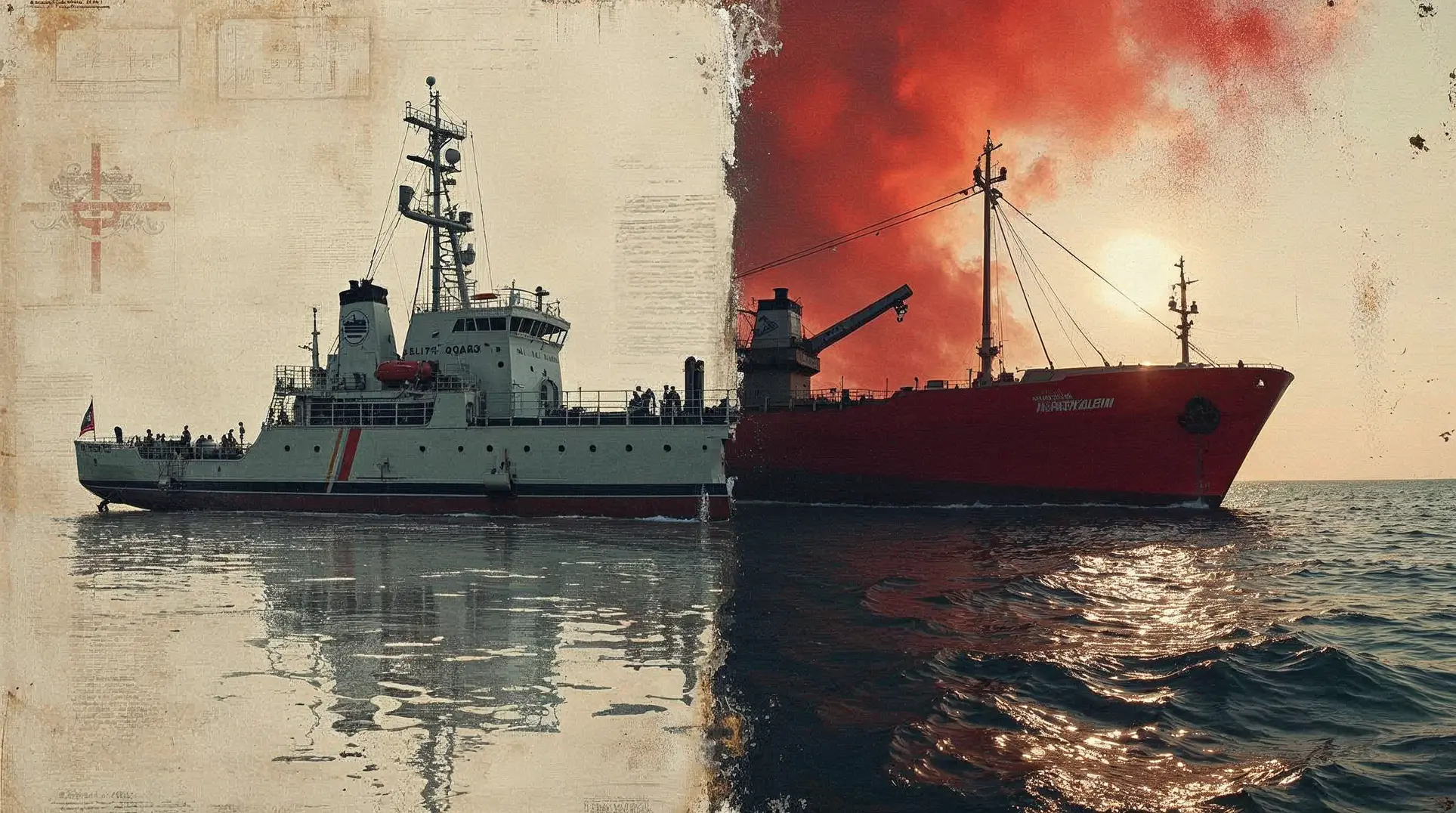
The newly enacted "Law to Guarantee Freedom of Navigation and Commerce Against Piracy, Blockades, and Other International Illicit Acts" represents a textbook case of defensive lawfare by a sanctioned state. At its core lies a fundamental semantic battle: Caracas insists that U.S. seizures of vessels carrying Venezuelan oil constitute piracy and theft under international law, while Washington frames the same actions as legitimate sanctions enforcement and counter-narcotics operations. This isn't merely rhetorical positioning. By codifying its narrative into criminal law, Venezuela creates a parallel legal reality that directly challenges the legitimacy of the U.S. sanctions architecture.
The law's language is deliberately expansive, targeting not just those who execute seizures—U.S. military and Coast Guard personnel beyond Venezuelan jurisdiction—but anyone who "promotes, finances, or supports" such actions. This broad definition creates potential criminal liability for shipping insurers who comply with sanctions guidance, maritime service providers who refuse Venezuelan business under U.S. pressure, and crucially, Venezuelan opposition figures who have lobbied Washington for tougher enforcement. The government has explicitly accused opposition leaders of advocating for measures that harm ordinary Venezuelans, and this law provides a legal framework to prosecute that advocacy as treason.
This legislative maneuver follows a predictable pattern when sanctioned states face escalating pressure. The second tanker seizure demonstrated that U.S. interdiction had shifted from exceptional to systematic, forcing Venezuela to innovate its defensive posture beyond diplomatic protests. The law domesticates the consequences of a geopolitical conflict, allowing the state to punish those within its territorial reach who might align with external pressure, while signaling costly risks to international actors in the gray market oil trade that has become Venezuela's economic lifeline.
Members are reading: How the law creates a compliance trap for international actors and establishes legal architecture for long-term geopolitical leverage.
Asymmetric legal warfare in a failing sanctions model
Venezuela's legislative response reflects a broader reality: the sanctions-based pressure model has failed to achieve its stated objective of regime change, forcing Washington to escalate from financial restrictions to kinetic maritime interdiction. This escalation, in turn, compels Venezuela to innovate its defensive strategy, moving from diplomatic protests to legal threats backed by domestic criminal penalties. The result is a spiral of asymmetric measures, each side using the sovereign powers available to it—the U.S. its naval dominance, Venezuela its legislative authority—to prosecute a conflict neither can decisively win.
The law's passage underscores what state survival looks like in a heavily sanctioned economy where illicit or embargo-violating petroleum exports have become the government's financial lifeblood. When traditional diplomatic and economic tools fail, states under pressure weaponize whatever instruments remain: legal systems, criminal codes, and the coercive apparatus of domestic law enforcement. Whether this legislation proves enforceable matters less than its chilling intent and its role in a broader narrative war about sovereignty, legality, and the human cost of economic coercion in the Caribbean.
Subscribe to our free newsletter to unlock direct links to all sources used in this article.
We believe you deserve to verify everything we write. That's why we meticulously document every source.


