


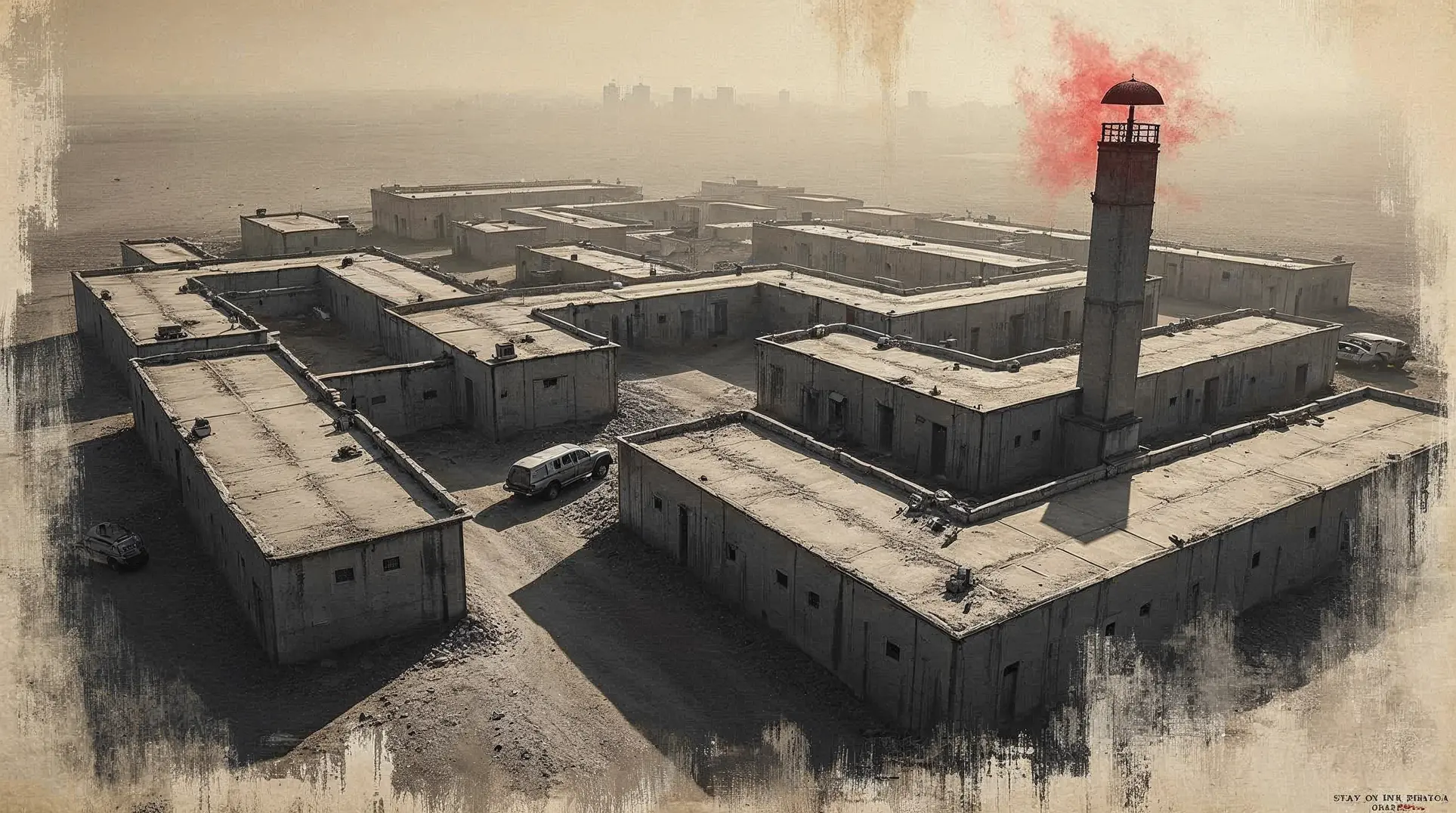
US Central Command launched an emergency evacuation Wednesday to transfer up to 7,000 Islamic State detainees from northeastern Syria to secure facilities in Iraq, marking the first phase of an urgent operation to prevent mass prison breaks. The initial convoy moved 150 ISIS fighters from a detention facility in Hasakah, according to a CENTCOM statement, as Syrian Democratic Forces withdraw from prison sites under pressure from Damascus-linked forces.
The operation comes as the security architecture holding thousands of high-value terrorism suspects across northeastern Syria approaches collapse. SDF units have pulled back from multiple detention sites in recent days, including the al-Hol displacement camp and facilities near Shaddadeh, where reports indicate dozens of ISIS fighters have already escaped. CENTCOM's intervention signals Washington's assessment that its former partner can no longer guarantee the security of these facilities, raising immediate questions about the regional consequences of America's abrupt policy shift away from Kurdish-led forces.
Latest Situation Update
The transfer mission began under heightened security conditions as Syrian government-aligned forces continue offensive operations against SDF positions in Hasakah and Deir ez-Zor governorates. US military officials confirmed that air assets and ground units secured the convoy route from the Hasakah detention center to the Iraqi border, where Iraqi security forces assumed custody of the transferred detainees. CENTCOM Commander Admiral Brad Cooper stated the operation was "essential to maintaining regional security" and preventing a reconstitution of ISIS operational capability.
The timing reflects growing alarm within the US defense establishment about the vulnerability of facilities holding approximately 9,000 ISIS suspects across northeastern Syria, including several hundred high-value foreign fighters. Syrian government forces, emboldened by recent gains against the SDF, have moved closer to key detention sites, creating conditions where neither the SDF nor Damascus controls secure perimeters. Intelligence assessments had warned for weeks that ISIS cells were positioning assets to exploit precisely this kind of security vacuum, with prison breaks already occurring at smaller facilities.
Members are reading: How Iraq's sudden role as ISIS detention coordinator reshapes Tehran's influence over regional counter-terrorism architecture.
Implications
The Hasakah transfer represents the first operational consequence of Washington's strategic pivot away from the SDF partnership model that anchored US policy in Syria since 2015. By moving high-value detainees to Iraq rather than negotiating security arrangements with either Damascus or Ankara, the United States signals its assessment that no stable detention framework exists in Syria under current conditions. The pace of subsequent transfers will indicate how rapidly Washington believes the remaining detention infrastructure will fail.
Subscribe to our free newsletter to unlock direct links to all sources used in this article.
We believe you deserve to verify everything we write. That's why we meticulously document every source.


