


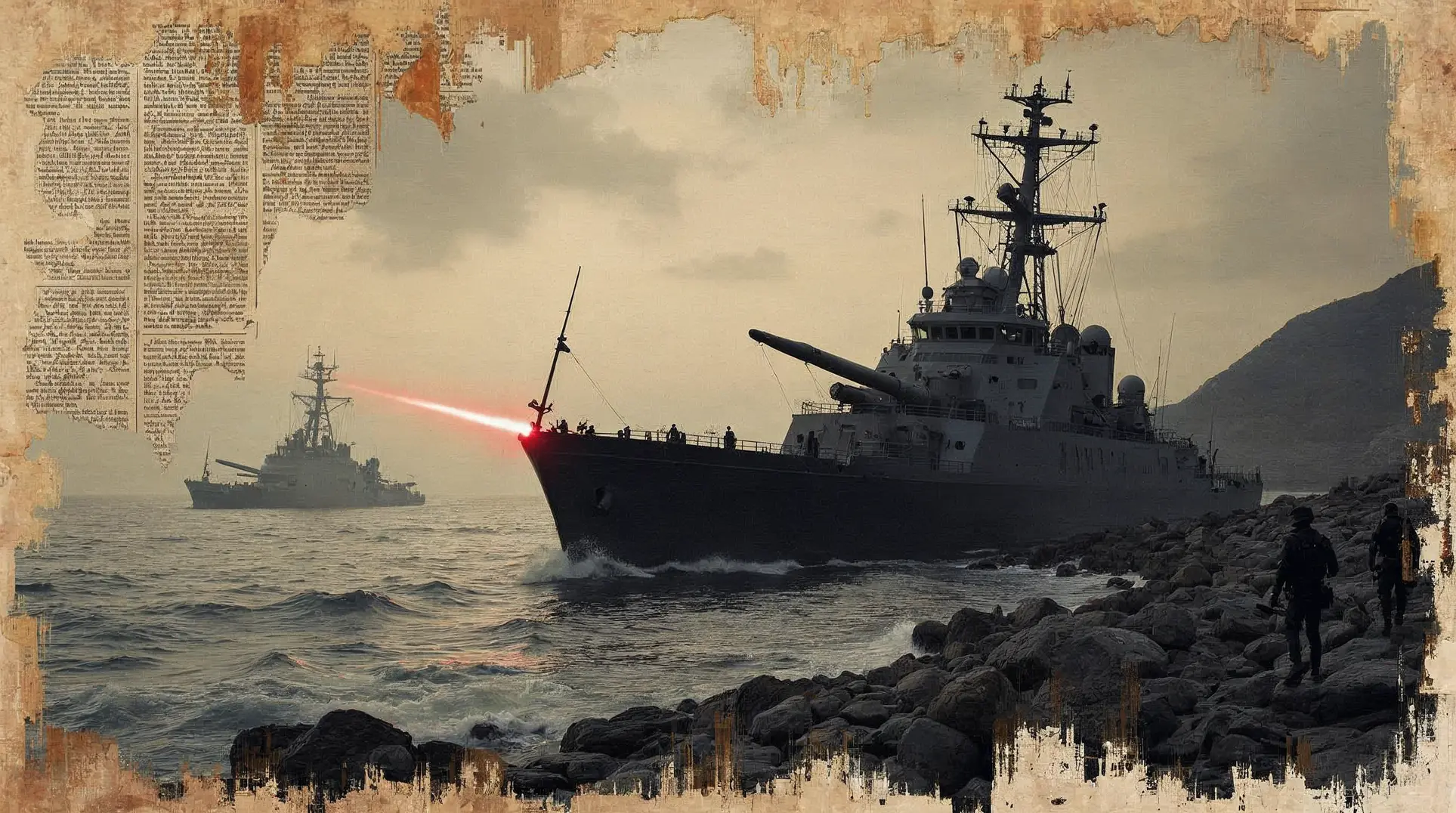
The Financial Times revealed that the US Navy conducted a covert, four-month operation using SEAL divers, unmanned surface vessels and underwater submersibles to locate and destroy sea mines in the Strait of Hormuz. Operating predominantly at night, small dive teams worked from inflatable-hulled boats, physically approaching live mines to attach explosive charges — a process retired Navy Capt. Bill Hamblet described to the FT as requiring a diver to "get in the water and approach the mine, and then put a charge on it and destroy it." No US casualties have been reported.
The disclosure lands as the waterway remains the region's central flashpoint, months after the June ceasefire memorandum collapsed and Washington returned to unilateral enforcement of transit. President Trump announced last week that "all the mines" in international waters had been cleared, a claim CENTCOM has since confirmed. Shipping executives told the FT they trust only the southern corridor near Oman.
Latest situation update
The revelation follows an intense 48 hours of exchanges. US forces struck three Iranian oil tankers on September 5, prompting CENTCOM commander Adm. Brad Cooper to warn: "If you shoot at two of our ships, we will impose an even higher economic cost — taking out three of yours." A day later, US forces struck a Fajr-5 rocket platform on Larak Island that CENTCOM said was being prepared to launch rocket-propelled sea mines into the strait — direct evidence Iran retains active re-mining capability months after the covert clearance operation supposedly concluded.
Iran, for its part, announced Sunday it will declare a new restricted zone extending from the US naval blockade line into the Gulf, according to Mohsen Rezaei, secretary of Iran's Supreme National Security Council. Tehran has also agreed maps for an Iranian-managed corridor with Oman, awaiting signature. The IMO estimated roughly 80 mines were deployed by June; Iran's stockpile is put at 2,000 to 6,000.
Observers are reading: how Iran's new restricted zone could force Washington into an impossible enforcement choice within days.
Become an Observer — it's free. Get full access to all Crisis.Zone analysis, briefings and breaking coverage.
The unresolved question of control
Brent crude sat at $96.95 a barrel Sunday, and US gas prices remain nearly a dollar above last Labor Day, even as Energy Secretary Chris Wright insists transits are running at two-thirds of pre-conflict volumes. The mine-clearing operation demonstrates what US special forces can achieve tactically. It has not resolved who controls access to Hormuz — a question now being renegotiated through Iran's restricted zone and its Oman corridor rather than through the stalled US-Iran talks that began in June.
Become an Observer — it's free — to unlock direct links to all sources used in this article.
We believe you deserve to verify everything we write. That's why we meticulously document every source.


