


The UN Independent International Fact-Finding Mission on Iran (FFMI) found reasonable grounds to believe both governments in last winter's war committed atrocities, concluding on Thursday that the United States committed war crimes in two February strikes on Iranian civilian sites and that Iranian authorities committed crimes against humanity in crushing nationwide protests. Neither finding cancels the other out. The mission, chaired by Bangladeshi jurist Sara Hossain, delivered a report that indicts Washington and Tehran alike.
The FFMI, created by the UN Human Rights Council in 2022 and staffed by unpaid independent experts, is not a court. Its findings are not binding and carry no enforcement mechanism. But they represent the first formal determination by an international body that US forces intentionally directed strikes at clearly identifiable civilian targets during the February 28 opening day of the US-Israel war on Iran, a finding that could feed into future international court proceedings.
The Minab school strike
The mission's most severe language concerns Shajareh Tayyebeh Primary School in Minab, in Iran's Hormozgan province, hit by Tomahawk cruise missiles on February 28. More than 150 people were killed, including roughly 120 schoolchildren and 26 teachers, according to Iranian authorities, with Western outlets reporting figures between 156 and 168. Crisis.zone reported at the time that the Human Rights Council convened an emergency session over the incident, and later documented the Pentagon's internal review of the targeting failure.
The FFMI's finding goes further than earlier reporting. The mission determined the school building was the intended point of impact, not an errant strike or collateral damage from an adjacent Islamic Revolutionary Guard Corps (IRGC) naval complex. It found no evidence the school was used for military purposes at the time of the attack and described it as a "clearly identifiable civilian object." US Central Command had built its targeting data from outdated intelligence: 2013 satellite imagery showed the school and the IRGC base as a single compound, but 2016 imagery revealed a fence separating them and a new school entrance. Imagery from December 2025 showed dozens of people in the courtyard.
The mission concluded the failure "went beyond mere negligence," writing that the US "directed the strikes at the building of the school while being aware of a substantial risk of striking a civilian object and acting recklessly as regards the possibility that this would happen." A separate strike the same day on a sports complex and residential area in Lamerd, using Precision Strike Missiles that disperse tungsten pellets, killed at least 21 civilians including seven children. CENTCOM has disputed that account, stating no strikes were launched on Lamerd that day.
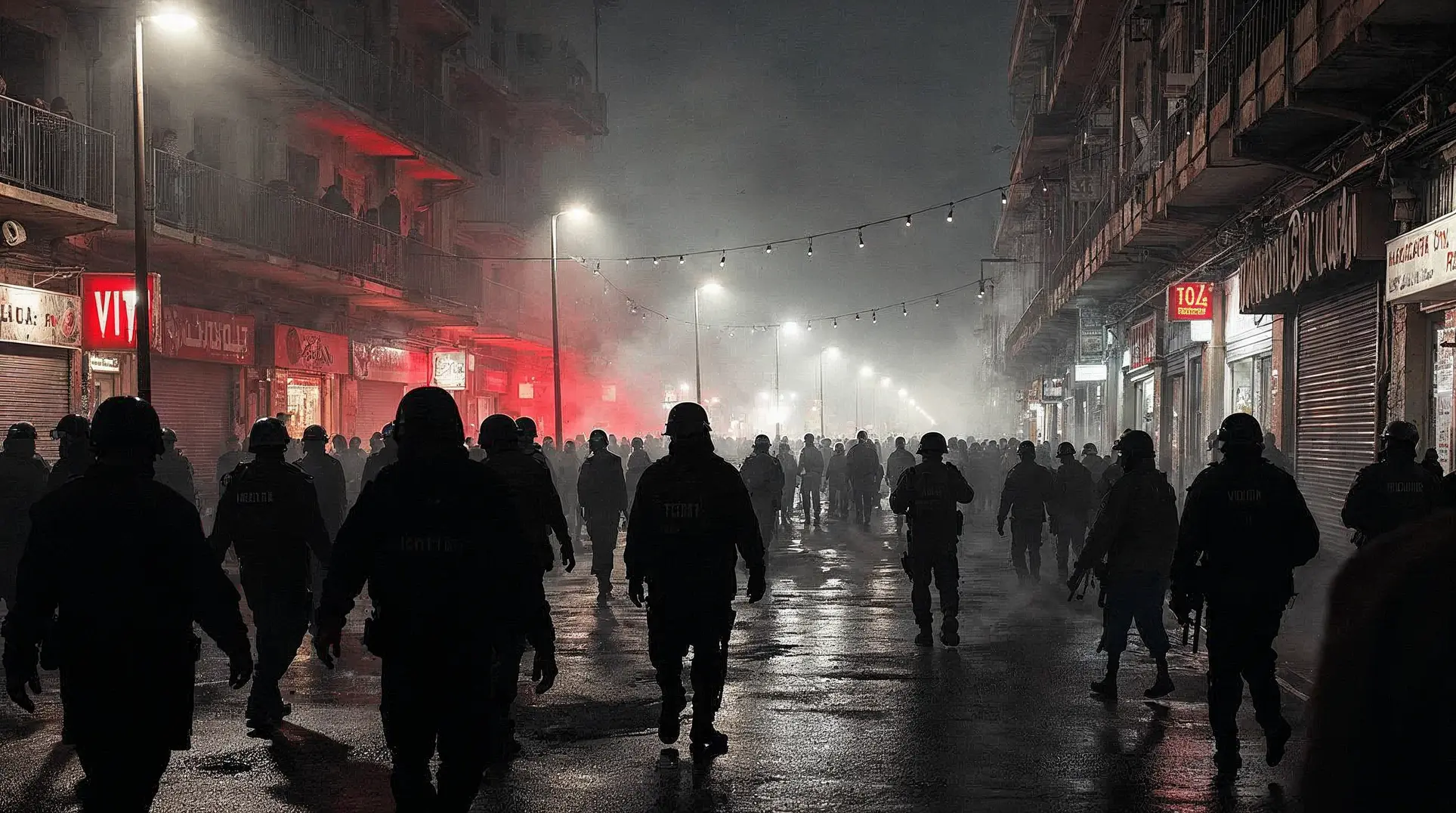
Observers are reading: How Washington and Tehran's identical rejection tactics reveal the limits of UN accountability mechanisms against powerful states.
Become an Observer — it's free. Get full access to all Crisis.Zone analysis, briefings and breaking coverage.
Both governments reject their half of the report
Washington's response came fast and total. The State Department said it does "not give credibility" to the findings, accusing the Human Rights Council of pushing "anti-American rhetoric" and appeasing "repressive regimes." White House spokeswoman Anna Kelly said the council "has accomplished nothing for human rights" and insisted Iran is "the only party in this conflict that has committed war crimes." The US withdrew from the Human Rights Council in February 2025 and did not respond to the mission's June requests for information or meetings.
Iran's silence was more passive but no less complete. Tehran left roughly three dozen FFMI information requests unanswered and denied the mission access to the country, even as Iranian state media cited the death toll from the Minab strike.
The result is a report that both governments can partially weaponize and neither can fully own. Washington cites Iran's crimes against humanity while rejecting the same mission's war crimes finding against its own forces. Tehran cites the Minab deaths while ignoring the mission's parallel documentation of its crackdown. The FFMI is scheduled to present its findings to the Human Rights Council on Monday, September 21, days before Iranian President Masoud Pezeshkian and Foreign Minister Abbas Araghchi are due in New York for the UN General Assembly. Whether either government's selective reading survives that presentation, or whether third states pursue the mission's call for accountability through universal jurisdiction, remains to be seen. The civilians documented in both halves of this report, Iranian schoolchildren under American missiles and Iranian protesters under their own government's bullets, are not waiting for either government's version to win.
Become an Observer — it's free — to unlock direct links to all sources used in this article.
We believe you deserve to verify everything we write. That's why we meticulously document every source.


