


The UN Security Council voted Friday to extend the mandate of its peacekeeping force in Cyprus until January 31, 2027, maintaining the mission's focus on facilitating reunification through a bicommunal, bizonal federation. Within hours, Türkiye issued a sharp rebuke, declaring the renewal "contrary to established UN practices and principles" because it proceeded without the consent of Turkish Cypriots. The exchange highlights a deepening diplomatic fracture over one of the UN's oldest and most static peacekeeping operations.
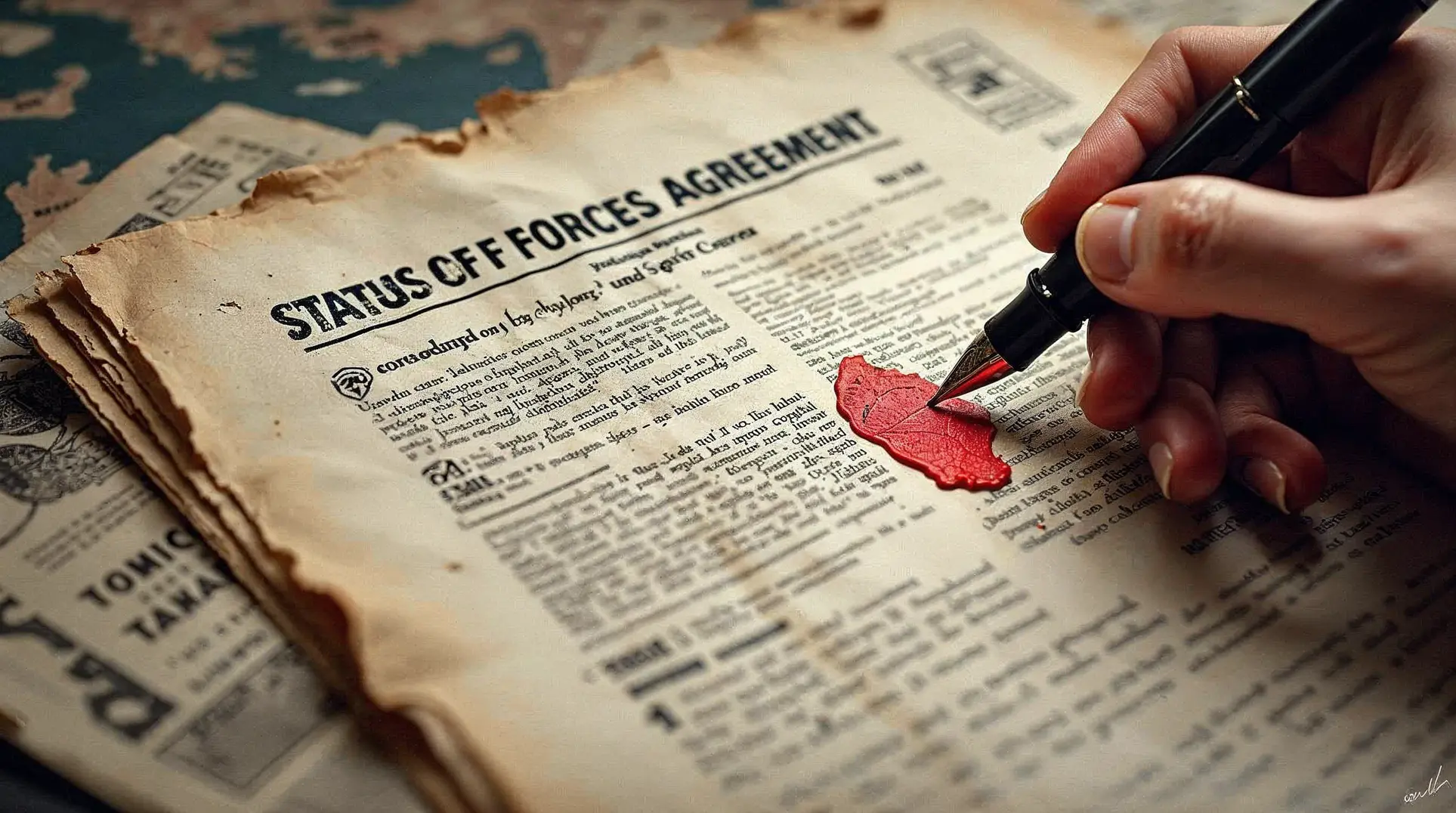
This is not merely another routine objection to the annual mandate renewal. Ankara and authorities in the Turkish Republic of Northern Cyprus are now directly challenging the legal foundation of UNFICYP's presence in the north, demanding a formal Status of Forces Agreement that would effectively require the UN to negotiate with the unrecognized TRNC as a state entity. The move signals Türkiye's determination to force international acknowledgment of a two-state reality that the Security Council has consistently rejected.
The institutional divide widens
Resolution 2815 passed with thirteen votes in favor and two abstentions—Pakistan and Somalia—whose decision to withhold support likely reflects broader solidarity within the Muslim-majority world with Türkiye's position. The resolution reaffirms language unchanged since Resolution 2771 adopted in 2025, reiterating that a bicommunal, bizonal federation remains "the only basis" for a settlement and describing the current status quo as "unsustainable."
Yet the Turkish Foreign Ministry's response suggests Ankara views the UN framework itself as the unsustainable element. The statement emphasized that UNFICYP currently operates in northern Cyprus solely through the "goodwill" of TRNC authorities, framing the mission's presence not as a legitimate peacekeeping operation but as a courtesy extended by what Türkiye considers a sovereign equal party. The demand for a SOFA represents an attempt to formalize this interpretation, transforming the UN's operational basis from Security Council authority to bilateral negotiation.
Members are reading: How Türkiye's demand for a legal agreement with the UN reverses the recognition framework and exploits NATO's strategic dependencies.
A frozen conflict begins to thaw—dangerously
UNFICYP has patrolled the Green Line since 1964, making it one of the UN's longest-running peacekeeping operations. Its expansion following the 1974 Turkish military intervention created a stable but politically paralyzed environment. For decades, this stasis served multiple interests: preventing renewed violence, allowing both sides to maintain incompatible political positions, and giving external powers a rationale to avoid difficult choices.
That equilibrium now appears increasingly fragile. The UN itself acknowledges in Resolution 2815 that the status quo is "unsustainable," yet offers no pathway beyond reaffirming the bicommunal federation formula that has produced no breakthrough since the failed Annan Plan referendum in 2004. Türkiye and the TRNC interpret this contradiction as evidence that the international community lacks both a viable plan and the political commitment to enforce one, creating space to advance their alternative vision.
The practical implications extend beyond diplomatic symbolism. If TRNC authorities follow through on suggestions that UNFICYP's operations in the north may face restrictions without a SOFA, the mission's ability to monitor the buffer zone and facilitate bicommunal contacts would deteriorate. The peacekeeping force, designed to preserve conditions for eventual reunification, could find itself unable to operate effectively in half its area of responsibility—not because of armed conflict, but because of administrative obstruction grounded in contested sovereignty claims.
The cost of diplomatic rigidity
The Cyprus impasse illustrates the limitations of institutional persistence when divorced from political reality. The Security Council's annual renewal ritual maintains legal continuity and signals normative commitment to Cyprus's territorial integrity. Yet this repetition occurs in a context where the gap between UN resolutions and facts on the ground grows wider each year, where one NATO member hosts a peacekeeping mission that another NATO member now challenges as illegitimate, and where the prescribed solution commands vanishing support among the populations it would govern.
Whether the UN framework can adapt to acknowledge changing power dynamics without abandoning core principles remains an open question. What seems clear is that Türkiye has decided the answer is no—and is prepared to act accordingly.
Subscribe to our free newsletter to unlock direct links to all sources used in this article.
We believe you deserve to verify everything we write. That's why we meticulously document every source.


