


Erdogan's hardened stance clashes with new Turkish Cypriot president's federal flexibility, exposing deepening impasse
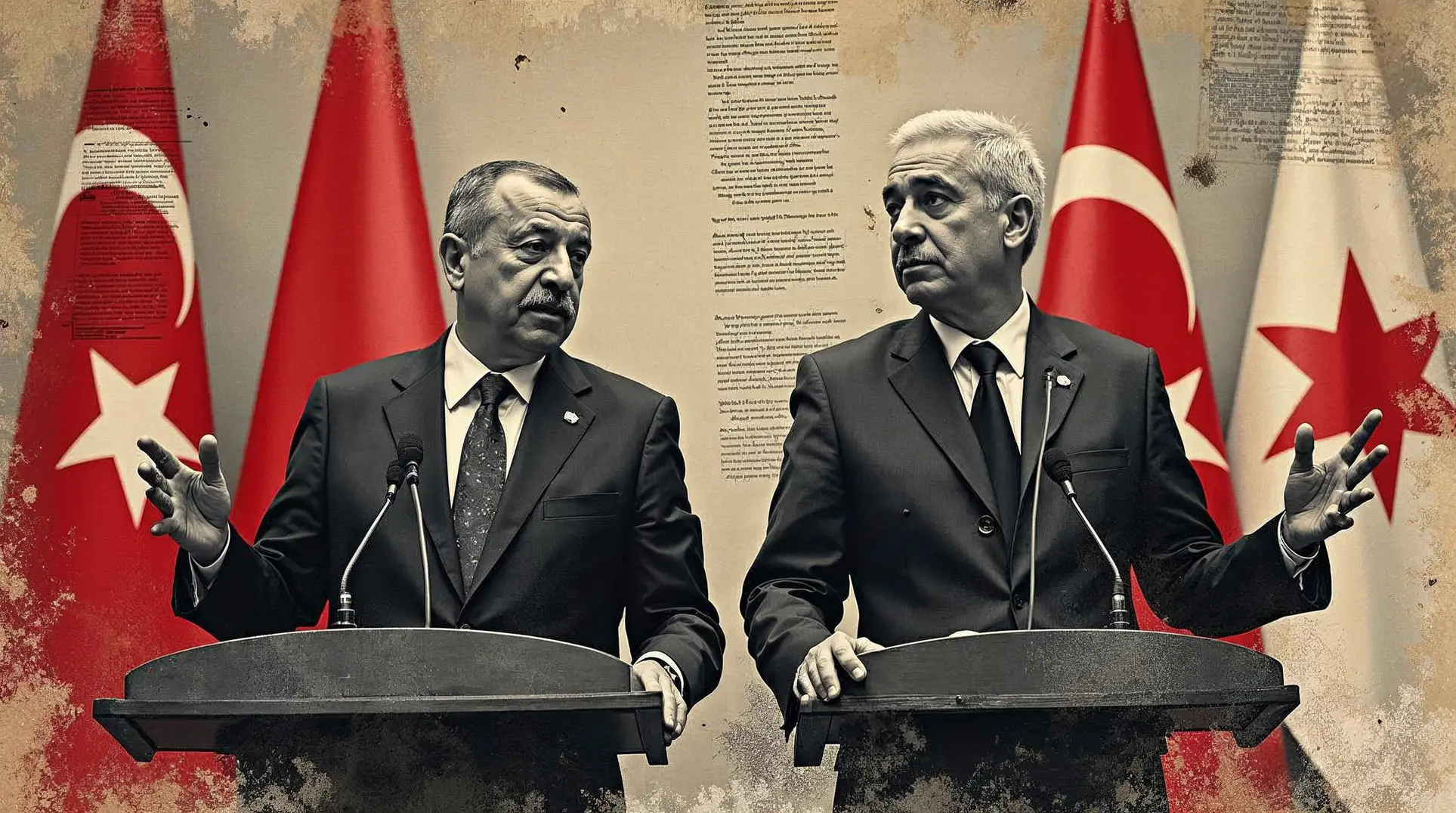
President Recep Tayyip Erdogan's November 13 declaration that a two-state solution represents "the most realistic way" to resolve Cyprus's division marks Turkey's clearest rejection yet of UN-backed reunification efforts. The timing—delivered alongside newly-elected Turkish Cypriot President Tufan Erhurman, who pledged to explore federal solutions—exposes the widening gulf between Ankara's maximalist territorial position and the international community's insistence on preserving Cypriot sovereignty. This isn't diplomatic posturing. It's a formalization of Turkey's strategic calculus that the island's 50-year partition serves Turkish interests better than any negotiated compromise.
The divergence matters because it crystallizes a structural deadlock where each side's non-negotiable position directly contradicts the other's. While Erhurman speaks of exploring federal frameworks, he simultaneously insists on "sovereign equality" for Turkish Cypriots—a demand incompatible with the Republic of Cyprus's legal status as the island's sole internationally recognized government. Turkey's backing of this position, formalized through recognition of the Turkish Republic of Northern Cyprus (TRNC), places Ankara in direct opposition to UN Security Council resolutions, EU law, and the territorial integrity principles underpinning the international order.
The buffer zone's frozen reality
The UN buffer zone—the Green Line—has separated Greek and Turkish Cypriot communities since 1974, when Turkish forces intervened following a Greek-backed coup attempt. What began as an emergency ceasefire line has calcified into a 180-kilometer demilitarized corridor, varying from a few meters to several kilometers in width, that bisects the capital Nicosia and cuts through villages, farmland, and archaeological sites. The United Nations Peacekeeping Force in Cyprus (UNFICYP) patrols this frozen frontier, maintaining a peace that neither side seems particularly interested in transforming into resolution.
Established initially in 1963 to prevent intercommunal violence, the buffer zone expanded dramatically after the 1974 events that created the current division. Some areas within the zone, like the village of Pyla, host both Greek and Turkish Cypriots living in uneasy coexistence—microcosms of what a unified Cyprus might resemble. Yet these pockets of cooperation remain anomalies in a landscape defined by separation. The UN mandate for UNFICYP continues through regular Security Council renewals, but recent TRNC demands for a separate State of Force Agreement challenge the mission's neutrality, signaling Turkish Cypriot leadership's intent to formalize division rather than bridge it.
Members are reading: How energy competition and security dilemma dynamics make the Cyprus stalemate structurally irresolvable under current frameworks.
Formalizing the frozen conflict
The international community's opposition to a two-state solution rests on principles of territorial integrity and the illegality of acquiring territory through force. Yet these legal frameworks lack enforcement mechanisms when confronted with Turkey's determination to protect what it views as Turkish Cypriot security interests. The UN can pass resolutions, the EU can maintain non-recognition policies, but none of these measures change the ground reality of division.
What Erdogan's statement signals is Turkey's assessment that time favors formalization of the status quo rather than negotiated reunification. As generations grow up knowing only division, as economic and political systems diverge further, and as regional energy competition intensifies, the prospect of federal reunification becomes increasingly remote. Turkey's position, while internationally isolated, reflects a cold calculation that strategic control matters more than diplomatic approval—a calculation that the international community has proven unable to effectively contest.
Subscribe to our free newsletter to unlock direct links to all sources used in this article.
We believe you deserve to verify everything we write. That's why we meticulously document every source.


