


President Donald Trump's public threat to launch land strikes against Venezuelan drug targets collides this week with a sharpening legal crisis over a single incident at sea. As Defense Secretary Pete Hegseth, Joint Chiefs Chairman General Dan Caine, and Secretary of State Marco Rubio prepare to brief the Gang of Eight on Tuesday afternoon, lawmakers from both parties are demanding answers about a September 2 maritime strike that has become the focal point of mounting legal scrutiny over alleged double-tap tactics.
The briefing arrives at a critical juncture. Trump told Politico he could extend anti-drug military operations not only to Venezuelan territory but also to Mexico and Colombia, declining to rule out ground troops. Yet Congress's fight over whether a follow-on strike killed survivors from the September boat attack has become the hinge for whether the administration can legally stretch a maritime campaign into land operations against a sovereign state—and whether lawmakers will tolerate executive war-making without authorization.
The September incident that changed everything
The September 2 strike initially appeared routine within the administration's Caribbean interdiction campaign. Video released by Trump showed a missile destroying a boat allegedly departing Venezuela with narcotics. But subsequent congressional briefings and media reports focused on what came next: allegations of a second strike targeting survivors in the water. White House Press Secretary Karoline Leavitt confirmed a follow-on strike occurred, asserting that Admiral Frank "Mitch" Bradley acted within his authority. Defense Secretary Hegseth has denied ordering a "kill them all" directive, countering Washington Post and New York Times reporting that cited such language.
That single incident has now become the test case for the entire legal architecture of Operation Southern Spear. Congress has tied compliance with disclosure demands to Hegseth's travel budget in the National Defense Authorization Act, with some lawmakers threatening to withhold funds unless unedited video and execute orders are produced. Both the House and Senate leadership—the Gang of Eight comprises intelligence committee leaders and party leaders from both chambers—are pressing for documentation. Venezuela's National Assembly has opened its own inquiry into what it frames as extrajudicial killings.
The administration's legal theory rests on claiming a non-international armed conflict with drug cartels designated as foreign terrorist organizations—specifically Tren de Aragua and the Cartel de los Soles—since October 1. The Justice Department argues that the War Powers Resolution does not apply to remote strikes that do not endanger U.S. forces. But UN experts and human rights organizations have warned that these operations constitute extrajudicial executions and that the use or threat of force against a sovereign state violates Article 2(4) of the UN Charter.
When law enforcement becomes armed conflict
The structural problem is that the administration is collapsing two incompatible legal paradigms. Traditional U.S. counter-narcotics practice relied on Coast Guard interdictions, prosecutions, and bilateral law enforcement cooperation. Experts at Just Security and the Washington Office on Latin America argue the new lethal model represents a dangerous departure that corrodes regional partnerships without reducing drug supply. The campaign has logged at least 22 strikes on 23 vessels through early December, killing at least 87 people according to Al Jazeera and Congressional reporting—up from earlier counts of 43-83 fatalities in late October.
Yet the administration has released no public evidence that those killed were "narco-terrorists" rather than lower-level smugglers. Colombian President Gustavo Petro shared video of bodies washing ashore and condemned the strikes as murder; he suspended intelligence sharing at several points, though some cooperation reportedly continued. Mexico's President Claudia Sheinbaum has flatly ruled out U.S. forces operating on Mexican soil. The mismatch between the USS Gerald R. Ford carrier strike group deployed to the Caribbean and the mission of interdicting speedboats has raised questions about the operation's true objectives—a tension explored in analysis framing Southern Spear as regime-change theater.
Members are reading: Why land strikes would shatter legal justifications that barely hold at sea, and how the September incident gives Congress leverage to stop escalation.
What Tuesday's briefing will reveal
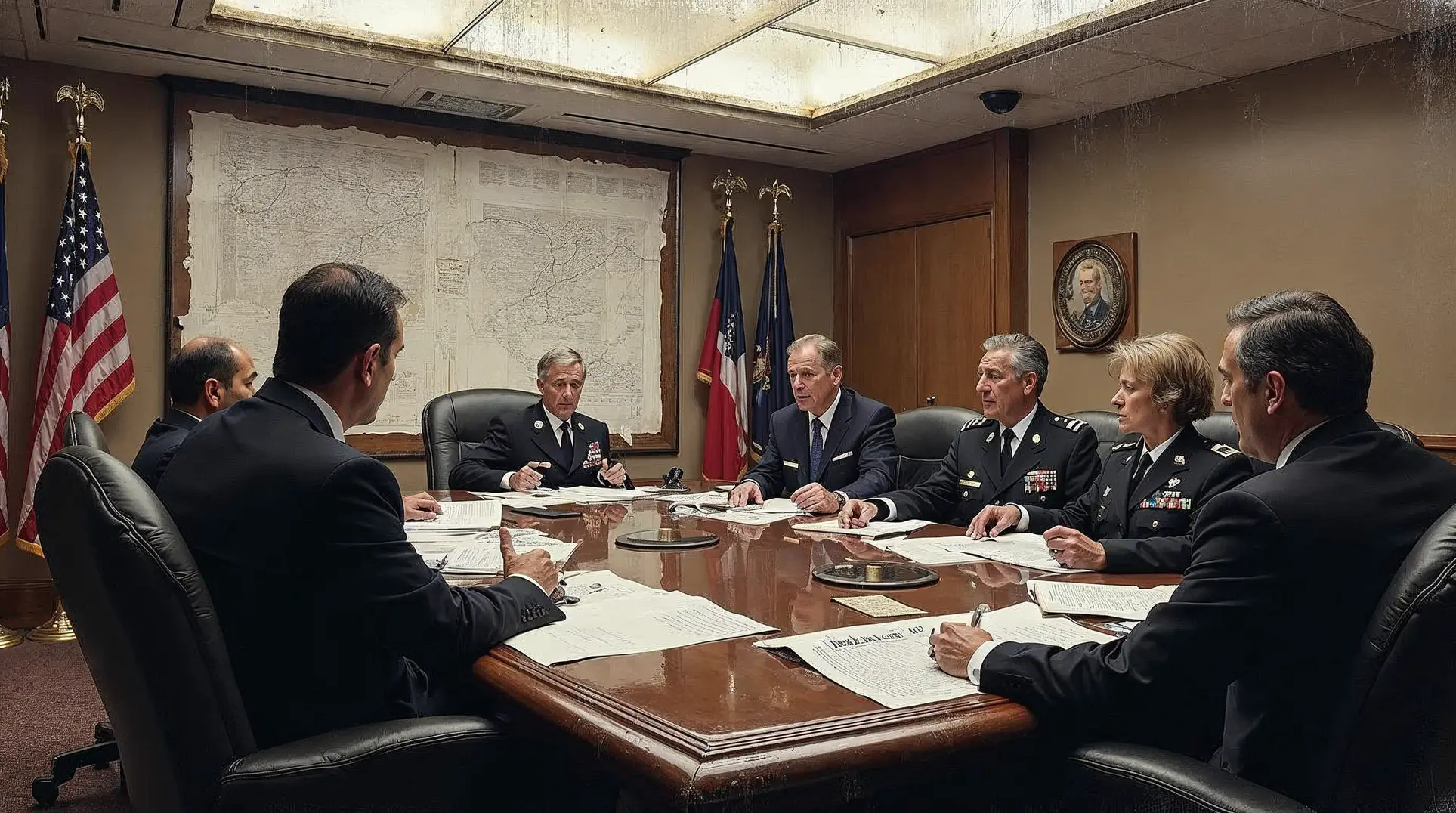
The Gang of Eight session will clarify whether the administration possesses a legal theory it can defend in closed session, even if it refuses public disclosure. Lawmakers will likely press for specific statutory or treaty citations authorizing the follow-on strike, for rules of engagement governing future operations, and for any analysis of international law constraints on land attacks. The presence of all three principals—Hegseth, Caine, and Rubio—signals the administration takes congressional pressure seriously, or that it seeks bipartisan cover for escalation.
Regionally, watch for Mexican and Colombian responses to Trump's land-strike rhetoric. Sheinbaum has already drawn a red line; Petro has oscillated between condemnation and pragmatic cooperation, but further strikes could tip the balance. In Caracas, the National Assembly inquiry may amplify the "double-tap" narrative, complicating any diplomatic resolution. The window for leveraging military pressure into negotiated safe passage for opposition figures and a political settlement is narrowing, not widening.
The deeper structural lesson is that militarized decapitation strategies do not reduce drug supply; they displace trafficking routes and destabilize the institutions needed for long-term governance reform. If a single boat strike's legality cannot withstand scrutiny, the case for a land war collapses before the first bomb falls.
Subscribe to our free newsletter to unlock direct links to all sources used in this article.
We believe you deserve to verify everything we write. That's why we meticulously document every source.


