


The United States escalated its confrontation with Iran on Thursday, with Ambassador Mike Waltz declaring at the UN Security Council that "all options are on the table" to stop the killing of protesters. The statement, delivered as Iran's crackdown entered its third week with over 500 reported deaths, represents Washington's most explicit military threat since nationwide demonstrations erupted. Waltz's warning was accompanied by fresh sanctions targeting former parliamentary speaker Ali Larijani and networks accused of financing the regime's repression.
The timing is not coincidental. The Trump administration is executing a textbook exercise in coercive diplomacy, wielding strategic ambiguity as both sword and shield. By maintaining deliberate vagueness about military intentions while ratcheting up economic pressure, Washington aims to maximize Tehran's uncertainty at a moment of acute domestic vulnerability. The question is whether this calculated brinkmanship will force regime concessions or trigger the very escalation it purports to deter. For realist observers, the answer depends less on stated intentions than on the structural pressures driving both capitals toward confrontation.
The Security Council as strategic theater
The UN Security Council meeting served primarily as a platform for public signaling rather than diplomatic resolution. Waltz's appearance was designed to globalize the threat, ensuring Tehran understood that Washington's commitment was being broadcast to allies, adversaries, and the Iranian people themselves. The chamber featured Iranian dissidents, including families of killed protesters, a staging choice calculated to lend moral authority to what is fundamentally a power play. Russia and China predictably objected to what they framed as interference in Iran's internal affairs, but their opposition was the point—it allowed Washington to demonstrate its willingness to act unilaterally if necessary.
The sanctions announced against Larijani and entities linked to the Islamic Revolutionary Guard Corps represent the tangible component of this pressure campaign. By targeting the architect of Iran's legislative strategy and financial networks sustaining the security apparatus, the administration moves beyond rhetorical condemnation. Trump has previously signaled support for Iranian protesters while maintaining plausible deniability about direct action, a pattern consistent with deliberate ambiguity.
The presence of the USS Harry S. Truman carrier strike group in regional waters adds kinetic weight to diplomatic threats. This is standard practice in coercive signaling: deploy the capability, broadcast the willingness, but stop short of commitment. Iran's leadership must now calculate whether the Trump administration—which has oscillated between maximum pressure and abrupt de-escalation in previous crises—would actually authorize military strikes to halt a domestic crackdown.
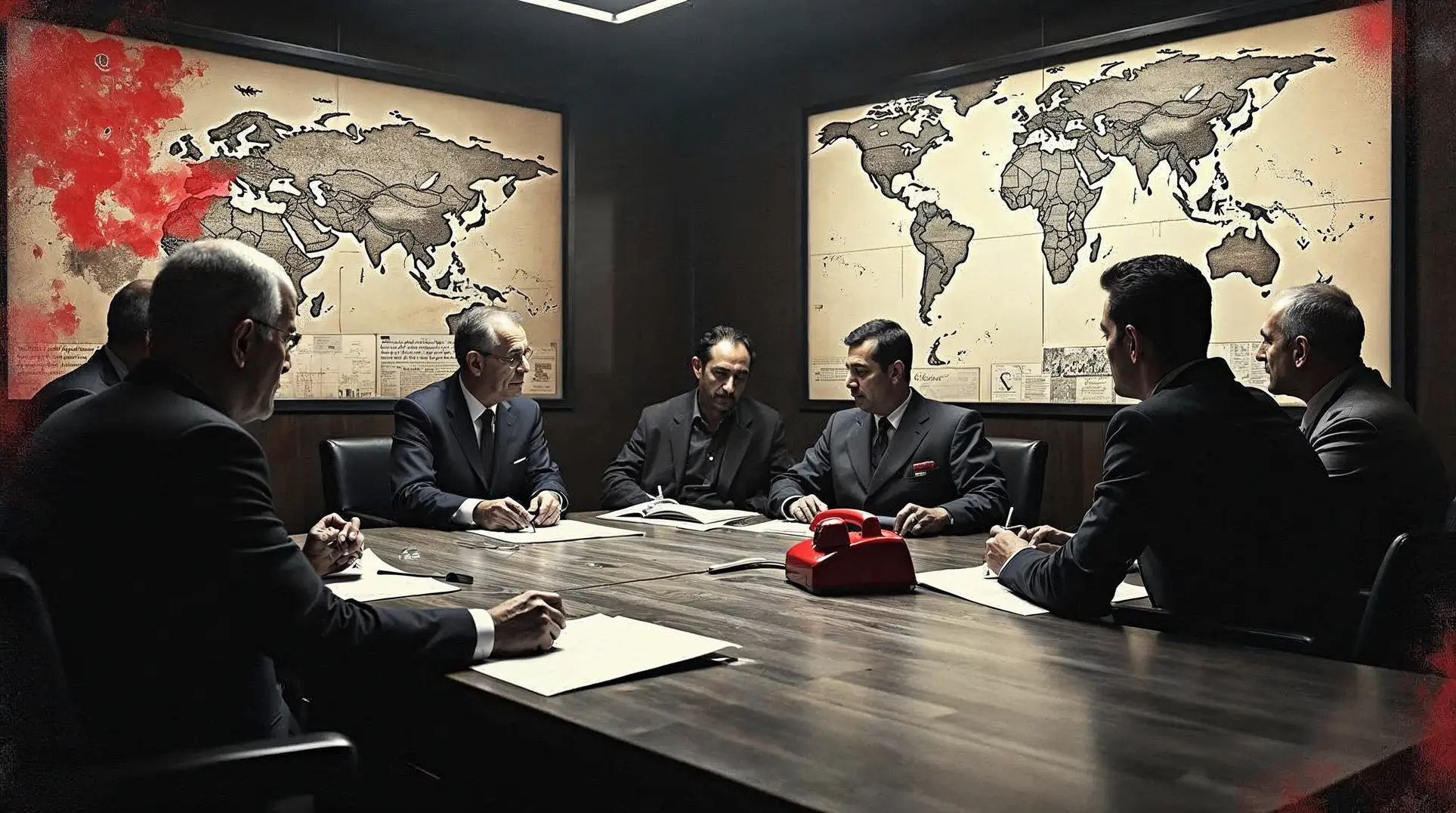
Members are reading: How Iran's survival dilemma creates a trap where both escalation and restraint carry existential risks.
The structural limits of strategic ambiguity
Coercive diplomacy through calculated uncertainty is a recognized instrument of statecraft, effective when the threatening power maintains both capability and credible willingness to act. The current US strategy meets the first criterion but struggles with the second. Domestic political constraints, alliance concerns, and the absence of clear military objectives beyond "stopping the slaughter" all undermine the credibility of maximum threats. Iran's leadership, weathering sanctions for decades, has developed sophisticated mechanisms for reading American resolve beyond public statements.
The sanctions component provides concrete pressure but faces familiar limitations. Targeting individuals like Larijani and financial networks imposes costs, but the regime has demonstrated capacity to absorb punishment when survival is at stake. The economic warfare approach assumes rational cost-benefit calculations by Tehran's leadership, yet regimes facing existential threats often prioritize political survival over economic optimization. The Communications blackout itself demonstrates willingness to accept massive economic and social disruption to maintain control.
What remains unclear is Washington's theory of victory. Does the administration expect sanctions and threats to compel regime concessions, trigger internal collapse, or simply impose costs without clear end-state? The absence of articulated objectives beyond halting repression suggests a reactive posture rather than coherent strategy. This ambiguity may serve tactical purposes in the short term but creates strategic drift over extended crises.
The gamble's likely trajectory
The current standoff will likely follow one of three paths. First, Tehran could calculate that Washington's threats are primarily rhetorical and proceed with repression, accepting international isolation as the price of domestic stability. Second, internal divisions within Iran's security apparatus could fracture under combined external pressure and domestic unrest, though this remains the least predictable scenario. Third, and most dangerous, a kinetic incident—whether deliberate or accidental—could force both sides into escalation neither planned nor desires.
The realist assessment is straightforward: strategic ambiguity works when the threatened party believes escalation costs exceed compliance costs. Iran's regime, facing potential collapse from within, may calculate that external intervention is survivable while domestic revolution is not. If that calculation holds, Washington's threats become background noise to Tehran's primary imperative of regime preservation. The administration's willingness to risk regional conflict over a humanitarian crisis it has previously shown limited interest in remains the central question of credibility that will determine whether this high-stakes gamble succeeds or catastrophically fails.
Subscribe to our free newsletter to unlock direct links to all sources used in this article.
We believe you deserve to verify everything we write. That's why we meticulously document every source.


