


On November 24, 2025, the United States formally designated Venezuela's Cartel de los Soles as a Foreign Terrorist Organization—a network the Treasury Department alleges is "headed by Nicolás Maduro Moros and other high-ranking Venezuelan individuals in the Maduro regime." The same day, President Donald Trump told advisers he intends to speak directly with Maduro, according to administration officials. The pairing of maximum legal pressure with diplomatic outreach compresses Washington's Venezuela strategy into a paradox: negotiating with a sitting head of state the U.S. formally labels as leading a terrorist organization.
The move escalates a legal architecture built over months. In July 2025, Treasury's Office of Foreign Assets Control (OFAC) designated Cartel de los Soles a "Specially Designated Global Terrorist" (SDGT), alleging the network corrupted Venezuelan military, intelligence, legislative, and judicial institutions to traffic narcotics and provide material support to Foreign Terrorist Organizations Tren de Aragua and Mexico's Sinaloa Cartel. November's State Department FTO designation aligns the legal framework across these entities, triggering material-support prohibitions, immigration bars, and broad compliance risks for financial institutions. Venezuela's government rejects the entire premise. Foreign Minister Yván Gil called the "Cartel de los Soles" a "non-existent" construct and dismissed the designation as "ridiculous," arguing Washington seeks regime change to control Venezuela's oil.
The legal paradox: designating a state-embedded network
The United States asserts that Cartel de los Soles is a Venezuela-based criminal network headed by Maduro and senior regime officials who corrupted state institutions to facilitate drug trafficking. Treasury Secretary Scott Bessent framed the action as exposing the "illegitimate Maduro regime's facilitation of narco-terrorism." The FTO designation builds on a 2020 U.S. indictment that accused Maduro and others of narco-terrorism, and follows February 2025 FTO listings of Tren de Aragua and Sinaloa Cartel.
Yet the characterization is contested even among analysts who acknowledge official complicity in trafficking. InSight Crime, cited by Reuters, called it an "oversimplification" to say Maduro heads a conventional cartel; experts describe a diffuse system of corruption where officials profit via protection rackets and facilitation, not a vertically integrated hierarchy akin to Mexican cartels. The name itself—referring to the sun insignia worn by Venezuelan generals—points to embedded military complicity rather than a discrete criminal command structure.
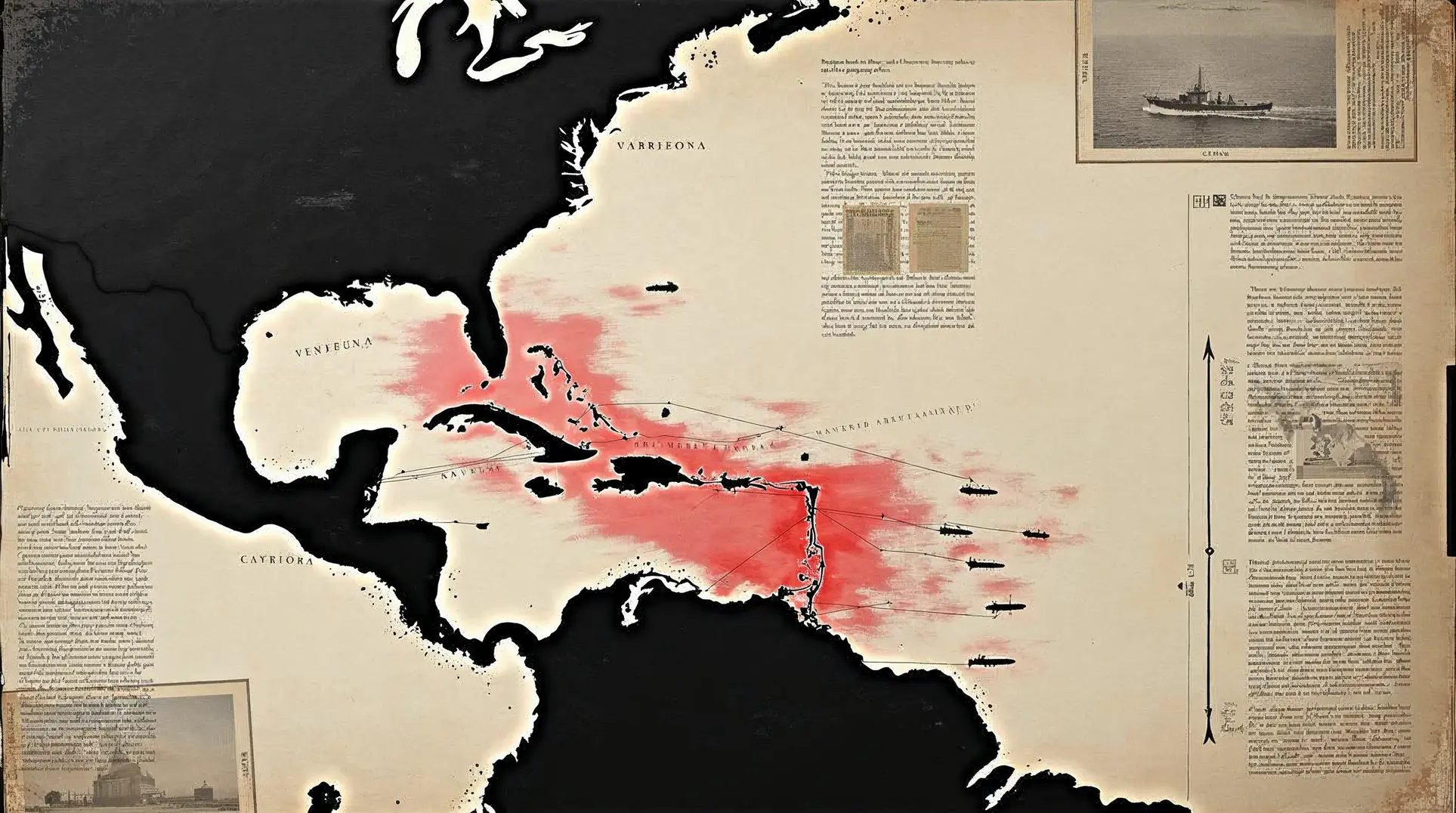
This disagreement matters legally and operationally. The FTO statute targets non-state entities; collapsing that framework onto a network allegedly synonymous with state institutions creates ambiguity about what U.S. actions would target in practice. Sanctions experts told Reuters the FTO designation does not itself authorize military force, and OFAC's SDGT listing blocks property and restricts U.S.-jurisdiction transactions without conferring combat authority. Yet U.S. maritime strikes in Caribbean waters throughout September and October—framed as self-defense against "non-state terrorist" cartels—have already blurred those lines, prompting Venezuelan militia mobilizations and coastal defense exercises.
Members are reading: Analysis of whether Trump's dual-track strategy creates negotiating leverage or an escalation ladder with no off-ramps.
The narrow path forward
Trump's planned call with Maduro tests whether coercive diplomacy can function when legal designations eliminate transaction space and military postures narrow margins for misperception. For Washington, success would require Maduro to accept behavior changes—curtailing trafficking facilitation, severing Tren de Aragua ties, potentially political concessions—substantial enough to justify unwinding sanctions and FTO listings. For Caracas, participating in talks while labeled a terrorist-led regime risks legitimizing the U.S. framing unless concessions are reciprocal and visible.
The alternative is that the FTO designation and diplomatic outreach serve separate timelines: talks provide cover while legal and operational pressure accumulates toward a more coercive end-state. Either way, the administration has constructed a framework where the president of the United States intends to negotiate directly with a leader his own government formally designates as heading a terrorist organization. That paradox will define the opening moves—and the risks—of whatever comes next.
Subscribe to our free newsletter to unlock direct links to all sources used in this article.
We believe you deserve to verify everything we write. That's why we meticulously document every source.


